Investment Data Platform Treehouse Acquires NFT Analytics Platform Origins To Expand Offerings
 Alex
Alex

Author: BiyaNews
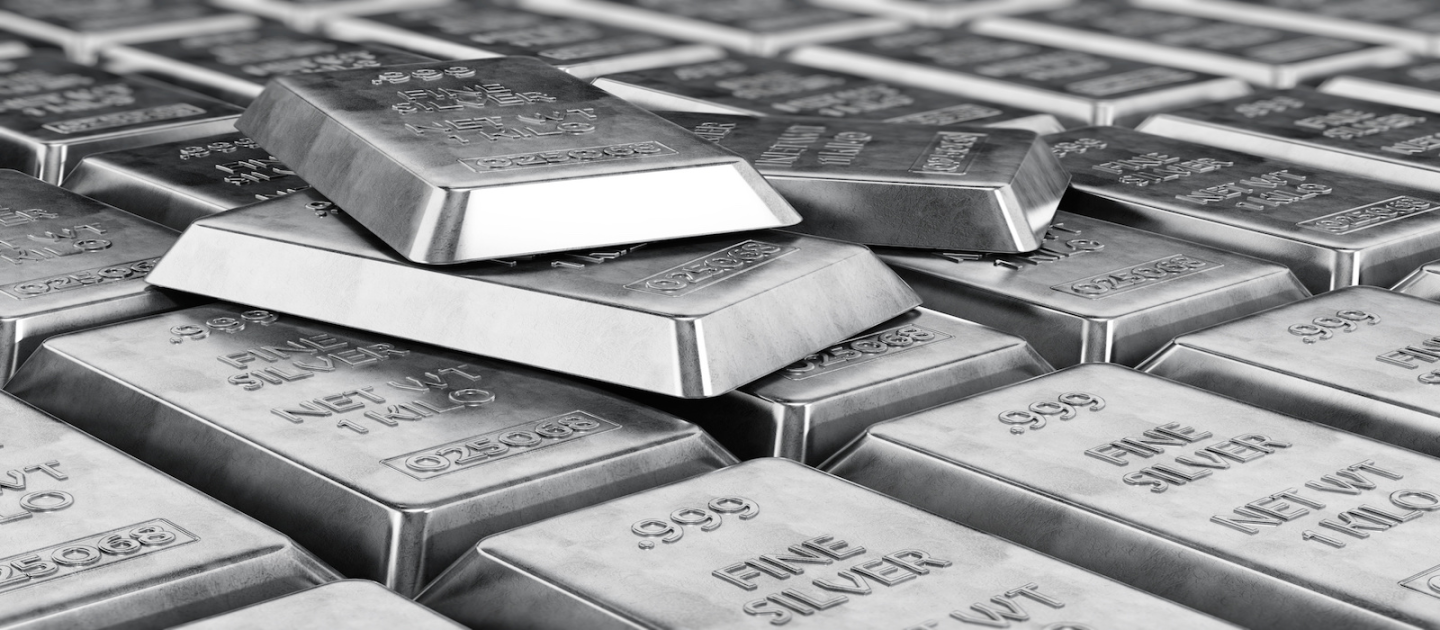
Recently, the silver market has been as hot as the summer heat. Looking at the SLV (iShares Silver Trust ETF) trend, many investors exclaimed, "This is practically the 'Nvidia' of precious metals!" When an asset rises at such a steep slope, the "fear of heights" and "contrarian thinking" factors in human nature begin to stir. I have friends who are itching to short it, betting on a pullback.
However, historical experience tells me that under the current macroeconomic landscape and microeconomic structure, shorting silver is tantamount to colliding head-on with a high-speed train. You might guess the direction correctly, but you're unlikely to survive until victory. Behind this is far more than just "what goes up must come down"; it's an extreme short squeeze orchestrated by multiple "trump card" factors.
Traditionally, the precious metals trading system centered in London and New York has built a vast world of derivatives. In this world, $100 worth of physical silver in a warehouse may correspond to several times or even dozens of times more futures and options contracts. This is essentially a credit-based financial game.
But the rules of the game are being rewritten.
In recent years, physical demanders, represented by major global manufacturing centers, have exhibited a clear attitude: "Forget the abstract, I want physical delivery." When industrial users and investors are no longer satisfied with paper contracts and demand physical delivery, the vulnerability of the entire system is laid bare. According to publicly available market reports and warehousing data, COMEX (New York Mercantile Exchange) silver inventories have shown signs of tightness several times in recent years. Short sellers in the futures market face a dilemma at expiration: either buy silver at a high price for delivery or close their positions. Both actions drive up prices. This creates a self-reinforcing cycle: rising prices → triggering more delivery demand or short covering → further pushing up prices → inventory appears even tighter. This price surge driven by physical delivery pressure is a "black swan" event that is difficult for technical analysis to predict. I recall the short squeeze at GameSpot (GME) in early 2021, triggered by retail investors. Its core logic was similar: a short squeeze. When short positions are too crowded and the available circulating supply (or physical commodity) is insufficient, any buying pressure can trigger a stampede of short covering. While the silver market isn't entirely driven by retail investors, the underlying logic of "spot trading is king" means that any large-scale short selling risks being "physically" disproven. Industrial "Silver Devourers": Demand Restructuring Under AI and the Green Revolution If a financial short squeeze is "adding fuel to the fire," then profound changes in fundamental demand are the "dried tinder" burning ever brighter in the furnace. Silver is not a scarce metal, but its demand structure is undergoing a silent revolution. For a long time, silver has been known for its investment properties and jewelry demand. However, it is easily overlooked that it is also an extremely important industrial metal. Silver possesses the highest electrical and thermal conductivity of all metals, making it irreplaceable in high-end manufacturing. Currently, two major trends are reshaping the industrial demand landscape for silver: Artificial Intelligence and Electrification: The explosive growth of AI data centers, high-performance computing chips, and 5G/6G infrastructure has created massive demand for high-end connectors, switches, and conductors. Every server and every base station is silently consuming silver. Green Energy Revolution: The photovoltaic industry is the absolute growth engine for silver demand. The silver paste on the front of each solar panel is the core conductive material. Despite technological advancements aimed at reducing unit consumption ("finer lines," "less silver"), the exponential growth in global photovoltaic (PV) installations has completely offset these savings. Data from organizations like the International Energy Agency (IEA) continues to revise upwards forecasts for future PV installations, indicating a robust engine for "green demand" for silver. The supply side is equally compelling. More than half of the world's silver is produced as a byproduct of metals such as copper, lead, zinc, and gold. This means that silver supply is not independent and heavily reliant on mining investment and extraction plans for other base metals. When major mining companies slow investment due to costs, environmental policies, or unfavorable expectations for base metal prices, silver supply growth is naturally limited. A more nuanced point is that the world's largest silver producer and a major industrial consumer has shown a stronger strategic control over key mineral resources, including silver, in recent years. While specific policy details require consulting the latest official documents, a major trend is that countries are placing greater emphasis on using resources to safeguard their domestic supply chains rather than simply exporting for foreign exchange. This rise of "resource nationalism," in the long run, may further tighten global silver trade flows and exacerbate regional supply-demand mismatches. The "Hidden" Geopolitical Manifesto: Silver's Return to its Monetary Role? In investment, some of the most powerful drivers are often hidden beneath the headlines. The current complex geopolitical landscape is, in a classical way, reawakening silver's ancient attribute—that of a monetary metal. When traditional international payment systems (such as SWIFT) become unusable due to sanctions, transacting parties must find an alternative medium with high consensus, stable value, and ease of cross-border transfer. Gold is certainly the first choice, but its high unit price is not conducive to small- to medium-sized trade settlements. This is where silver's advantages become apparent. Market analysis points out that in trade between countries restricted by international sanctions and their trading partners, silver is being used as a form of "physical currency" or collateral. For the recipient, silver is both a hard asset with intrinsic value and can be easily integrated into their domestic industrial chain (such as India's huge silver jewelry processing and consumption market) or resold to the global market. This process essentially creates a new "enclave" of physical silver demand within the gaps of international trade, independent of the dollar system. This demand is hidden and difficult to quantify precisely, yet it is real. Like ocean currents beneath the surface, though unseen, it continuously and powerfully influences the direction of the sea. This provides a solid "hidden support" for silver prices, with low correlation to global financial market fluctuations.
Faced with such a complex confluence of positive factors, how should we respond?
First, understand the essence of the market. The current silver market is not simply a speculative bubble, but the result of multiple resonances of financial conditions, industry cycles, and geopolitics. The biggest risk of shorting is that you are fighting against a fundamental situation supported by a real spot shortage, strong industrial demand, and strategic hoarding. This is different from shorting an overvalued tech stock, which may only face the risk of liquidity contraction.
Second, respect the power of trends. My experience is that in the early stages of a trend, you can discuss valuations; but in the mid-to-late stages of a trend's acceleration, especially when accompanied by structural changes (such as the aforementioned spot market run and demand revolution), discussing "where the top is" is often more meaningful than discussing "when the reversal will occur."
Trying to predict how high lava will erupt during a volcanic eruption is dangerous and futile. So, how should ordinary investors participate? For trend traders: Consider ETFs like SLV, but always set strict stop-loss orders. The end of a trend often sees dramatic fluctuations; entry timing and position management are more important than directional judgment. For long-term investors: Consider allocating a small portion of silver as a commodity asset to hedge against currency devaluation and geopolitical risks, in a diversified portfolio, rather than as a tool for short-term speculation. For everyone: If you feel prices are high and you don't know where to start, the best strategy is to wait and see. The market never lacks opportunities, it lacks patience. As the old saying goes: "Missing out" isn't a risk, "making a mistake" is. The story of silver is a microcosm of the clash between the old world's financial order and the new world's industrial demands, and also a vivid lesson in risk education: never short sell simply because prices have "gone too high." The real risk lies in ignoring the underlying forces driving prices up. In the market's frenzy, sometimes the wisest move is neither to join in nor to fight back, but to stand aside and first understand the rhythm of the music. After all, the prerequisite for making money is protecting your principal.
AlexOne of the key conspirators profited around 3 million from the operation.
 Clement
BAYC’s exclusive ApeFest Hong Kong merch drop is in the midst of a hiccup with the online store being taken down temporarily until website issues are resolved.
 Catherine
The utilisation of machine learning has played a role in enabling Paul McCartney and Ringo Starr to transform an archival John Lennon demo into what’s likely the band’s last collaborative effort.
 Kikyo
KikyoThe company is only the fourth entity that has been approved to offer crypto services to UK customers.
ClementAs convicted traffickers deliberated over the optimal offshore haven for their crypto wealth, US authorities listened in and pounced on the proceeds accrued through illicit darknet drug sales.
CatherineProShares CEO Michael Sapir stated that the new ETF was created specifically to help people short ETH.
ClementSingapore's cryptocurrency industry, once booming, faced a significant setback in 2022 due to a $2 trillion market crash and regulatory actions. However, the city-state remains focused on balancing innovation and investor protection in its evolving crypto landscape.
 Joy
JoyThe jury took less than five hours to reach their guilty verdicts.
ClementInstead of requiring users to write complex queries with programming skills, individuals can now ask questions in plain language using Dune's natural language engine.
 Davin
Davin