Last October, the US government shutdown lasted 43 days, causing a global financial liquidity crunch and a sharp drop in the cryptocurrency market. Many people still vividly remember that event. And at the end of this month, something similar may happen again. Three days ago, Trump said in an interview in Davos, "I think we're in trouble again, and it's very likely we'll be facing another government shutdown caused by the Democrats." Although lawmakers are working hard to finalize an appropriations agreement, with the January 30th deadline fast approaching, the US government only has four working days left, making another shutdown seem difficult to avoid. Currently, the probability of the US government shutting down again before January 31st on Polymarket has surged to 80%. The main points of contention between the two parties are funding for ICE and Obamacare. These are also long-standing issues in the political and economic debates between the two parties: immigration policy and social welfare. To further understand why a government shutdown might occur, we must begin with one of the largest welfare fraud cases in U.S. history, which took place in Minnesota. It all started in Minnesota. The story begins in 2020 when the pandemic had just begun. The United States has a traditional welfare policy: providing free lunches to children from impoverished families. Before the pandemic, this welfare was strictly regulated; children had to eat together at schools or formal community centers, and roll call was required to prevent fraudulent claims. But with the pandemic, schools closed, and children stayed home. So the US Congress made a bold move, allowing meals to be taken away without strict verification. As long as you are a registered non-profit organization, the government will provide funding for whatever meals you claim to have distributed, with no upper limit. This loophole is the background to the Minnesota welfare fraud case, exposed by an American social media blogger, Nick Shirley. In December 2025, Nick Shirley released a 42-minute investigative video that went viral overnight. In the video, he exposed a group of non-profit organizations operating under the guise of "children's nutrition" and "assistance to vulnerable groups." These organizations applied for funding from state and federal governments, claiming to serve tens of thousands of people, but in reality, many of these children did not exist, nor did the children's meals. Their so-called charitable projects were merely shells used to obtain government funding. The video quickly went viral, garnering tens of millions of views within the first 24 hours. With various short video edits and reposts, the overall reach exceeded one hundred million times. Following investigations by the Department of Homeland Security (DHS) and the Federal Bureau of Investigation (FBI), it was discovered that since 2018, the federal government had allocated a total of $18 billion to 14 public programs in Minnesota, with $9 billion of that amount involved in the fraud. This is one of the largest welfare fraud cases in U.S. history. The truly politically explosive aspect of this case lies in the fact that it occurred in Minnesota. Minnesota has long been a stronghold for the Democratic Party, and its Democratic governor was Kamala Harris's running mate. It is also a state highly dependent on welfare programs and with an exceptionally high concentration of non-profit organizations. Over the past decade, its welfare system has developed a structure of "outsourced governance": the government does not directly provide services but instead delegates many public functions to non-profit organizations. Theoretically, this is for efficiency and community autonomy; however, in reality, it has created an extremely lax, poorly regulated, and politically complex gray area. Many of the organizations involved have close ties to the local Democratic Party political landscape. Evidence suggests that a significant portion of the funds obtained by these welfare fraud organizations flowed into Democratic campaign donations. Meanwhile, Minnesota itself is a highly immigrant state, with a large Somali and other immigrant population. The Minnesota Attorney General's Office stated that 82 of the 92 defendants in this case are Somali Americans. This highly intertwines immigration enforcement, welfare distribution, and public safety issues, precisely hitting the core of the long-standing conflict between the Democratic and Republican parties, and also key policy promises repeatedly emphasized by Trump and the Republican Party during their campaigns. Since someone has handed them a knife, the Republican Party has naturally chosen to plunge it in hard. Both Donald Trump and Elon Musk, the biggest "internet celebrities" of the current administration, frequently retweeted related content, fiercely criticizing Minnesota's handling of the situation and linking such opaque and potentially abused subsidy policies to the Democratic Party's long-standing expansion of social welfare. Due to the exposure of the Minnesota welfare fraud case, Trump significantly intensified immigration enforcement in Minnesota. The Department of Homeland Security and the FBI deployed a large number of agents to continue the investigation and crackdown on illegal immigrants, with ICE (Immigration and Customs Enforcement), as the enforcement agency under the Department of Homeland Security, becoming the main force in this operation. However, the sudden increase in enforcement quickly led to serious consequences. On January 7, ICE agents accidentally shot and killed a 37-year-old woman, Renée Good, during an operation, drawing national attention. Just 17 days later, on January 24, another U.S. citizen, Alex Pretti, was accidentally shot and killed by federal immigration enforcement officers in the same city. These two fatal shootings caused the situation in Minnesota to spiral out of control. Large-scale protests and riots erupted, even requiring the deployment of the National Guard to maintain order. The Democratic Party quickly seized this opportunity, using the fatal shootings by ICE in Minnesota as irrefutable evidence of the agency's out-of-control enforcement methods.
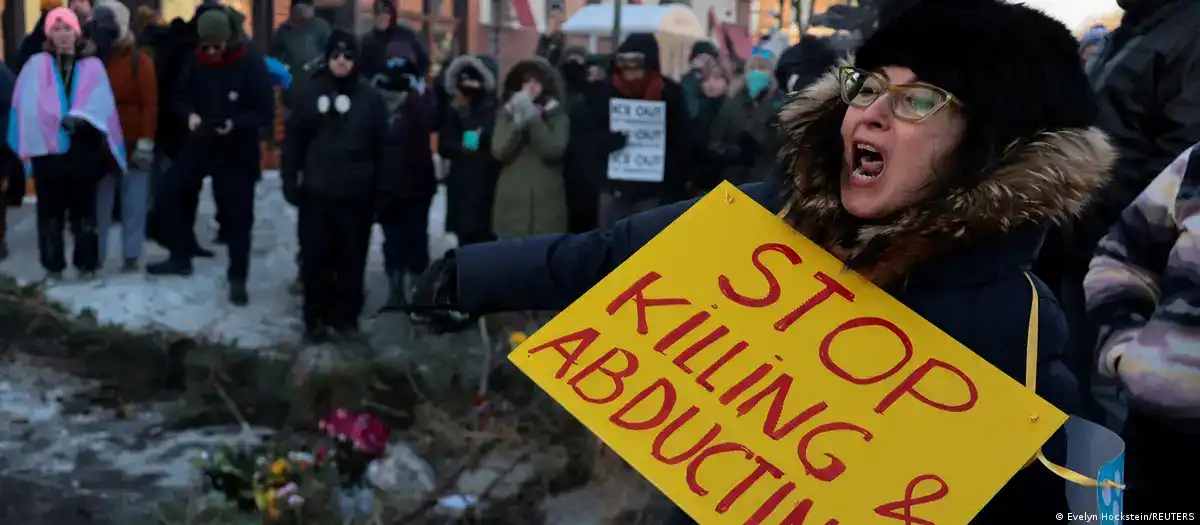
People spontaneously mourn the victims shot and killed by law enforcement officers
So why did this affect the US government shutdown on January 31?
In the US constitutional system, the purse strings are held by Congress, and the executive branch cannot decide on its own to continue spending money.
Each fiscal year, Congress must pass 12 annual appropriations bills, each corresponding to one of 12 policy areas: defense, homeland security, agriculture, transportation, housing, etc. These appropriations bills determine the maximum amount of money a department can spend in that fiscal year, and where that money can be spent. If an appropriations proposal fails to pass, or if the legal authorization for the fiscal year expires and Congress hasn't passed a new authorization in time, the department will be without a budget and will have to shut down. This is what's known as a government shutdown. The normal process is that the fiscal year begins on October 1st. If no agreement is reached before October 1st, Congress will pass a temporary appropriations bill to extend the government's life, setting a new deadline. January 30th, which we are currently focusing on, is the expiration date of this temporary bill. If, by that day, a formal appropriations bill has not been passed, and the temporary bill has not been renewed, the US government will be shut down, or partially shut down. These appropriations bills require passage by both the House of Representatives and the Senate. The House has already signed them, but the process is stalled in the Senate. The US Senate stipulates that a government appropriations bill requires 60 votes to pass. Currently, the Senate's seat structure is: 53 Republicans, 45 Democrats, plus two independent senators allied with the Democrats, giving the Democrats a total of 47 votes. Even if all Republicans agree, they only have 53 votes, insufficient to unilaterally reach the 60 required to end the debate. This means that if the Democrats collectively obstruct the process, the Republicans must secure at least 7 votes from the Democratic camp to bring the appropriations bill to a final vote and prevent a government shutdown. This is why Trump has been proposing to abolish the 60-vote threshold for the past six months.
Therefore, in this context, the Department of Homeland Security budget, including ICE, has become the most controversial and difficult part to reach a consensus on in the current funding negotiations involving the risk of a government shutdown.
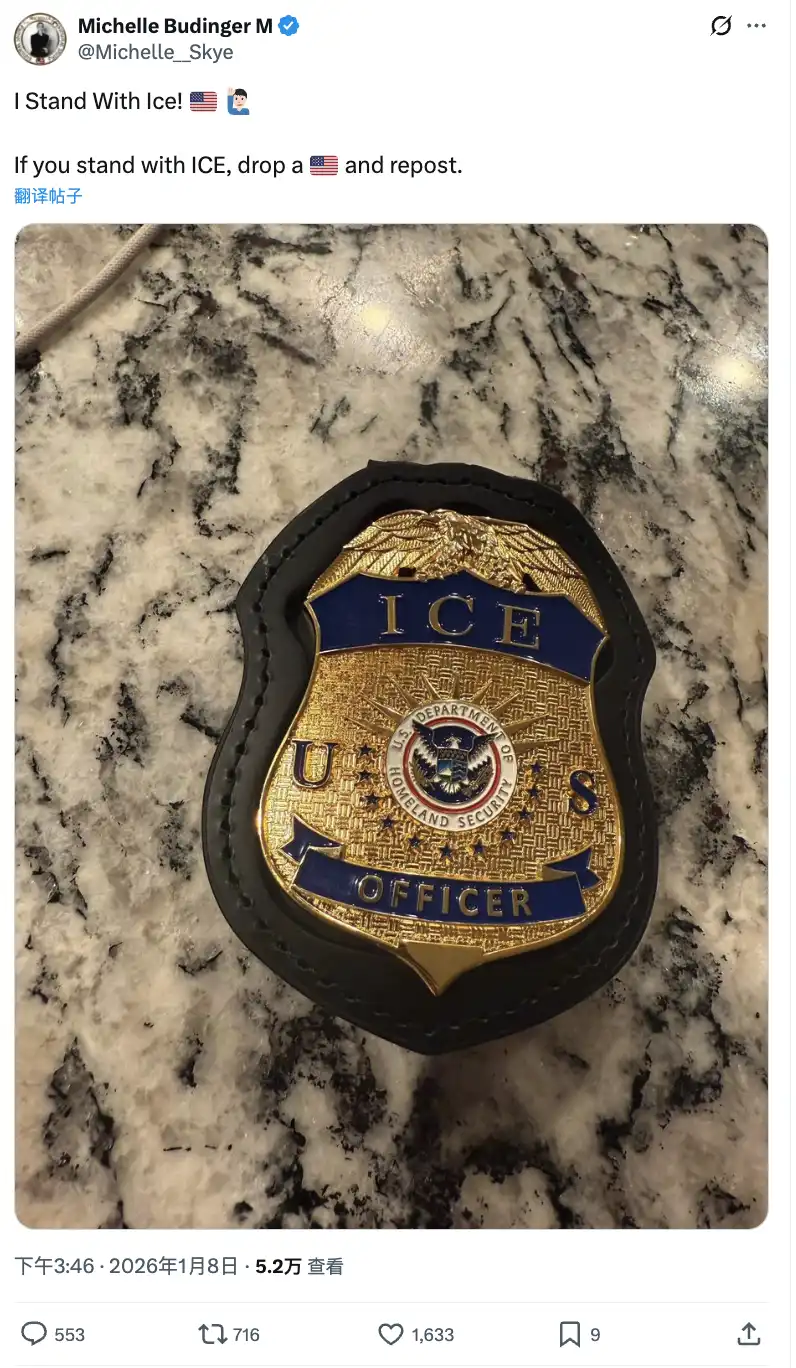
There are many voices on social media supporting ICE law enforcement.
The Democrats' logic is clear: ICE caused two deaths in Minnesota, which proves that the agency's law enforcement methods have serious problems.
Why should we continue to fund ICE without substantial reforms and stricter restrictions? Democrats are demanding cuts to ICE or at least stricter limitations. Republicans counter with the same argument: the Minnesota welfare fraud case, involving $9 billion and mostly Somali defendants, underscores the need to strengthen, not weaken, immigration enforcement. ICE is a key force in combating illegal immigration and welfare fraud and must be adequately funded. This antagonism has led to a congressional deadlock on the Department of Homeland Security budget bill, which includes funding for ICE. This issue may even remain a partisan battleground until the midterm elections, becoming a central battleground. Beyond ICE funding, the issue of healthcare subsidies represents the second, and more structural, point of contention in the current government shutdown risk. This controversy stems from a legacy issue temporarily shelved during the previous government shutdown and remains unresolved: whether to continue increasing funding for the Affordable Care Act (ACA), commonly known as Obamacare. These subsidies were initially temporary measures introduced during the COVID-19 pandemic, significantly reducing the actual cost of health insurance for low- and middle-income individuals through tax credits. They were not made permanent after the pandemic but officially expired at the end of last year. Due to the failure of Democrats and Republicans to reach an agreement on funding authorization, this issue was "frozen" during the previous government shutdown, but it hasn't disappeared; it has simply been delayed until now. Democrats want increased funding; if the subsidies are not renewed, the health insurance premiums for millions of Americans will surge in the short term, and some may even be forced to withdraw from the insurance system altogether. However, the Republican opposition stems from similar backgrounds and causes to the Minnesota welfare fraud case. The healthcare subsidy system during the pandemic has bred systemic fraud. The ACA subsidy is not merely a financial burden issue, but a "gray pool" abused by local nonprofits, insurance companies, and even political networks. Politics influences people's livelihoods, and people's livelihoods also influence politics. The period of contention between the two parties over this healthcare budget is intricately linked to several hotly debated events online. For example, the "American cutoff line" theory, which recently sparked heated discussion in Chinese-speaking regions, states that many American families are not destitute; they have jobs, income, and health insurance, but their financial security margin is extremely low. Once they face unemployment, serious illness, accidental injury, or the expiration of health insurance subsidies and increased premiums, their cash flow can be completely depleted in a very short time, plunging them into a state of inescapable financial ruin. Mortgage defaults, credit card defaults, and snowballing medical bills occur almost simultaneously. Like a character in a game, once their health drops to a critical threshold, a single critical hit is enough to eliminate them from the game, without needing a combo. The ACA subsidy serves as the last buffer for many families to avoid triggering this "kill line." It doesn't make people rich, but it prevents them from falling out of the system entirely after an illness or layoff. This is why the Democratic Party describes the subsidy issue as an "affordability crisis" rather than "welfare expansion." It is against this social backdrop that the case that ignited public opinion—a 26-year-old third-generation rich Ivy League graduate who shot and killed the CEO of America's largest insurance company—why did it fulfill the American public's imagination of a modern-day "folk hero"?
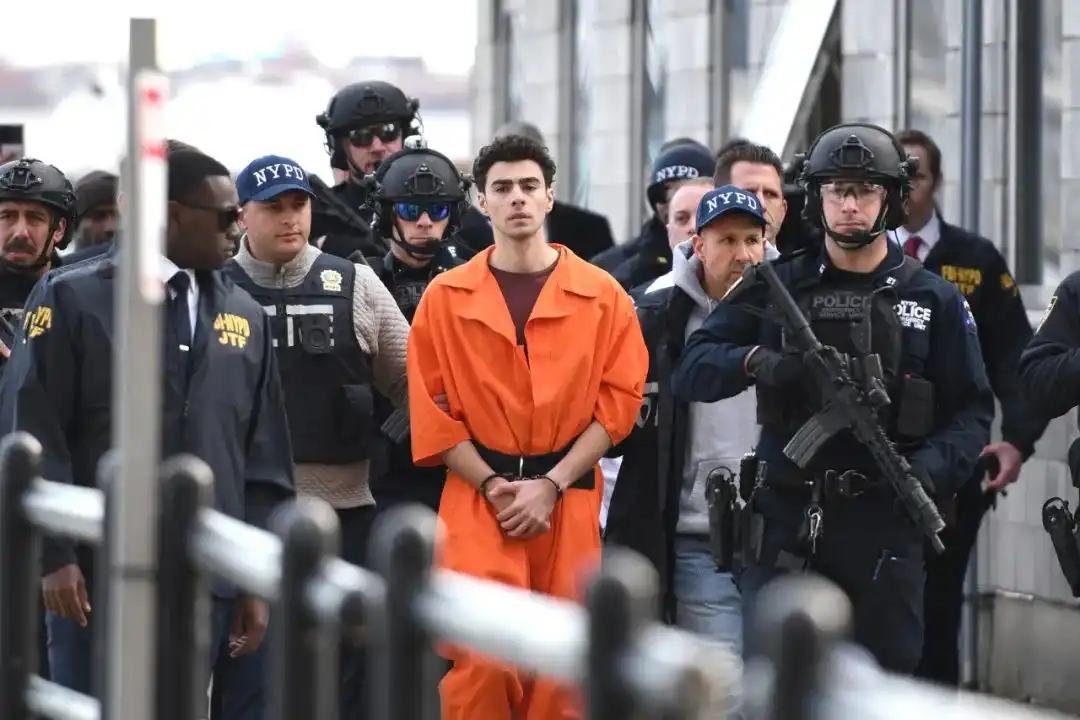
The suspect in the shooting of the CEO, Luigi
That symbolized insurance company CEO became a victim. Healthcare issues are no longer just policy debates, but are eroding the very foundation of social security.
When people begin to use extreme events to express their despair for a system, it indicates that the space for discussion about that system has become severely unbalanced.
When people begin to use extreme events to express their despair for a system, it indicates that the space for discussion about that system has become severely unbalanced.


 Weiliang
