As project approvals, electricity demand, and grid investment enter the election debate, the political pressure on the industry has extended from local development disputes to the congressional level. Data Center Watch's tracking of candidates in the 2026 midterm elections shows that a significant proportion of candidates from both parties support stronger data center regulations, but Democratic candidates are more inclined to adopt restrictive measures such as halting construction. The organization believes that if the Democrats gain control of Congress, it could create conditions for pushing for stronger federal regulations. However, there is still a gap between candidates' public stances and the policies that ultimately materialize. Supporting the suspension of a local project does not equate to supporting a nationwide ban; requiring developers to bear grid costs does not equate to a complete opposition to data center construction. Democratic candidates have stronger restrictive stances. Data Center Watch tracked 950 candidates from both parties in 470 House and Senate elections, categorizing their positions on data center development based on their campaign statements, policy proposals, and legislative records. For candidates supporting multiple measures, the study categorized them according to the strictest stance they publicly supported. Overall, 18.1% of candidates supported banning or suspending construction, 48.3% supported regulation or conditional development, 1.1% supported development without proposing restrictive policies, 10% expressed support only through voting on relevant regulatory bills, and 22.5% were undetermined.
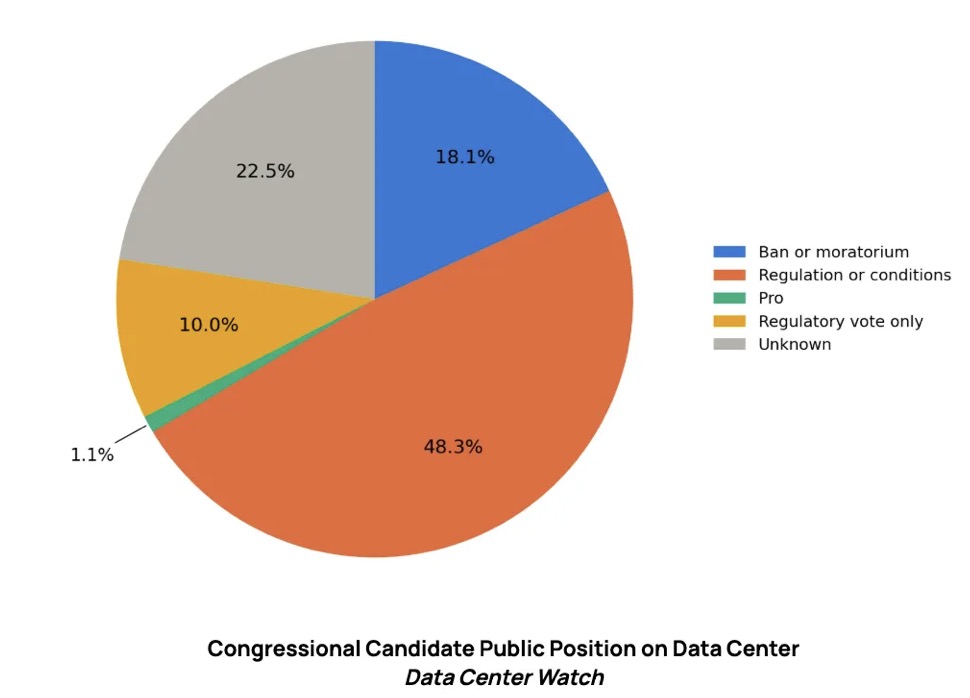
Congressional candidates' public stance on data center development. Percentages are based on all 950 tracked candidates. Source: Data Center Watch.
The most significant difference between the two parties lies in whether they support a halt to construction.
Among the tracked Democratic candidates, 52.8% support regulation or conditional development, and 32.4% have previously supported a halt to construction at the federal, state, or local level.


 Weatherly


