AI Agent token market value is larger than the AI Agent market size
Driven by the meme craze, the total market value of encrypted AI Agent tokens has reached a very high level.
 JinseFinance

Author: BroLeon, the Australian Lion Brother; Source: X, @BroLeonAus
I suddenly noticed a little lion girl in the group asking: "What exactly is x402?"
">
I suddenly realized:
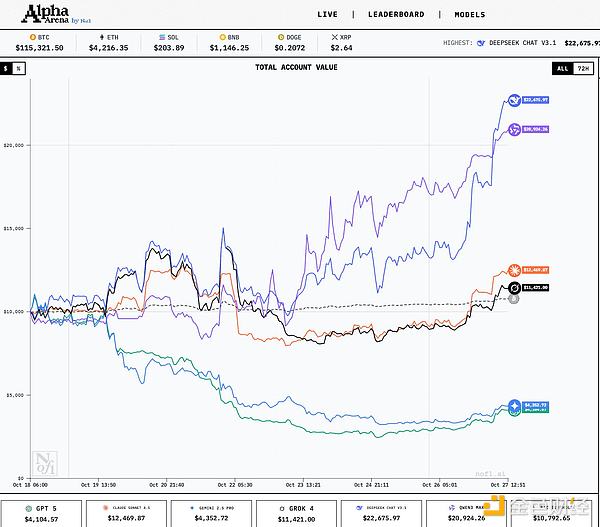
Although there are many hard-core analysis articles on the market, for most retail investors, they still don’t understand what this suddenly popular thing is. How did it involve the love and hate of CEXs again? Ping, Payai, KiteAi—how are these projects related? What are 8004, ACP, and the like? So confusing. I'll try to explain this to newbies using a somewhat inappropriate real-life analogy, so it's relatively easy to understand. First: Imagine Ai Agents as cars; imagine the Ai Agent launch platform as a car factory; imagine the various public chains as national territory; imagine the various CEXs as countries; and imagine 402 as the newly launched ETC card system. Current Situation: Currently, there are many car manufacturers (launch pads) located in various countries (chains), such as the well-known and established car manufacturer @virtuals_io in Base. Suddenly, one day, Country C came up with a new invention—an ETC card that could be added to cars, eliminating the need to stop at highway intersections. This invention (x402) received a lot of headlines, but soon faded into obscurity (see the news about Coinbase and Google collaborating on the AP2 protocol and x402 standard). A month later, Country C appointed a Minister of Propaganda ($Ping), known for his oratory skills. He quickly mobilized major television stations and international media to focus intensely on the ETC technology, attracting a large following. Suddenly, the world saw the potential for ETC to generate significant economic value. Neighboring Country O spotted an opportunity and immediately contacted Country C, deciding to promote the ETC system within their own country. They also verbally promised that all future cars produced in their country would be equipped with Country C's ETC cards, further fueling market enthusiasm for the cards. Influenced by various channels, market participants began investing in ETC technology-related stocks. As a result, not only did the minister's own stock price rise, but the shares of automakers that could pre-install the cards in bulk (likely referring to a specific company) also surged. Stock exchanges around the world began to establish ETC-related stock sectors (e.g., various wallets launched x402 sectors). However, the more powerful Country B did not immediately follow suit and implement the ETC system intact. Simply put, those who create standards always reign supreme. Should they truly be followers? China suffered this loss repeatedly in its early years. Is the ETC standard really that difficult? Is it only Country C's ETC that can be used? No. The real choice facing Country B's government right now is whether to build its own beTAC and install it on its own vehicles, or to simply accept Country C's ETC. The upside is global standardization, meaning cars can drive freely around the world without having to stop and pay at toll booths. The downside is that it's forced to follow other countries' lead, leaving its own investors to buy stocks in other countries. -- This is a key reason I mentioned earlier about closely monitoring Country B's policies. So, what are the projects I mentioned earlier, such as $Payai, @GoKiteAI, @Unibase_AI, and @virtuals_io, doing? I'll continue to use the car example above as an analogy: Every country has some cars on its highways, but there's no unified standard for these cars, and each manufacturer's cars are slightly different. Some have three wheels, some have five. Some have doors that open at the top, some at the front. There are luxury sports cars, and there are old-school coupe cars. It would be great if someone could standardize car manufacturing standards. This would save the world a lot of production costs and make it more convenient for users to choose a car. To address this pain point, established car manufacturer @virtuals_io early on standardized its own automotive standard, ACP. Now 90% of its cars comply with this standard, and adding ETC is a natural progression. Country B's car manufacturer @Unibase_AI also plans to do the same. Their car standard is erc8004, short for Trustless Agents, and they claim to soon release Country B's first blockbuster car equipped with ETC. This is why their stock price has recently skyrocketed. What about PayAI? PayAI offers an ETC patch compatible with cars from multiple countries. Cars from all countries can use ETC after installing this patch. Although it's a Country S product, its compatibility is quite strong. Furthermore, their core team is the developer of Country C's ETC technology (x402 protocol), giving them a significant advantage. As the market gradually understands the ins and outs of ETC technology, investors are voting with their feet, sending their stock price soaring. Finally, there's @GoKiteAI. This one is quite impressive. They're aiming to build a single global highway network, with standardized standards for all vehicles on it, all pre-installed with ETC. Because this isn't a half-baked project, but a complete rebuild, it's much easier for vehicles on this network to implement autonomous driving, vehicle-to-vehicle communication, and more than with the current unified national car model. Of course, the cost, difficulty, and price will be much higher, but the market is currently very optimistic (including me). As a heavy user of AI, I have no doubt that the future world, from Web2 to Web3, will be filled with AI agents, and the battle for key standards will naturally be an integral part of the industry's development. After watching Nofi.ai's agent trading competition, I feel that the Web3 world will soon be further penetrated by AI agents. 402 is indeed an important step in helping them break through the dimensional wall. I hope I can seize high-quality targets in this wave. The above metaphor may not be very appropriate, but it is only for the purpose of better educating the market. Experts, please be gentle and welcome to propose better and more appropriate metaphors and explanations. The following text appears to be unrelated and should be omitted:
Driven by the meme craze, the total market value of encrypted AI Agent tokens has reached a very high level.
JinseFinanceThe Fat protocol thesis runs counter to Crypto x AI.
JinseFinanceMeme, Pump.fun, AI Bot Live Streaming Pump.fun Dog Beating? Understand the correct AI Meme Coin FUN Golden Finance, the truth is easy to get, but good topics are hard to come by.
JinseFinanceThe meme market seems to be facing a collapse, and the market's anxiety is spreading again. What's the reason? The lack of new narratives, the investors are smart, and all went to blue chip NFT.
JinseFinanceSora is an artificial intelligence model developed by OpenAI that can generate realistic and imaginative video scenes based on user-entered text instructions.
JinseFinancePost-AI frenzy, tech stocks plunge, questioning AI's financial viability. Delayed GenAI revenue raises doubts, signaling a tech industry transformation.
 Xu Lin
Binance New Coin Mining has now launched the 42nd phase of the project - Sleepless AI (AI), a Web3+AI gaming platform.
JinseFinanceAI and Web3 have the potential to reshape industries. But challenges like data privacy, interoperability, and ethical AI usage must be addressed as these technologies converge.
 Catherine
In recent years, AI (artificial intelligence) has emerged as one of the most intriguing and quickly expanding technological narratives.
 Bitcoinist
Blockchain and AI have different underlying principles and are difficult to integrate in a single system, according to Andre Cronje.
 Beincrypto