The U.S. Treasury Department's Office of Foreign Assets Control (OFAC) recently announced the addition of 10 individuals and 1 entity to its sanctions list. The Treasury Department stated that these individuals were involved in a network of overseas IT personnel assisting the North Korean government: these individuals used false identities and documents to work for companies in the U.S. and other countries, transferring their earnings to the North Korean government. This action also targets individuals accused of assisting with money exchange, cryptocurrency transfers, and team operations.
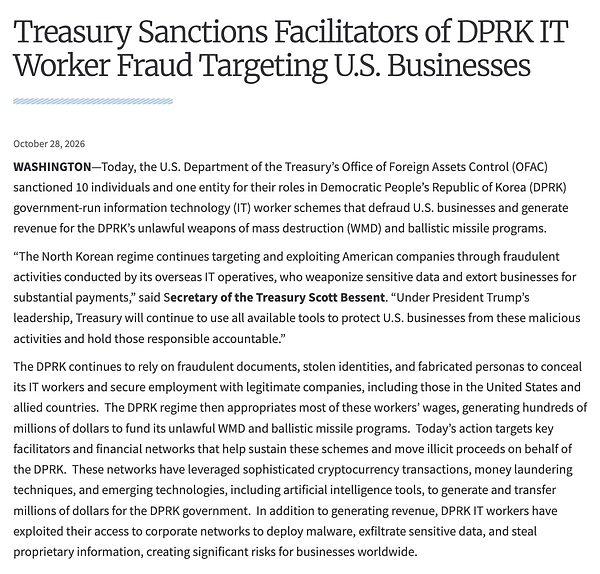
(Source: https://home.treasury.gov/news/press-releases/sb0669)
Sanctions Action
OFAC's sanctions target IT personnel, team leaders, financial intermediaries, and related entities operating in North Korea and Russia.The OFAC sanctions target IT personnel, team leaders, financial intermediaries, and related entities operating in North Korea and Russia.
The OFAC sanctions target IT personnel, team leaders, financial intermediaries, and related entities operating in North Korea and Russia.
The OFAC sanctions target IT personnel, team leaders, financial intermediaries, and related entities operating in North Korea and Russia.
The OFAC sanctions target IT personnel, team leaders, financial intermediaries, and related entities operating in North Korea and Russia.
Sanctioned Address Correlation Analysis
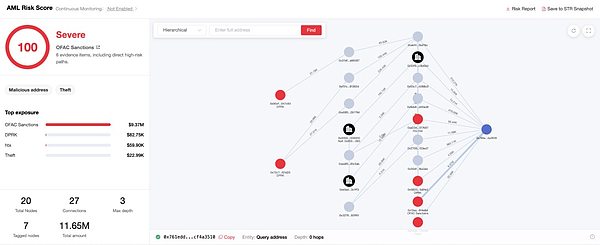
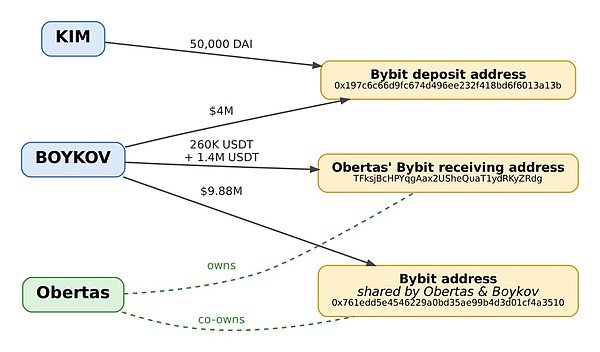
OFAC's updated SDN list that day listed 8 cryptocurrency addresses associated with sanctioned entities, distributed across the Ethereum and TRON chains. According to analysis by MistTrack, an anti-money laundering and on-chain tracking tool under SlowMist, observable connections exist between these addresses: some addresses directly transfer funds to each other, while multiple addresses transfer funds to the same wallet marked as an exchange deposit address. Among them, the Ethereum address 0x761edd5e4546229a0bd35ae99b4d3d01cf4a3510 is listed under both Boykov and Obertas, representing a clear intersection of addresses in the list. OFAC claims that Kim Ki Hyok has transferred nearly $500,000 worth of cryptocurrency to a team of IT personnel operating in Russia since 2024. The Ethereum address associated with him on the list is: 0xE4C9a7F68B1EbA4508f54f07f7378847318dD1A3. This is the "cleanest" and simplest address on the entire list: it only existed for two days and did only one thing, which was to transfer 50,000 DAI to an exchange. The funds first passed through an intermediary address: 0x4865773f498186d838fe47227804a158cbed51de. On August 31st, four addresses successively transferred a total of approximately 100,000 DAI to this intermediary address. On September 9th at 06:46, the intermediary address transferred 50,000 DAI to an address under Kim's name; approximately 6 minutes later, it transferred 0.001 ETH to pay transaction fees. At 09:39 the following day, Kim's address transferred the 50,000 DAI to the Bybit deposit address 0x197c6c66d9fc674d496ee232f418bd6f6013a13b. OFAC claims that Russian national Boykov has assisted entities in exchanging and transferring approximately $3.5 million worth of cryptocurrency since 2024. The Ethereum addresses associated with him in the list include: 0x12Ea80238C7d805D003ce793594e92d84A6f4E8d; 0x761edd5e4546229a0bd35ae99b4d3d01cf4a3510. Analysis of address 0x12Ea8 by MistTrack shows that this address was active from November 10, 2022 to August 25, 2025, earning a total of 49.5767. ETH, 4.7 million USDC, 4.63 million USDT, and 10.22 million DAI. Its token funds have four clear exits: 50.54% (approximately $9.88 million) were directly transferred to BOYKOV/Obertas' Bybit deposit address 0x761edd5e4546229a0bd35ae99b4d3d01cf4a3510, with the largest single transaction being 511,000 USDC on June 12, 2024; an additional 13.67 ETH was also transferred to this Bybit deposit address. 20.47% (approximately $4 million) was deposited into Bybit deposit address 0x197c6c66d9fc674d496ee232f418bd6f6013a13b, totaling 31 transactions. 28.88% (approximately $5.65 million) was deposited into two HTX deposit addresses: 0xee60121c763143a4fb17735ab86b5f0fc5cb1800 and 0x7f78ddf455f9f8eef56c4c9f76b5d53c75dc54ee. The first transaction occurred on June 22, 2023, and it continued uninterrupted for more than two years afterward. 0.05% ($9,870) deposited to Binance deposit address 0x4941c94
81e9bb27b74be4e2b6c6fa349f8be99d5
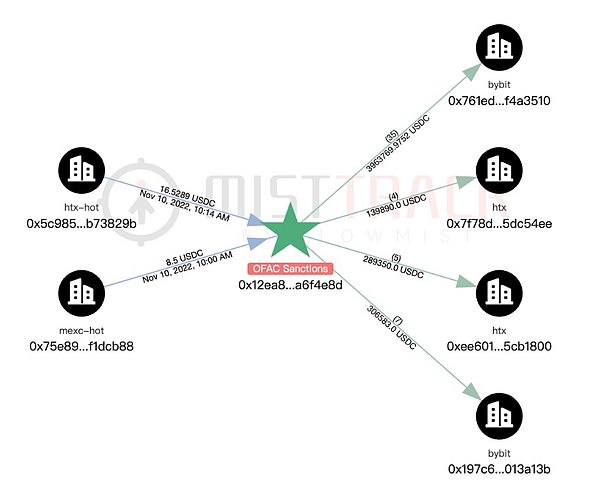
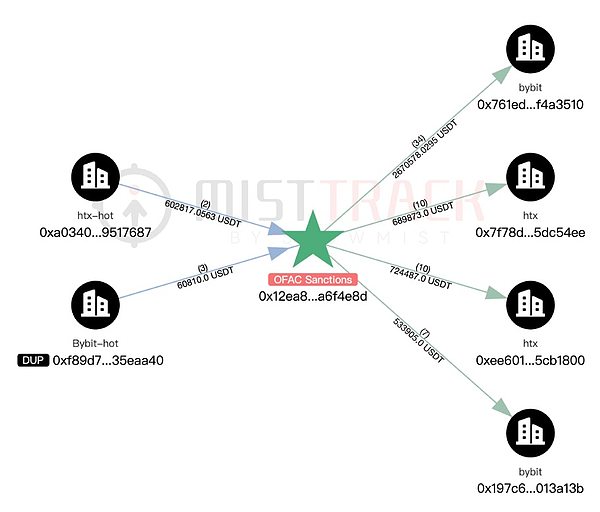
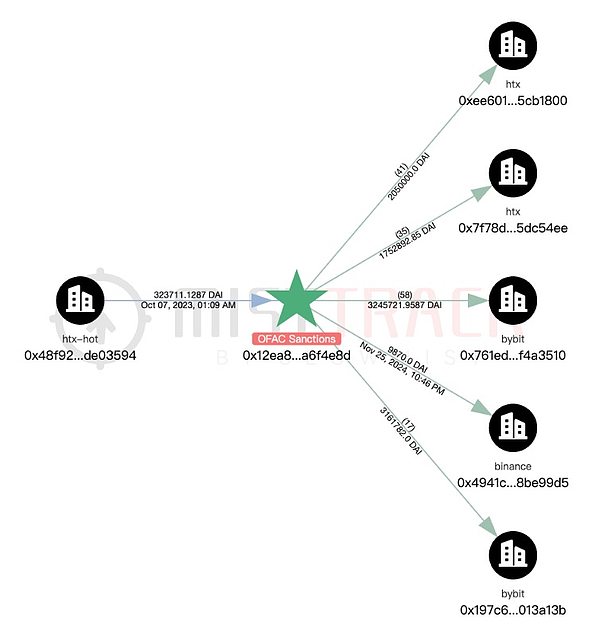
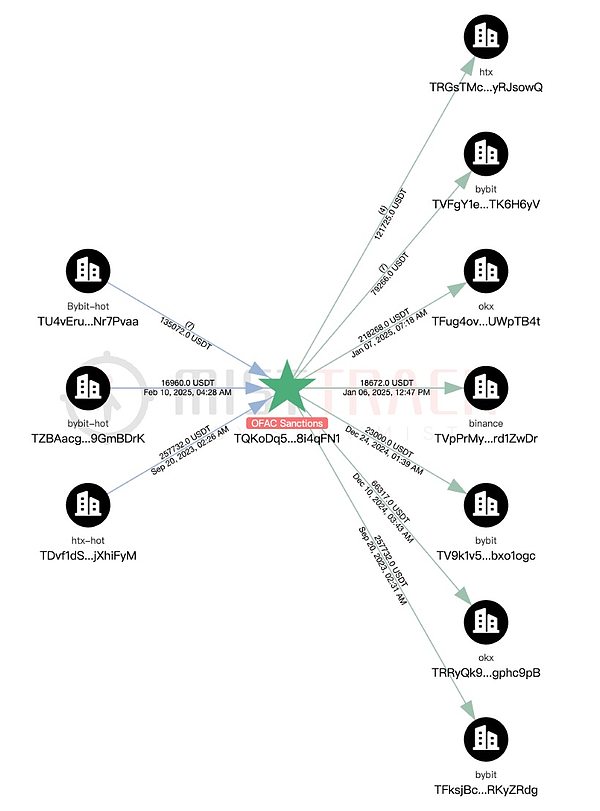
Boykov also has two other TRON addresses: TQKoDq5aCrWAciiNtete5pDYVN38i4qFN1 and TXmrnVgsqCMJncYHTXchuJ5z111BXSj4g3.
Address TQKoDq5aCrWAciiNtete5pDYVN38i4qFN1 is Boykov's first wallet on TRON; it's small in size but has a clear direction.
Address TQKoDq5aCrWAciiNtete5pDYVN38i4qFN1 is Boykov's first wallet on TRON; it's small in size but has a clear direction.
From December 2, 2022 to December 21, 2025, a total of 873,675 USDT was received. The largest single outflow of 257,732 USDT was directly paid to Obertas' Bybit deposit address TFksjBcHPYqgAax2USheQuaT1ydRKyZRdg. The remaining funds were distributed in various locations.
The address TXmrnVgsqCMJncYHTXchuJ5z111BXSj4g3 is Boykov's more concentrated and later-activated wallet on Tron, and also the most direct connection between him and Obetas: from March 21, 2024 to December 6, 2025, it earned a total of 1.62 million USDT. Within three months, it transferred 1.4 million USDT (86.2%) of it in 7 transactions to Obetas' Bybit deposit address TFksjBcHPYqgAax2USheQuaT1ydRKyZRdg. Its funding primarily comes from medium-sized clients. These two direct transfers between the TRON address and TFksjBcHPYqgAax2USheQuaT1ydRKyZRdg provide on-chain evidence of the connection between addresses under Boykov's name and addresses under Obertas' name. In addition to the Ethereum address co-listed with Boykov, OFAC also lists three TRON addresses under Obertas's name: TCV4qdpTxoMyqkn7sSPeRrXmhH5JFxMvmT TQCBdU4K92oxLAkzwexZpqVZJhmPbtLYMm The address TCV4qdpTxoMyqkn7sSPeRrXmhH5JFxMvmT was marked as an HTX deposit address by MistTrack, earning a total of 9.16 million USDT in the 11 months from September 10, 2024 to August 28, 2025. The address TQCBdU4K92oxLAkzwexZpqVZJhmPbtLYMm is an address with multiple inflows and outflows of funds. Analysis shows that it received approximately 11.09 million USDT between November 7, 2022 and February 25, 2026, and transferred funds to other addresses. Of these, approximately 2.58 million USDT was transferred to Obertas' own Bybit deposit address TFksjBcHPYqgAax2USheQuaT1ydRKyZRdg, and approximately 1.08 million USDT was transferred to Obertas' own HTX deposit address TCV4qdpTxoMyqkn7sSPeRrXmhH5JFxMvmT. These two transfers link TQCBdU4K92oxLAkzwexZpqVZJhmPbtLYMm to two other addresses listed on the sanctions list and registered under Obertas' name. The largest single transaction among the funding sources comes from TEvYL8PU8EiC84kAoN67ZhHyUgPfvgVoD8, amounting to 1,242,541 USDT. The transaction history of this address is quite complex. The address TFksjBcHPYqgAax2USheQuaT1ydRKyZRdg has been flagged by MistTrack as a Bybit deposit address. This address received approximately 31.02 million USDT between March 7, 2023 and October 31, 2026. The second largest source of its funds is Obertas' own wallet address TQCBdU4K92oxLAkzwexZpqVZJhmPbtLYMm (2.58 million USDT), and the sixth largest source is TXmrnVgsqCMJncYHTXchuJ5z111BXSj4g3 under Boykov's name (1.4 million USDT). Based on records from both the Ethereum and TRON chains, several address relationships can be confirmed or observed: Ethereum address 0x761ed is listed under both Boykov and Obertas; approximately $9.88 million was transferred to Boykov through address 0x12Ea8. Both Boykov and Kim's Ethereum addresses transferred funds to address 0x197c6. This address is not among the 8 addresses announced by OFAC this time. Both TRON addresses under Boykov's name have transferred USDT to the Bybit deposit address TFksj under Obertas' name. TQCBd under Obertas transferred USDT to his own Bybit deposit address TFksj and HTX deposit address TCV4q.
How North Korean IT Personnel Networks Operate
These activities often begin with a seemingly ordinary remote job: the company posts a position, receives resumes, conducts interviews, then sends out a computer and pays a monthly salary. The risk is that the person sitting on the other end of the screen may not be the person listed on the resume.
Some North Korean IT personnel use stolen, borrowed, or forged identity information to apply for remote jobs, and also prepare email addresses, social media accounts, and professional resumes.
Some North Korean IT personnel use stolen, borrowed, or forged identity information to apply for remote jobs, and also prepare email addresses, social media accounts, and professional resumes.
Some people use VPNs, proxy networks, or accomplices located in the target country to conceal their true location. Computers shipped by companies may first be delivered to local individuals or "laptop farms," and then remotely operated by overseas personnel. In this way, the address, identity information, and device location seen by the company may not reflect the actual location of the workers. These arrangements typically require multiple people working together. Some provide or rent out identities, some collect and store equipment, some assist in opening payment accounts, and others manage teams or transfer income. Those providing assistance may know who they are helping, or they may simply believe they are providing ordinary collection, networking, or outsourcing services. Income typically arises as remote work salaries or project payments. Fund transfers may pass through third-party bank accounts, payment platforms, and cryptocurrency addresses; some of the individuals named in this OFAC sanction are accused of assisting with cryptocurrency exchange, fund transfers, or team operations. For businesses, the issue extends beyond simply verifying the authenticity of employee identities. Once remote personnel gain access to company accounts and equipment, they may have access to codebases, customer data, internal tools, or other systems. Some individuals, after being discovered, have used their previously acquired access to steal company data and demanded payment under the pretext of disclosing or withholding the data. Therefore, for enterprises, a more practical approach is to examine identity verification, equipment delivery, contractor management, and system permissions together: confirm who is working and what they can access. The risks posed by North Korean IT personnel can extend from the recruitment process all the way to equipment and system permissions. When verifying candidates, in addition to checking their identity and resume, it is also important to ensure that their location, equipment delivery address, and payment account match. For remote employees, outsourced personnel, and third-party service providers, it is essential to continuously verify who is actually using the equipment, which systems their accounts can access, and avoid granting permissions beyond what is required for their work. For cryptocurrency exchanges, custodians, and payment service providers, the addresses of individuals, entities, and wallets on the OFAC list should also be included in routine screening. SlowMist has flagged the sanctioned addresses involved in this operation; MistTrack can be used to query address tags and track fund flows. SlowMist KYT supports continuous transaction monitoring and configurable risk control rules, providing assistance to institutions in identifying and reviewing on-chain risks.


 Weiliang


