Source: Crypto In America; Compiled by: Jinse Finance Claw
The midterm elections were a resounding victory for the Democrats.
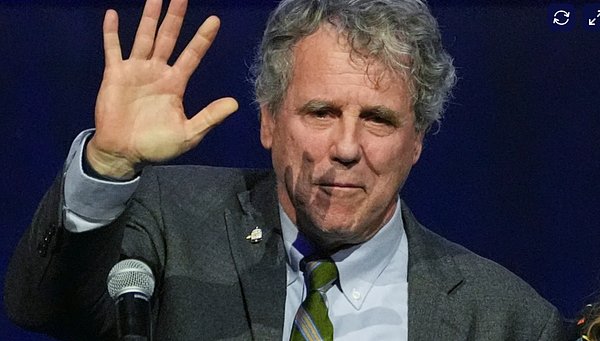
Sherrod Brown defeated Jon Husted in the special U.S. Senate election in Ohio.
(AP Photo/Joshua A. Bickel, File Photo) Key Takeaways: This midterm election was largely a disastrous night for Republicans and the crypto industry—despite the industry's investment of over $170 million this election cycle. Democrats flipped both houses of Congress, several key crypto industry allies lost seats, and some of the industry's most outspoken critics are poised to take control of committees overseeing digital assets. The Biggest Winners and Losers: Sherrod Brown is back. Over $64 million in crypto industry funding couldn't keep the Ohio Democrat out of the Senate. Brown, a longtime crypto skeptic and former chairman of the Senate Banking Committee, could once again lead a committee with jurisdiction over digital assets, although Senate seniority rules could complicate the path. Meanwhile, Senator Elizabeth Warren (a Democrat from Massachusetts)—another of the industry's fiercest critics—may take the gavel on the Senate Banking Committee, where she currently ranks first among Democrats. The crypto industry has lost key House allies. Pro-crypto Republicans—Bryan Steil of Wisconsin, Zach Nunn of Iowa, and Ann Wagner of Missouri—have all lost their seats. New York Republican Mike Lawler also conceded defeat to Democrat Cait Conley, though the Associated Press has not yet announced the election results as delayed ballots are still being counted. Senator Kirsten Gillibrand's influence rises, Scott will lose his gavel. Senator Kirsten Gillibrand (a Democrat from New York) is a leading Democratic voice on crypto policy and chair of the Democratic Senate Campaign Committee. She helped the Democrats win a stronger-than-expected Senate majority, thus increasing her influence within the party. Meanwhile, Senator Tim Scott (a Republican from South Carolina), chair of the National Republican Senate Committee, is expected to move from chair of the Senate Banking Committee to ranking member after the Republicans lost control of the Senate. French Hill retains his seat but loses his gavel. The House Financial Services Committee chairman appears poised for a narrow re-election in Arkansas, though his election results are still pending. But with Democrats controlling the House, Hill is expected to become the ranking committee member, and Representative Maxine Waters (a Democrat from California) will return as chair. This isn't all bad news for the crypto industry. Nebraska Senator Pete Ricketts (a Republican from Nebraska)—a pro-crypto member of the Banking Committee—won re-election. Meanwhile, Representative Andy Barr (a Republican from Kentucky) won the vacant seat in Kentucky, replacing Mitch McConnell. Barr is another industry ally and a potential contender for the Senate Banking Committee seat. What does this mean for the crypto industry? This outcome creates a political landscape in Washington that is drastically different from one it helped shape in 2024. After two years of strong Republican support, the crypto industry now faces Democratic control of both the House and Senate, the defeat of several key Republican allies, and a reshuffling of leadership on the committee responsible for drafting digital asset legislation. This almost certainly means that the chances of the cleansing bill becoming law are now close to zero, at least in its current form. And even if legislation does eventually be passed, it will likely reflect more of the changes that Democrats have been pushing for. This also means that congressional oversight of Republicans and the Trump administration is bound to escalate. Last night we saw a preview: incoming House Oversight Committee Chairman Robert Garcia (a Democrat from California) tweeted just two words: “LAWYER UP”.
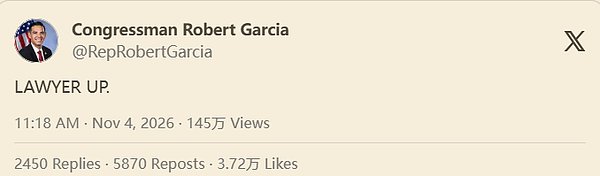
For the crypto industry, increased oversight could mean the Trump administration's ties to the industry will be under the spotlight—including the president's own crypto business, potential conflicts of interest, and regulatory decisions made by agencies like the SEC and CFTC.
As Democrats scrutinize the industry, which has enjoyed far more favorable treatment in Washington under Trump, more hearings, investigations, and requests for documentation are expected.


 Weatherly


