Is the success of Robinhood Chain a boon or a bane for ETH?
The surge in Robinhood Chain transaction volume could be a major boon to Ethereum, but only if the view that "ETH is currency" holds true.
 JinseFinance


DEX Trading Volume
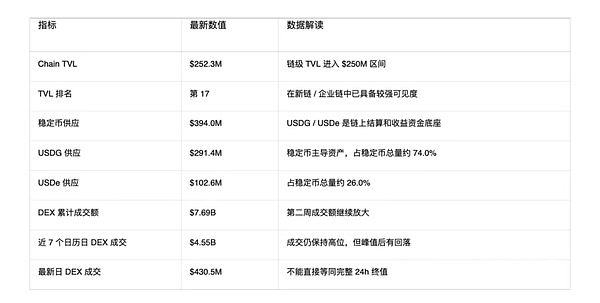
Robinhood Chain's DEX trading volume experienced explosive growth after July 8th, reaching a peak on July 11th.
Robinhood Chain's DEX trading volume experienced explosive growth after July 8th, reaching a peak on July 11th.
TVL Sources
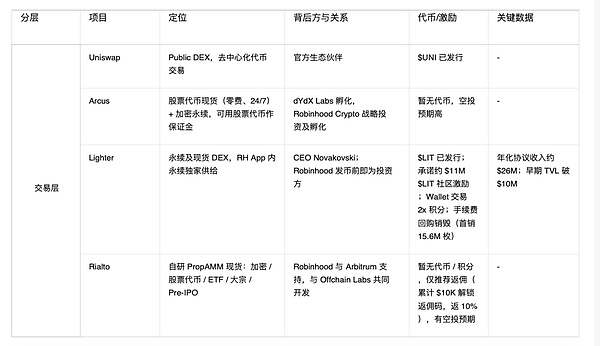
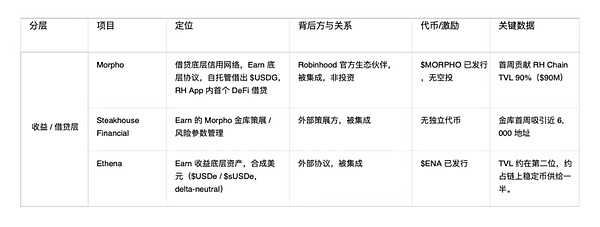
The latest protocol TVL breakdown shows that Robinhood Chain's core TVL remains lending, DEX, derivatives/bridges, and yield. Morpho Blue currently has a TVL of approximately $156.8M, making it the largest single protocol; Uniswap V2/V3/V4 combined has approximately $75.6M; Arcus Perps, Spark Savings, and Lighter Bridge have also entered the tens of millions of dollars level.
TVL Sources
The latest protocol TVL breakdown shows that Robinhood Chain's core TVL remains lending, DEX, derivatives/bridges, and yield.
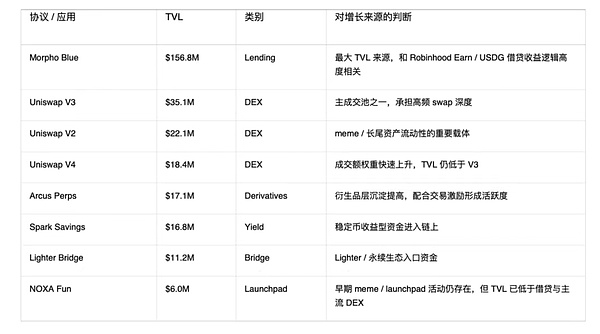
Due to potential differences in terminology and double counting between protocol TVL aggregation and Chain TVL, a more reasonable understanding is that: Morpho is the main source of funds, Uniswap is the main trading platform, and stablecoin yields and derivatives form the second growth curve.
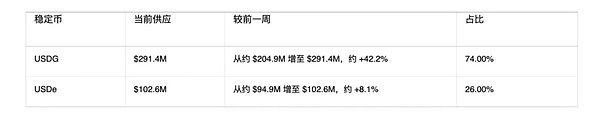
Among them, USDG has become the foundation of on-chain funds, and its expansion is particularly crucial. It is both the underlying narrative asset of Robinhood Earn and a major part of Morpho's lending and stablecoin yield strategy.
Among them, USDG has become the foundation of on-chain funds, and its expansion is particularly crucial. It is both the underlying narrative asset of Robinhood Earn and a major part of Morpho's lending and stablecoin yield strategy.
Stock Tokens
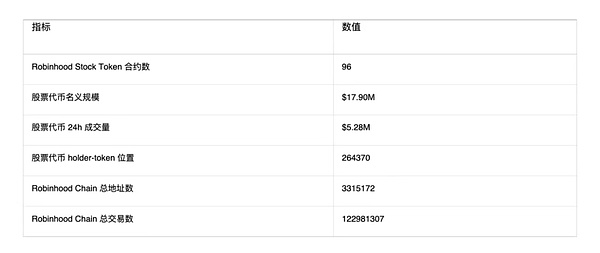
Robinhood's official contract page lists stock tokens as standard ERC-20 and provides contract addresses. Reference data is as follows:
The surge in Robinhood Chain transaction volume could be a major boon to Ethereum, but only if the view that "ETH is currency" holds true.
JinseFinanceRegarding L2 networks, Robinhood Chain once again confirms the fact that they contribute negligible value to Ethereum.
JinseFinanceSaying goodbye to the old "coin issuance" model, physical giants like Robinhood are betting on Ethereum's L1+L2 architecture, and the real on-chain business landscape is rapidly reshaping the new crypto landscape.
JinseFinanceThe real focus of continued observation is not whether these Meme coins can maintain their market capitalization, but whether the underlying infrastructure supporting this wave of speculative activity can retain the new users attracted by Meme coins after the market downturns.
JinseFinanceRobinhood, DeFi, Project, Robinhood Chain is a hit: Why are these DeFi projects the real beneficiaries? Jinse Finance, Four beneficiaries each reaping different benefits.
JinseFinanceRobinhood initially created its Layer 2 network to serve legitimate on-chain finance, but speculative players have taken a different development path.
JinseFinanceJinse Finance launches the "Jinse Web3.0 Daily," providing you with the latest and fastest news on AI, DeFi, DAO, NFT, and the metaverse industry.
JinseFinanceAgentic commerce is the establishment of a completely new economic order dominated by machines. It is not as simple as "AI automatically placing orders," but rather a reconstruction of an entire cross-entity chain.
JinseFinanceTokenized stocks offer direct access to the $134 trillion global stock market and address existing pain points. This combination of existing market demand and addressable pain points makes them the real-world asset class with the greatest potential for mass adoption.
JinseFinanceWith the launch of Dogs new coin mining on Binance, the attention to the TON ecosystem has reached a new high. DOGS is a MEME token that embodies the spirit and culture of the Telegram community. The official announcement said that a large number of users are waiting for airdrop claims.
JinseFinance