Bitcoin bulls
Recently, Michael Saylor, founder of MicroStrategy, said in an interview: "Bitcoin is becoming the world's reserve capital network. People realize that Bitcoin is better than real estate, better than stocks, and more worthy of long-term holding than a certain company or real estate."
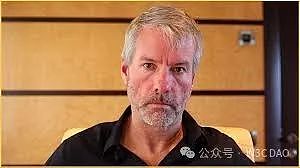
In addition, Michael Saylor also hinted that after his death, his Bitcoin private key will be destroyed to ensure that his Bitcoin will never be sold, and called it a "proportional contribution" to all Bitcoin holders.
It can be said that he is an unswerving Bitcoin bull.
Michael Saylor also said at the ICR Conference in Orlando that companies should turn to Bitcoin investment because traditional bonds such as government bonds are "poison." He emphasized that Bitcoin has outperformed bonds since the company began implementing its Bitcoin investment strategy in 2020, and suggested that companies view Bitcoin as digital capital.
MicroStrategy recently increased its holdings of Bitcoin again at $243 million, marking the tenth consecutive week of purchases. The company currently owns about $41 billion in Bitcoin, more than 2% of the total supply of Bitcoin.
He also criticized companies such as Microsoft and Nvidia for failing to follow MicroStrategy's Bitcoin investment strategy. Saylor encouraged companies to "embrace the future" and said that "the only consequence of taking action is to get rich."
Entrepreneur who graduated from a prestigious school
Saylor was born on February 4, 1965 in Lincoln, Nebraska, USA. His father was an Air Force sergeant, so he spent his childhood in air force bases around the world. When Saylor was 11 years old, his family settled in Fairborn, Ohio, near Wright-Patterson Air Force Base.
In 1983, Saylor entered the Massachusetts Institute of Technology (MIT) with a scholarship from the Air Force Reserve Officer Training Program.
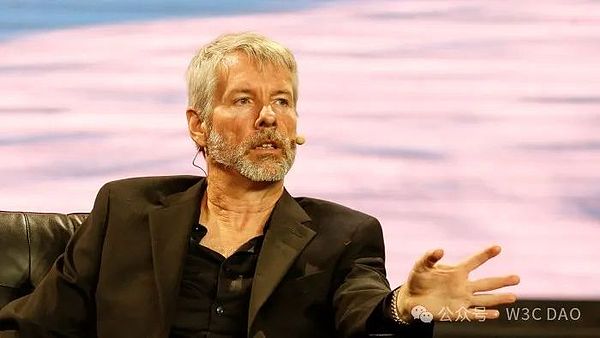
He then joined the Theta Delta Chi fraternity, through which he met future MicroStrategy co-founder Sanju Bansal. He graduated from MIT in 1987 with a double degree in aerospace engineering and science, technology and society.
But things didn't go as planned. Due to a medical condition, he couldn't become a pilot, so he found a job in 1987 working for a consulting firm, The Federal Group, Inc., focusing on developing computer simulation models for a software integration company.
In 1988, Saylor became an in-house consultant for DuPont, where he developed computer models to help the company predict changes in its key markets. The simulation predicted a recession in many of DuPont's major markets by 1990.
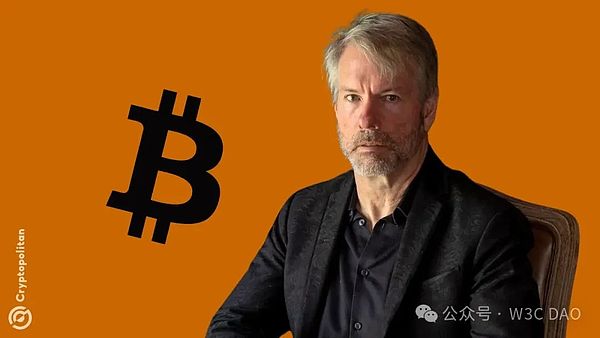
Using the funds obtained from DuPont, Saylor founded MicroStrategy with his MIT fraternity brother Sanju Bansal.
The company initially developed software for data mining and later focused on software for business intelligence. In 1992, MicroStrategy signed a $10 million contract with McDonald's to develop an application for analyzing the effectiveness of its promotions. The contract with McDonald's made Saylor realize that his company could create business intelligence software that would allow companies to use their data to gain insights into their business.
Later, Saylor took the company public in June 1998, offering 4 million shares at $12 per share. On the first day after the listing, the stock price doubled. By early 2000, Saylor's net worth reached $7 billion, and Washingtonian reported that he was the richest person in the Washington, D.C. area.
Bitcoin Evangelist
Saylor was not interested in Bitcoin at first. He once tweeted in 2013 that Bitcoin's days were numbered because it faced government regulation and competition. He also admitted that he did not take the time to understand the principles and advantages of Bitcoin at the time.
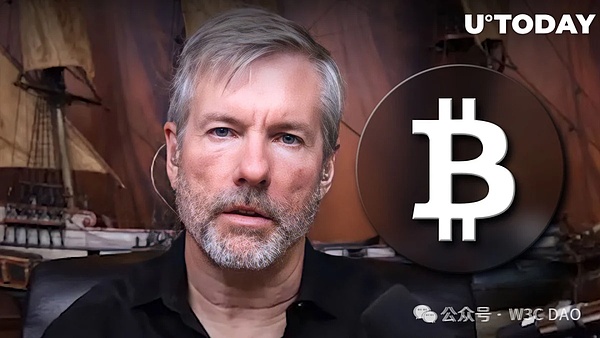
It was not until 2020 that Saylor began to change his mind about Bitcoin.
He was affected by the COVID-19 pandemic and the US government's fiscal stimulus policy. He believed that the value of the US dollar was being diluted, and traditional value-stored assets, such as gold and bonds, could not provide adequate returns and protection.
Saylor began looking for a new asset that could serve as a wealth reserve for his company MicroStrategy. He re-examined Bitcoin and found that it had many advantages that gold did not have, such as digitalization, programmability, divisibility, verifiability, mobility and scalability.
Saylor spent hundreds of hours studying Bitcoin, reading Bitcoin's white paper, related books and articles, and watching videos and podcasts from the Bitcoin community. He also communicated with some Bitcoin experts and leaders, such as Coinbase CEO Brian Armstrong, Bitcoin Core Developer Adam Back, Bitcoin Educator Andreas Antonopoulos and Bitcoin Advocate Anthony Pompliano.
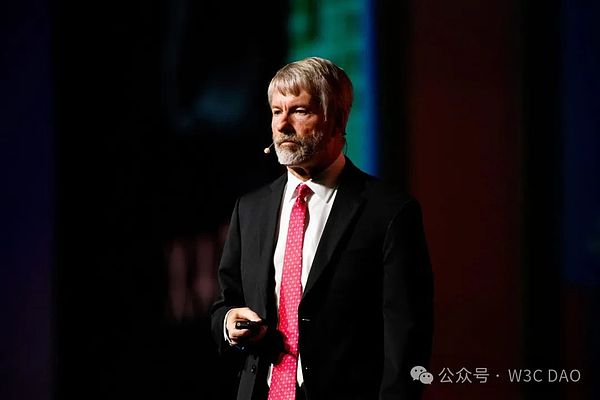
Through these studies and conversations, Saylor gradually became a Bitcoin enthusiast and supporter.
In August 2020, he announced that his company MicroStrategy would convert most of its cash reserves into Bitcoin, a historic move that attracted the attention of the entire financial community.
Since then, Saylor has been increasing his Bitcoin holdings, both through his company and personally. He has also become a Bitcoin evangelist, actively promoting the value and potential of Bitcoin on various media and platforms, encouraging other companies and investors to join the Bitcoin revolution.
Written in the end
With the rapid advancement of technology and the uncertainty of the global economy, the world is entering a new digital era. Bitcoin and other cryptocurrencies are becoming an important part of the financial field, changing the traditional way of wealth storage and investment.
Michael Saylor's story shows how to seize the opportunities brought by emerging technologies through in-depth research and courageous decisions in moments of change. In the future, as more companies and individuals accept and adopt Bitcoin, we have reason to believe that cryptocurrency will further consolidate its position in the global financial system.
Looking to the future, Bitcoin is not only a tool for wealth preservation and appreciation, but also an engine for innovation and economic development. Its decentralization, transparency and security have laid a solid foundation for the future financial ecosystem. Let us look forward to a more open, inclusive and efficient financial future, in which everyone can benefit from technological progress and economic growth.


 Catherine
