RepubliK and TON: Pioneering a User-Friendly Web3 Social Sphere
RepubliK partners with TON to integrate familiar social media aspects into a user-friendly Web3 platform, emphasizing engagement and flexibility.
 Alex
Alex

The word "stable" is truly magical in the financial world. Especially in the volatile cryptocurrency market, stablecoins are like a safe haven in the storm, promising to provide investors with a piece of pure land. However, is there really a solid support behind this promise? The "Stablecoin Bill" passed by the Hong Kong Legislative Council in the third reading on May 21, 2025 is precisely to provide a regulatory answer to this question.
Imagine that you hold a token that claims to be worth a constant value of 1 US dollar or 1 Hong Kong dollar. When the global financial market is turbulent, do you really believe that this promise can be fulfilled? Especially when we see from the review report of the Hong Kong Monetary Authority's virtual banks that, none of these fully licensed financial institutions, such as Hong Kong virtual banks, have made a profit since their opening in 2020.
This can't help but raise a soul-searching question: If even virtual banks with full-scale banking business rights are difficult to make a profit, then how will stablecoin issuers with more limited business scope ensure their own profitability and deliver on their promise of "stability"? This is not only a question of whether supervision can be in place, but also a question of whether financial mathematics and business models can be established.
Aiying's members are a compliance consulting team that has worked in both parties A and B. They are well versed in the golden mean of balancing industry regulatory compliance and actual business models. While the market has high expectations for stablecoins, we hope to take you through the real predicament of virtual banks in Hong Kong, directly hit the core contradictions of the new stablecoin regulatory rules, reveal the survival challenges faced by stablecoin issuers, and put forward practical suggestions for all parties involved. We are neither to sing the praises of innovation nor to be blindly optimistic, but to find a wise path forward between hope and reality.
"Those who will dominate the future of finance will not be those passionate dreamers, but those pragmatic people who have dreams and can handle risks."
In 2019, when the Hong Kong Monetary Authority issued the first batch of virtual bank licenses, the market was jubilant. The spring of financial technology seems to have arrived, and Hong Kong will usher in a digital revolution in retail banking. However, six years later, the trumpet of revolution is mixed with financial pressure that cannot be ignored.
According to the Hong Kong Monetary Authority's "Virtual Bank Review Report" in August 2024, the eight virtual banks present a complex picture of ice and fire:
Hot customer growth:
In just a few years, virtual banks have attracted a total of 2.2 million customers, accounting for 8.8% of the total number of retail banking customers in Hong Kong, which is impressive. Behind this number is the new generation of users' eager demand for digital financial experience.
Cold financial performance:
With total assets of HK$49.9 billion and deposits of HK$37.5 billion, they only account for 0.3% of Hong Kong's HK$6.5 trillion retail bank deposit market.
All eight banks suffered losses. Although the overall loss narrowed by 15% from 2021, it is still far from the profit break-even point.
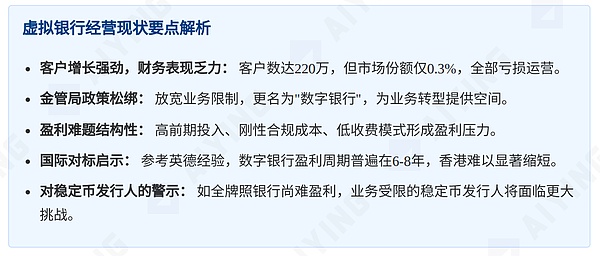
This dual paradox of "users and profits" is quite intriguing: on the one hand, virtual banks have performed well in user acquisition; on the other hand, these users have failed to bring corresponding profit contributions to banks. This may reflect the prevalence of the current "free lunch" culture in digital finance, where users are accustomed to low-cost or even zero-cost financial services, while banks have to bear high technology investment and compliance costs.
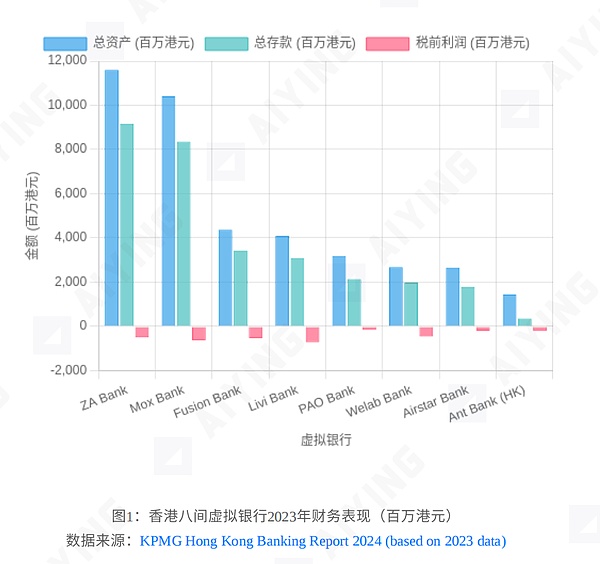
As can be seen from the above figure,even the largest ZA Bank and Mox Bank are facing losses of hundreds of millions of Hong Kong dollars. This reminds people of the common "burning money for market" strategy in the Internet industry, but the problem is: the financial industry is not an ordinary Internet industry, and its requirements for capital strength and sustained stability are higher.The sustainability of the strategy of simply relying on "losses for scale" is questionable.
MA's relaxation: an opportunity for virtual banks to transform into "digital banks"
Faced with the difficult situation of virtual banks, the MAS has shown a pragmatic side. Paragraph 73 of the Review Report proposes two important adjustments:
Loosening of business scope:
Removing the restriction of "mainly engaging in retail banking business" to provide space for virtual banks to develop commercial banking and digital asset-related businesses.
Redefining identity:
Plans to rename "virtual banks" as "digital banks" to give them a more professional and broader image of financial institutions.
These adjustments are not just word games, but a positive response of regulators to market realities. The word "virtual" often gives people the impression of being unrealistic and lacking physical support; while "digital" emphasizes technology-driven and modern, which helps to improve market recognition.
More importantly, the expansion of business scope may open up new sources of income for digital banks . Imagine if these banks are allowed to participate more deeply in the Web3 financial ecosystem, carry out more digital asset-related services, or provide customized digital financial solutions for corporate customers, their profit prospects may be substantially improved.
The profitability dilemma of virtual banks is by no means unique to Hong Kong. The international experience cited in the Review Report shows that challenger banks in the UK take an average of 6 years to make a profit, and a large German digital bank is expected to take 8 years to make a profit.
Then the question is: Is it possible for Hong Kong to "overtake on the curve" and create a shorter profit cycle than these mature markets? Let's face it:
Rigid cost structure:
Investment in fintech infrastructure is upfront and expensive, including core system construction, network security investment, API development, data analysis capabilities, etc.
High compliance costs:
As an international financial center, Hong Kong's regulatory standards for banks are no lower than any other region. The ongoing costs brought about by compliance requirements such as anti-money laundering, know your customer (KYC), and risk management are difficult to significantly reduce.
Fierce competition for talent:
Compound talents with financial professional background and technical capabilities are scarce and expensive. As a high-cost region, this problem is particularly prominent in Hong Kong.
Traditional banks fight back strongly:
Faced with the challenges of virtual banks, traditional banks such as HSBC and Standard Chartered are also actively transforming to digitalization, and remain competitive with their brand advantages and large customer base.
Take a medium-sized virtual bank as an example. The annual technical operation budget can reach hundreds of millions of Hong Kong dollars. In addition to marketing, human resources and compliance costs, a large active user base and average revenue per user (ARPU) are required to achieve a balance between income and expenditure. However, the current free service model and limited cross-selling capabilities make this goal difficult to achieve in the short term.
The plight of virtual banks constitutes a severe warning to stablecoin issuers that are about to enter the market: if banks with full licenses face such challenges, how will stablecoin issuers with a narrower business scope make a profit? This question cannot be avoided.
On May 21, 2025, the regulatory framework for stablecoins in Hong Kong finally surfaced. The passage of the Stablecoin Ordinance and the subsequent release of the Draft Regulatory Guidelines for Licensed Stablecoin Issuers marked the official entry of Hong Kong into a new era of stablecoin regulation. However, this regulatory framework is not only a response to market development, but also reflects the wisdom of regulators in seeking a balance between innovation and risk.
The core of the stablecoin regulatory framework can be understood with a simple metaphor: the reserve assets that the regulator requires the issuer to maintain are like a bucket, which must be filled at all times (face value coverage), but can only contain "clean water" (high-quality assets).
1. The material of the "bucket": reserve asset management
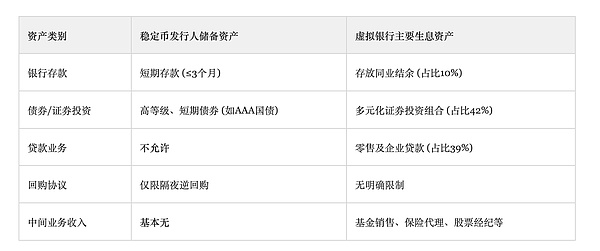
The HKMA has set extremely strict restrictions on the scope of reserve asset investments by stablecoin issuers. The investable categories specified in paragraph 2.2.1 of the Draft Guidelines are basically limited to:
short-term bank deposits (≤3 months)
high-rated short-term bonds (such as government bonds)
overnight reverse repurchases collateralized by eligible bonds
specific funds that specialize in investing in the above-mentioned assets
This restriction is like tying the hands of investment managers. Imagine if an asset management expert can only invest in these categories, he is likely to complain: "This is not asset management, this is asset custody!"
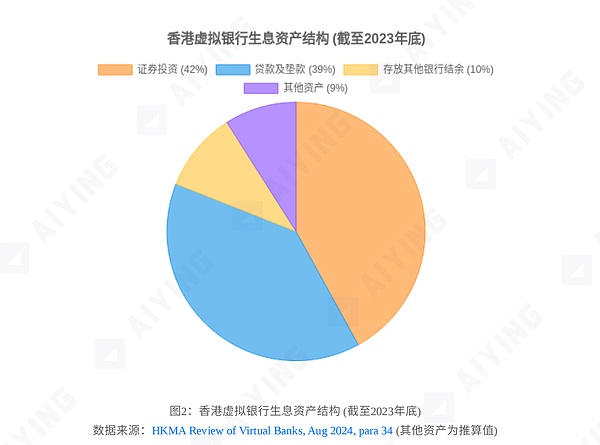
Compare the asset allocation freedom of virtual banks: 39% of loan business (which can obtain higher interest spreads), 42% of diversified securities investment (which can pursue higher returns), and commission income from agency sales of funds, insurance, securities brokerage, etc. The following table clearly shows the vast difference between the two types of institutions in asset management:
2. "Water level" requirements: stable par value principle
Paragraph 2.1.1 of the "Draft Guidelines" cites the requirements of the regulations,
text="">The licensee must ensure that the market value of the reserve assets is not less than the face value of the issued stablecoin at any time. This is a seemingly simple but extremely strict requirement: no matter how the market fluctuates, the water in the bucket cannot be lower than the scale line.In reality, even the safest assets are subject to price volatility risks.
For example, in 2022, U.S. Treasuries, which were considered "risk-free", experienced significant price fluctuations, with the price of 10-year Treasury bonds falling by more than 15% in one year. In such extreme cases, stablecoin issuers must be ready to inject additional funds at any time to meet the "stable face value" requirements, which poses a huge test of capital strength. 3. Isolation of the "reservoir": trust arrangement Paragraph 2.4.2 of the Draft Guidelines requires that the reserve assets be strictly isolated from the issuer's own assets through a trust arrangement. This requirement ensures that even if the issuer faces operating difficulties or even bankruptcy, the reserve assets will not be diverted to repay other debts of the issuer. This is similar to the customer asset isolation system in the securities industry, which protects the rights and interests of investors. However, it is worth noting that asset isolation does not mean value protection; isolated assets may still depreciate due to market fluctuations.
4. Treatment of "overflow" and "depletion": ownership of reserve asset gains and losses
Paragraph 2.4.3 of the Draft Guidelines provides thatall gains or losses arising from the management of reserve assets belong to the issuer, not the stablecoin holders. This provision establishes an interesting asymmetric mechanism:
"Overflow" situation (harvest mechanism):
When the value of reserve assets exceeds the internal buffer level, the excess can be "harvested" to the issuer's own account on a regular basis. This is a potential source of revenue for the issuer.
"Depletion" situation (replenishment responsibility):
When the value of reserve assets falls below the face value of the stablecoin, the issuer must inject additional funds to ensure that the "bucket is full". This is a rigid responsibility of the issuer. This mechanism makes the issuer of stablecoins face a situation of "limited returns and unlimited risks": in a good market environment, the yield of reserve assets is capped due to investment scope restrictions; but in times of market turmoil, the issuer needs to bear the potential unlimited margin call liability. 5. Redemption rights and bankruptcy protection The Draft Guidelines also clearly stipulate that stablecoin holders have the right to redeem at par at any time and claim the difference from the issuer when the issuer is insolvent. This provides a certain degree of legal protection for stablecoin holders, but there is still uncertainty in the actual implementation.
The HKMA's regulatory strategy for stablecoins reflects the concept of "prudence first". The theoretical basis of this concept can be traced back to the conclusion of its 2022 research report "An Event Study on the Collapse of the Stablecoin Market in May 2022": "Among crypto-collateralized stablecoins, those with stricter borrowing requirements (i.e., higher collateral ratios) better resisted bank runs in May 2022, highlighting the importance of having sufficient safety margins." The lessons learned from this study directly affect the current regulatory thinking: It is better to limit profitability than to ensure stability. This approach can indeed provide stronger risk resistance in the face of "black swan" events such as the UST/Terra collapse.
However, the question is:Will over-emphasizing safety margins kill the commercial viability of stablecoin issuers? From a business perspective, the design of any financial product needs to strike a balance between risk and return. If regulation controls risks too strictly, making it difficult for issuers to make a profit, the market will lack sufficient commercial motivation to provide such products.
This is like requiring a restaurant chef to use only the safest but most basic ingredients and cooking methods. The result may be a high degree of safety, but the dishes are too monotonous, customers are not interested, and the restaurant is difficult to sustain.
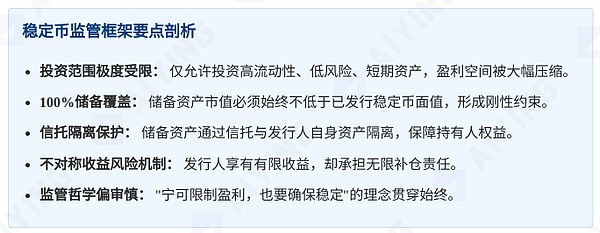
When we examine the profit dilemma of virtual banks together with the regulatory framework for stablecoins, an unavoidable contradiction surfaces:Stablecoin issuers with narrower business scopes and more investment restrictions may have a bleaker profit prospect, but they have to bear a disproportionate amount of risk responsibility.This contradiction not only concerns the sustainability of the business model, but also the long-term stability of the financial market.
1. Extremely single source of income
For stablecoin issuers, there are almost only two main sources of income:
Reserve asset management income:
text=""> Due to the limited investment scope, this part of the yield may only be 1-3% annualized (under normal interest rate environment). This means that for every HK$1 billion of stablecoins issued, the annual income may be only HK$10-30 million.
Transaction/redemption fees:
Considering market competition and user experience, these fees are usually low and difficult to become the main source of income.
In sharp contrast, the virtual bank's diversified income structure: net interest income (from loans and broader investments), fee income (payment settlement, foreign exchange, etc.), intermediary business income (agent sales of financial products), etc.
2. Real case: A realistic mirror of the bank's profit dilemma
Let's look at some specific data: According to the financial report of ZA Bank, a leading virtual bank in Hong Kong, its net interest income in 2023 was HK$489 million, but its operating expenses were as high as HK$599 million. Even with non-interest income, it still recorded a loss of HK$232 million.
We can compare stablecoin issuers and virtual banks through a simple business model:
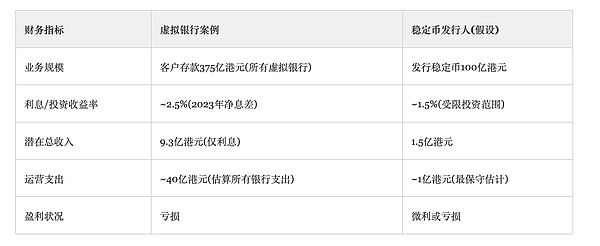
Even if we assume that
the operating costs of stablecoin issuers are much lower than those of virtual banks (in fact, core costs such as technical infrastructure, compliance, and security are difficult to significantly reduce), their profitability is still very limited.
3. "The world is bustling, all for profit": the double-edged sword of a high-interest environment
The global interest rate hike cycle that began in 2022 has increased the return rate of fixed-income assets to a certain extent, which seems to be a good thing for stablecoin issuers. However, this double-edged sword of "high interest rates" deserves careful consideration:
Short-term yield improvement:
Indeed, the high interest rate environment has temporarily increased the yield on reserve assets, which may increase from around 1% to 3% or even higher.
Long-term sustainability is in doubt:
Interest rate cycles are the norm in the macro economy. As inflationary pressures ease, many major economies have begun to cut interest rates. Once we return to a low-interest rate environment, the returns on reserve assets will shrink again.
Increased market risks:
In a high-interest rate environment, even short-term government bonds are subject to price volatility risks. In 2022, the US 1-3 year Treasury bond ETF fell by about 5% in one year, posing a challenge to issuers who must maintain a "stable face value".
"Relying on a high interest rate environment to make long-term business plans is like buying refrigeration equipment stocks in the summer, but forgetting that winter will eventually come."
4. The alarm bell of "Ponzi scheme"
In the case of worrying business sustainability, there is a theoretical risk that some issuers may rely on newly issued stablecoins to raise funds to pay redemption requests from early investors. This practice is essentially close to a Ponzi scheme.
The HKMA's regulatory framework is clearly committed to preventing such risks, building a firewall through multiple measures such as capital requirements, trust arrangements, and information disclosure. However, if a healthy profit model cannot be formed in the market, this risk will always exist like an "undercurrent".
1. The arduous mission of "stabilizing the face value"
We can understand the risk of reserve asset depreciation through a simplified scenario:
The issuer issued HKD 1 billion of stablecoins.
The reserve assets are all invested in short-term high-rated bonds (in full compliance with regulatory requirements).
The sudden market turmoil caused the value of these bonds to temporarily drop by 5%, and the market value of the reserve assets dropped to HK$950 million.
At this time, the issuer must immediately inject HK$50 million in funds to maintain the "stable par value".
The question is: Where does this HK$50 million come from? Injected from the issuer's own capital? Obtained from additional capital contributions from shareholders? Or through an emergency credit facility? For issuers that may already be operating at a small profit or loss, such an unexpected need for funds could be a fatal blow.
2. Practical Exercise: Liquidation Scenario Analysis
Consider an extreme but not impossible scenario:
Monday:
The value of a stablecoin issuer's reserve assets is exactly equal to the par value of the issued stablecoins.
Tuesday:
The global financial crisis broke out, and the value of reserve assets (although "safe" assets) fell by 10%. The issuer faced a large number of redemption requests, the capital chain was tight, and it was applied for liquidation.
In this case, can stablecoin holders recover their funds in full? The Stablecoin Regulations give stablecoin holders a claim against the issuer, but how much is the actual value of this claim when the issuer is insolvent?
The bankruptcy of Lehman Brothers in 2008 provides a mirror: despite the legal claims, holders of "mini bonds" issued in Hong Kong at that time only recovered about 70% of their investment amount on average, and they went through several years of legal procedures. And the recovery process at that time was jointly pressured by Hong Kong and US regulators to settle financial institutions, rather than relying solely on judicial channels.
3. Isolation does not mean value preservation: the limitations of trust arrangements
The trust isolation arrangement of reserve assets does provide important protection to ensure that these assets will not be misappropriated or mixed into the bankruptcy property of the issuer. However, this isolation cannot prevent the market value of the assets themselves from fluctuating.
For example, during the "new crown crisis" in March 2020, even ultra-safe assets such as US short-term Treasury bonds experienced liquidity constraints and price fluctuations. At that time, the bid-ask spread of US Treasury ETFs once widened to more than 10 times that of normal times. In such a special period, even isolated reserve assets may be difficult to quickly realize at par.
History has never lacked challenges to the myth of "stability". In May 2022, UST, known as the "algorithmic stablecoin", collapsed from $1 to 26 cents, causing investors to lose about $40 billion in just a few days. Although the mechanism of UST is fundamentally different from the fiat-backed stablecoins under Hong Kong regulation, its collapse provides an important warning: financial products that claim to be "stable" are not necessarily stable.
The "minibond" crisis triggered by the bankruptcy of Lehman Brothers in 2008 is even closer. At the time, these structured investment products were marketed as "safe" investments by many banks, but as Lehman collapsed, investors found that the value of their "safe" assets had shrunk significantly, and the recovery process was long and complicated.
From a practical perspective, the actual risks of financial products are often not revealed in calm periods, but exposed during extreme market fluctuations. Therefore, stablecoin issuers not only need to meet the minimum regulatory requirements, but also build a sufficiently strong risk buffer to cope with the "once-in-a-century" market storm.
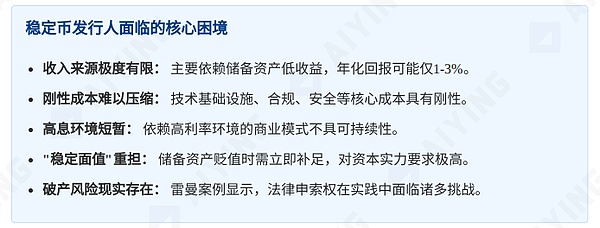
The balance between financial innovation and prudent regulation is like an acrobat walking on a tightrope. It should not be too conservative and stagnant, nor too radical and fall into the abyss of risk. Hong Kong's stablecoin regulatory framework was born in this context. It embodies both tolerance for innovation and vigilance against risks. However, how will this framework evolve in the future, and how will it affect the global digital financial landscape?
Major financial centers around the world are actively exploring stablecoin regulatory frameworks, and have formed different regulatory ideas and focuses:
Singapore:
The Payment Services Act introduced in 2022 explicitly includes stablecoins in the scope of supervision, but the restrictions on reserve assets are relatively flexible, allowing for more diversified asset allocation.
UK:
The Financial Services and Markets Act (FSMA 2023) gives the UK Financial Conduct Authority and the Bank of England the power to regulate stablecoins, with a focus on transparency and consumer protection.
US:
There is a lack of a unified framework at the national level, and there are significant differences in regulation among states. New York State's BitLicense requirements are the most stringent, but the investment scope restrictions on reserve assets are relatively moderate.
Hong Kong's regulatory framework appears to be relatively strict in international comparison, especially in the management of reserve assets. This strictness is conducive to building market confidence and preventing systemic risks, but it may also be at a disadvantage in global competition.
More importantly, with the rapid development of central bank digital currencies (CBDCs) around the world, commercially issued stablecoins will face competition from official digital currencies. China's digital RMB and the EU's digital euro projects are accelerating. Against this background, if commercial stablecoins cannot provide clear differentiated value, their living space will be further squeezed.
Faced with the tension between regulation and innovation, the "Regulatory Sandbox" model provides a balanced path. As early as 2016, the Hong Kong Monetary Authority launched the Fintech Regulatory Sandbox, allowing banks to test innovative solutions in a controlled environment.
For stablecoins, the following innovative directions may be worth exploring:
Layered reserve architecture:
Divide the reserve assets into a core layer (high liquidity) and a value-added layer (moderately expand the investment scope), while ensuring basic security and improving overall returns.
Smart contract-driven automated governance:
Use blockchain technology to automate and make reserve management transparent, reducing the risk of human intervention and operating costs.
Cross-chain interoperability:
Design stablecoins that can be seamlessly transferred between multiple blockchain networks to improve ease of use and application scenarios.
Customized risk management tools:
Develop risk hedging tools specifically for stablecoins, such as stablecoin insurance products or derivatives, to provide additional protection for issuers and holders.
Hong Kong has a mature financial market and an active technological innovation ecosystem, and is fully capable of pioneering in these areas. For example, the Hong Kong University of Science and Technology has established a laboratory dedicated to the study of stablecoins and digital currencies to explore various possibilities for technological innovation.
In addition, Hong Kong's unique "one country, two systems" advantage provides potential opportunities for exploring RMB-related stablecoins. As Hong Kong develops into a global offshore RMB business hub, compliant, secure and efficient RMB stablecoins may become an important bridge connecting the Chinese market with international investors.
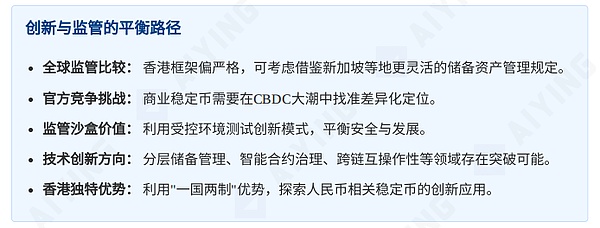
Looking back at the full text, we see that the Hong Kong stablecoin regulatory framework has a firm stance on safeguarding financial stability, and also recognizes the severe business challenges that stablecoin issuers may face. In such an environment, how should market participants act wisely?
For issuers interested in entering the stablecoin market, the following strategies are worth considering:
Scale effect is key:
Given the limited yield on reserve assets, sufficient issuance scale is a prerequisite for profitability. It is difficult for small participants to survive in this market.
Establishing ecosystem advantages:
It may be difficult to make a profit by issuing stablecoins alone, but using stablecoins as part of the overall financial services ecosystem can provide more profit opportunities. For example, using stablecoins as an entry point to carry out compliant value-added services such as payment, settlement, and international remittances.
Adequate capital is crucial:
Not only must the regulatory minimum capital requirements be met, but there must also be sufficient capital buffers to cope with extreme market fluctuations.
Investment in technology and professional talents:
Stablecoin is a fusion product of finance and technology, which requires a cross-disciplinary professional team, especially experts in risk management, asset management, compliance and blockchain technology.
Transparency construction is the first priority:
On the basis of sound internal control, build a sound information disclosure mechanism, regularly publish audited reserve certificates, and establish market trust.
Aiying believes thatoperating a stablecoin is like opening a beverage store that can only sell boiled water. You must find value creation points in other aspects, otherwise the costs will not be covered at all. 2. A wise choice for investors For individual and institutional investors who are considering using or holding stablecoins: Don't be confused by the word "stable": The risks of stablecoins essentially depend on the qualifications, strength and quality of the issuer's reserve assets. "Licensing" does not mean "zero risk". "
Different stablecoins, such as fiat-backed, crypto-collateralized, and algorithmic, have very different risk profiles.
"Read the fine print" is crucial:
Study the issuer's terms and conditions, redemption policy, fee structure, and dispute resolution mechanism in detail.
Diversify holdings and avoid over-concentration:
text=""> Even for stablecoins issued by large issuers, avoid concentrating all funds on a single product.
Regularly check the health of the issuer:
Pay attention to the reserve certificates, financial statements and regulatory developments disclosed regularly by the issuer, and adjust the position in time if there are any abnormalities.
The golden rule of risk management still applies here: never invest in products you don't understand, and don't put all your eggs in one basket.
For companies considering using stablecoins in their business:
Clear definition of use cases:
Evaluate the actual value and necessity of stablecoins in cross-border payments, instant settlements or digital operations.
Cost-benefit analysis is essential:
text=""> Compare the cost, speed, convenience and risks of traditional financial services and stablecoin solutions.
Equal emphasis on integration and compliance:
Ensure that stablecoin solutions can be seamlessly integrated into existing financial systems and meet the compliance and accounting requirements of enterprises.
Risk mitigation measures:
Establish risk monitoring and contingency plans related to stablecoins, such as monitoring the health of issuers and developing rapid funds transfer mechanisms.
Aiying believes thatgood regulation is like a suitable belt - it must be tight enough to maintain order, but flexible enough to allow activities.
The healthy development of Hong Kong's stablecoin ecosystem requires the joint efforts of regulators, issuers, investors and technological innovators. In this process, it is crucial to maintain a pragmatic attitude: we should neither be blindly optimistic that the stablecoin market will explode like the Internet industry in the past decade, nor be overly pessimistic that regulatory restrictions will completely stifle innovation.
As Hong Kong's own development process shows, finding a balance between rigor and innovation, tradition and change can often create a unique development path. For stablecoins, true "stability" lies not only in the constancy of their prices, but also in the health and sustainability of the ecosystem behind them.
In Hong Kong's grand blueprint of building an international financial center and an innovation and technology center, stablecoin is just a small piece of the puzzle, but the placement and presentation of this piece of puzzle may have a profound impact on the whole picture.
Reference information:
chrome-extension://blegnhaaimfcklgddeegngmanbnfopog/https://www.hkma.gov.hk/media/eng/doc/key-information/press-release/2024/20240806e3a1.pdf
chrome-extension://blegnhaaimfcklgddeegngmanbnfopog/https://assets.kpmg.com/content/dam/kpmg/cn/pdf/en/2023/06/hong-kong-b anking-report-2023-financial-highlights-performance-rankings.pdf
RepubliK partners with TON to integrate familiar social media aspects into a user-friendly Web3 platform, emphasizing engagement and flexibility.
Alex2023 marked a significant year for blockchain in finance, with key players like Franklin Templeton and JPMorgan showcasing the technology's efficiency and growth potential.
 Kikyo
KikyoTaiwanese authorities issue a stern warning against cryptocurrency betting, citing legal repercussions and ongoing investigations into activities involving platforms like Polymarket.
 Hui Xin
Originating as an extension of Nexon's iconic MapleStory IP, which gained global popularity since its inception in 2003, MapleStory M transitioned to mobile in October 2016, laying the groundwork for global expansion in July 2018.
 Brian
Brian45-year-old Mr. Hsu led a fraudulent pyramid scheme exploiting the elderly, establishing a fake investment platform and app named "DuoDuo Blind Boxes." They conducted investment seminars across Taiwan, enticing people to join by promising a 3% profit on reselling these blind boxes, pressuring them to become members and purchase USDT for deposit.
 Joy
JoyVeChain's unexpected rise in December 2023 sparks investor interest, despite previous stagnation.
AlexThe Frame mainnet and the accompanying tokens are set to launch simultaneously on January 31, 2024.
Brianthe OKX Wallet app's recent vulnerability necessitates an immediate update by its iOS users. Despite the rapid response and fix by OKX, the incident underscores the ongoing vigilance needed in digital asset security.
KikyoOKX, with CertiK, discloses iOS wallet flaw, urging updates; amid debates, users face risks as both navigate crypto challenges.
Hui XinHong Kong-based digital asset group HashKey's Singapore subsidiary, HashKey Capital Singapore, has secured a significant regulatory milestone, obtaining a full Capital Markets Services (CMS) licence from the Monetary Authority of Singapore (MAS). This licence empowers the firm to deliver regulated fund management services primarily concerning capital markets products within Singapore.
Joy