Editor's Note: Ethereum is heading towards a new era of scalability, aiming for 10,000 TPS, and zero-knowledge proof (ZK) technology is becoming a key driver. This article is the first in our series, "Ethereum's Roadmap to 10,000 TPS," which explains ZK technology, the zkEVM roadmap, and Ethereum's Layer 1 (L1) scaling plan in a straightforward manner. The next article will delve into the challenges of ZK implementation, the evolution of the Layer 2 (L2) ecosystem, and its future impact on Ethereum's economic structure. On July 30, 2025, Ethereum celebrated the tenth anniversary of its genesis block. After a decade of exploration, Ethereum's scaling roadmap is also exploring new directions and visions. Of course, the recent rise in ETH's price has restored confidence in the community, but what's truly exciting is that after years of exploration around Layer 2 scaling, Ethereum's Layer 1 finally has a trusted path to extreme scalability while maintaining maximum decentralization. In short, from now on, Ethereum's gas limit and transaction throughput (TPS) are planned to increase several times annually. Validators will no longer re-execute every transaction (Editor's note: that is, they no longer need to recalculate the transaction's state changes from scratch). Instead, they will only verify a single zero-knowledge proof (ZK-proof) to prove that the batch of transactions was executed correctly, thereby increasing the underlying network's TPS to tens of thousands of transactions per second. At the same time, Layer 2 will scale simultaneously, reaching hundreds of thousands or even millions of TPS, and a new type of Layer 2 called “Native Rollup” will operate like programmable sharding, providing the same security as Layer 1. While these proposals have not yet been formally approved by Ethereum’s governance process, they build on ideas that Vitalik Buterin began exploring in 2017 and have been driven by Justin Drake, a core researcher at the Ethereum Foundation. At the EthCC conference in July, Drake stated: “We are at a critical inflection point in Ethereum scaling. I firmly believe we are about to enter the GigaGas era of Layer 1—around 10,000 TPS, and the key to unlocking this era is the zkEVM and real-time proving.” Drake's ultimate goal is to enable the Ethereum ecosystem to achieve 10 million TPS within 10 years, but this means that no single blockchain can meet this throughput requirement. The future will inevitably be a "network of networks" architecture: different L2s will each handle different scenarios, trade-offs, and advantages, and together expand the entire ecosystem to meet global demand. Why has Ethereum's L1 been unable to scale massively? While other blockchains have long begun to attempt to use more powerful hardware and computing power to increase throughput, Ethereum has always had an almost ideological, and some even consider "utopian," obsession with decentralization. From the perspective of ETH maximalists, “datacenter chains” like Solana carry millions of dollars of centralized risk points that governments can directly target to censor transactions. Even chains with lower hardware requirements like Sui have prohibitive costs and bandwidth requirements, thus undermining decentralization. In contrast, Ethereum, which can even run on a Raspberry Pi, has a low barrier to entry network with over 15,000-16,000 public nodes and millions of validators, making it nearly impossible to censor transactions and making the entire network extremely resilient to attacks.
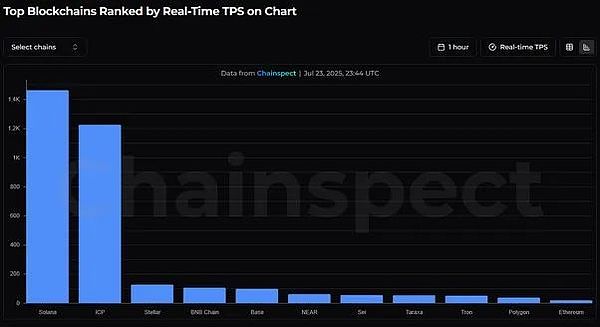
Of course, the price is extremely slow speed - the current TPS is about 18-20 transactions per second, while Solana's TPS is about 1,500 transactions per second.
In some ways, blockchain architecture is inherently inefficient, a bit like a Google Sheet,
Every time you modify a cell, all computers around the world that have copies must first recalculate the entire spreadsheet and confirm that it is correct before it can be updated. Uma Roy, co-founder of ZK technology company Succinct Labs, explained, "Ethereum is designed so that anyone can keep up with the network and re-execute all transactions." This also means that transaction volume cannot be increased indefinitely, as every transaction requires someone to recalculate it. Precisely because the mainnet's capacity for expansion is limited while maintaining decentralization, Ethereum was forced to embark on the controversial path of Layer 2 (L2) scaling in 2020. How does ZK solve the blockchain's impossible trinity? Ethereum founder Vitalik Buterin once coined the term "blockchain's impossible trinity" to describe the dilemma faced by public chains in achieving a balance between security, scalability, and decentralization. Almost all scaling solutions can only meet two of these requirements simultaneously, inevitably sacrificing the third. Until now. Zero-knowledge proofs (ZK-Proofs), a technology Drake described as "moon math," can mathematically prove that a large number of complex transactions have been executed correctly without revealing transaction details. Generating ZK proofs is complex, but verifying a proof is fast and lightweight. Therefore, the vision for Ethereum's future is this: rather than having a bunch of underpowered Raspberry Pi nodes recalculate every transaction one by one, validators could simply check the mathematical results of a tiny ZK proof. Succinct Labs co-founder Uma Roy went on to explain, "Instead of having everyone re-execute every transaction, we can simply give them a proof that these operations occurred, and anyone can verify this proof without having to redo the computation." Drake even joked that in the future, the computational complexity of verifying ZK proofs could be so small that even a $7 Raspberry Pi Pico (with less than one-tenth the performance of a typical Raspberry Pi) could handle it, eliminating the need for large data centers. 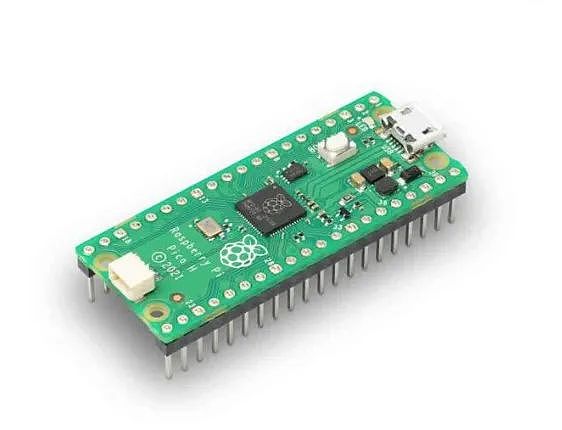
zkEVM: Roadmap to 10,000 TPS
A recent blog post by Sophia Gold of the Ethereum Foundation sparked heated discussions in the community: Within the next year, the L1 mainnet may integrate the zero-knowledge proof-driven Ethereum Virtual Machine (zkEVM). It's worth noting that many practical explorations of ZK technology actually begin on Layer 2 networks. For example, Linea, incubated by Consensys, owned by Ethereum co-founder Joe Lubin, is a ZK Rollup public chain that's 100% EVM-compatible. Any application that runs on Ethereum can run seamlessly on Linea. Linea even considers itself an extension of Ethereum and recently announced that it will destroy 20% of ETH transaction fees to support the return of value to Layer 1. Linea Head Declan Fox explained that ZK technology provides a solution to the blockchain's impossible triangle: "The magic of ZK is that we can significantly increase the gas limit of Layer 1 without increasing the complexity of verification due to the increased computational effort." He added that as the latency and cost of generating ZK proofs continue to decrease, we will be able to handle higher throughput while keeping the hardware requirements for verification extremely low—even a smartwatch can handle the verification work. However, the community should not be overly optimistic. Even if the zkEVM is successfully integrated into L1 within the next year, it will not directly achieve 10,000 TPS on the first day. It will be done one step at a time and then in an instant. Ethereum currently has five major software clients that can be used to run the network, which means that if a client has problems, the network will not be directly shut down like Solana.
In future upgrades, Ethereum plans to release two or three modified clients that support ZK verification, allowing validators to choose to complete verification by checking zero-knowledge proofs (ZK-proofs) instead of re-executing every transaction.
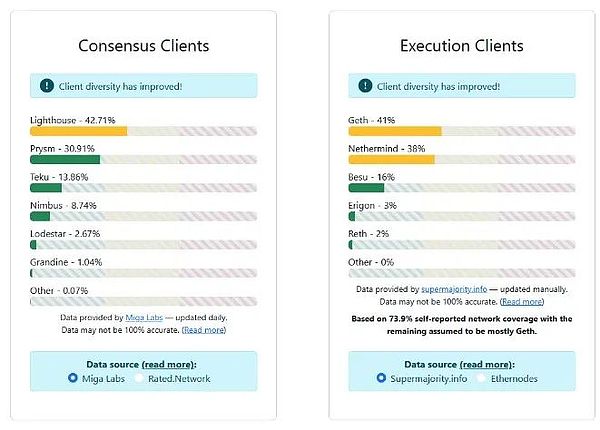
Initially, only a small number of validators will be the first to switch to the new verification mode to allow for early troubleshooting and remediation of potential issues.
Ladislaus of the Ethereum Foundation's protocol coordination team said that "the switch to the snarked EVM will be a gradual process" - the "snark" here refers to the use of SNARK-type zero-knowledge proofs. Users will primarily experience a gradual increase in the L1 gas limit, which translates to a boost in the network's economic activity. While the L1 transition to ZK verification will take time, the gas limit expansion is almost imminent. Last week, the L1 gas limit was raised by 22% to 45 million. Researcher Dankrad Feist proposed an EIP that would automatically increase the gas limit three times per year. According to this plan, the Ethereum mainnet could achieve approximately 2,000 transactions per second (TPS) in four years. Justin Drake has even proposed extending this pace by two years, reaching a throughput of 1 gigabyte by 2031 and achieving approximately 10,000 TPS.


 Weatherly


