Square Enix Joins NFT Arena with Exclusive Collection
Pioneering the convergence of gaming and NFTs, Square Enix introduces SYMBIOGENESIS, a global digital art project.
 Kikyo


1. Total Market Cap of DeFi Tokens: $72.859 Billion
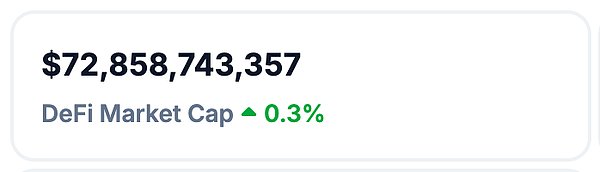
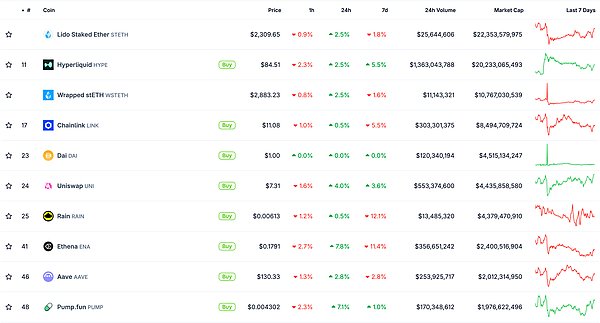
Total Market Cap of DeFi Tokens and Top Ten Projects by Market Cap Data Source: CoinGecko
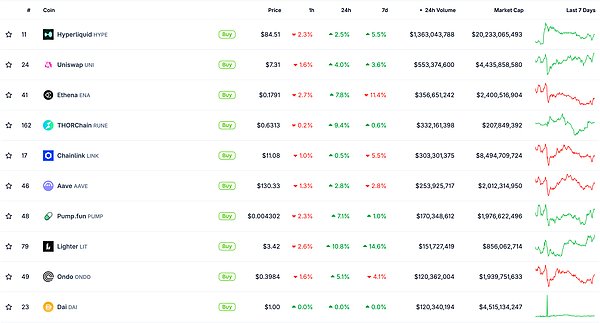
2. DeFi Token 24-Hour Trading Volume: $5.135 Billion
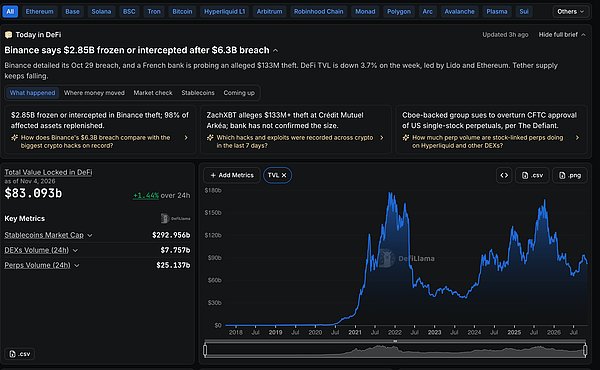
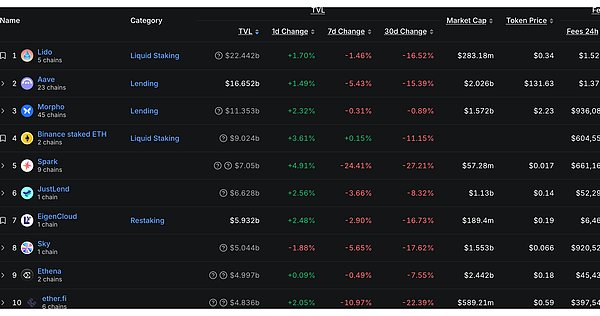
DeFi Token 24-Hour Trading Volume and Top Ten Projects by Trading Volume 3. Total Assets Locked in DeFi: $83.093 Billion
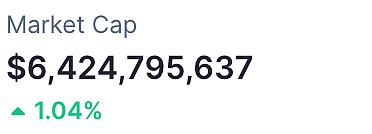
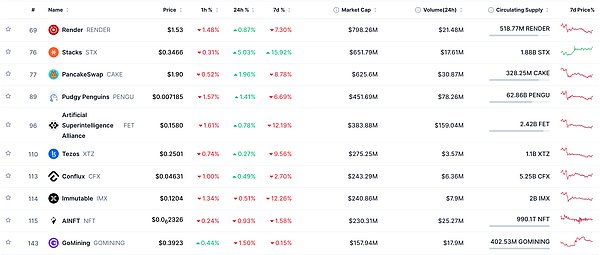
Top Ten DeFi Projects by Locked Assets and Total Value Locked Data Source: DefiLlama NFT Data 1. Total NFT Market Value: $6.425 billion
Total NFT Market Value and Top Ten NFT Projects by Market Value Data Source: CoinMarketCap
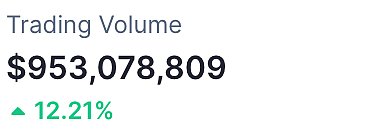
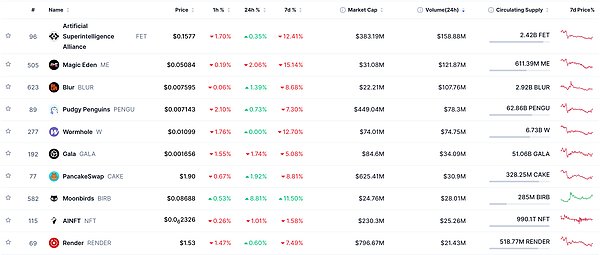
2. NFT 24-hour transaction volume: $953 million
NFT 24-hour transaction volume and top ten projects by transaction volume Data Source: CoinMarketCap
Ethereum developers bring forward post-quantum transition target to 2028, one year ahead of schedule 2. OpenAI Claims ChatGPT Search Queries Reach 20% of Google's 3. OpenAI Acquires Developer Tools Company Pierre Computer, Directly Aiming at Microsoft GitHub 4. Report: OpenAI's Internal Code Access is Too Wide, Multiple Security Risks Remain Unresolved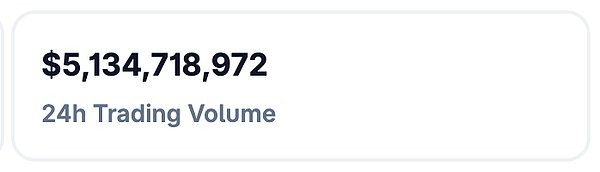
Headline
On November 4th, Ethereum Foundation researcher Justin Drake stated at Devcon 8 in Mumbai that he hopes to complete Ethereum's post-quantum and post-AI transition by December 2028, one year ahead of the foundation's previously announced December 2029 quantum resistance deadline. This means developers only have 24 months to deliver three additional network upgrades. The foundation's September roadmap set December 2029 as the quantum resistance target for execution, consensus, and data layers. Drake's statement is more aggressive but has not yet officially replaced the existing roadmap, which is scheduled for reassessment in January 2027.
On November 4th, according to The Verge, Adam Fry, head of consumer products at OpenAI, stated that ChatGPT handles 20% of the search queries that Google handles. OpenAI defines search as a query entered by a user that triggers a web search, rather than defining terms or simple instructions. Fry did not specify the source of the Google search volume data. The report states that while ChatGPT's search volume is only one-fifth of Google's, it is significantly higher than Bing—Microsoft CEO Satya Nadella once stated that Bing's market share is only about 3% after more than a decade of effort. OpenAI also proposed the concept of "intelligent UI," which involves creating visual and interactive interfaces in chatbot replies, and sees advertising as a potential monetization path.
On November 4th, according to an exclusive report by Axios, OpenAI will acquire developer tools startup Pierre Computer. The transaction amount was not disclosed. Pierre's technology is already used in OpenAI's Codex, and OpenAI plans to integrate its Code Storage functionality into Codex. Pierre's open-source projects will remain open source. This move is seen as a challenge to Microsoft GitHub as AI agents take on more coding work: Cursor previously launched Origin, a competitor to GitHub, and former GitHub CEO Thomas Dohmke also released a competing product last month. OpenAI also disclosed Pando this week, stating that it can reduce the time required to push code changes by nearly 80%. Microsoft holds nearly a quarter of OpenAI's shares.
On November 4th, according to foreign media citing five sources familiar with the matter, OpenAI employees had warned management and the board of directors before the launch of ChatGPT that the company's code and research data access was too wide, which could lead to the leakage of sensitive technologies. Some employees believed that management was more focused on catching up with Google and Anthropic than on security construction. Internal risks include overly wide code repository access, research data being widely stored on GitHub and Slack, and a lack of regular security reviews for testing tools. OpenAI has strengthened its security construction, reassigning a quarter of its production engineers to security infrastructure projects in August of this year, and has responded by stating that it has strengthened access restrictions on sensitive data and internal security reviews, and will launch a new round of special security actions.
5. AI Industry PACs Spend Approximately $72 Million in Midterm Election, Lower Than Crypto Industry's $170 Million
On November 4th, according to Eleanor Terrett, the AI industry became a significant spender of political funds in this round of US midterm elections, with related political action committees (PACs) spending approximately $72 million, lower than the approximately $170 million spent by the three major crypto industry PACs. Both industries experienced some political investments falling short of expectations: AI industry-supported candidates such as Darline Graham and Mike Rogers lost, and the crypto industry's approximately $64 million in political spending also failed to prevent Sherrod Brown's election.
1. Binance Discloses the Entire Process of the $6.3 Billion Theft: Hackers Lurked for 4 Months and Compromised 3 Computers
On November 4th, Binance released a preliminary investigation report on the security incident, disclosing the complete attack chain that led to the theft of approximately $6.3 billion in assets. The report stated that in June of this year, an engineer on the wallet operations team downloaded a tampered Homebrew installation package from the search results while searching for and installing AI programming tools; after the security team discovered the anomaly, they replaced the relevant equipment, but the wallet's infrastructure permissions remained exposed. In September, the attacker, posing as a project director, contacted another software engineer through a recruitment platform, conducting video interviews and social media interviews, and sending code repositories as assignments; one 3414-byte file bypassed endpoint security protection, and the attacker also used internal AI tools to find traces related to the first engineer. On October 30th, the attacker logged into the computer of a third employee and transferred approximately $6.3 billion in assets.
4. Moscow Exchange Plans to Launch Bitcoin, Ethereum, and USDT Trading on December 1st
On November 4th, according to CoinDesk, the Moscow Exchange, Russia's largest stock exchange, plans to launch Bitcoin, Ethereum, and USDT trading on December 1st. Trading hours will be from 06:50 to 23:50 Moscow time, with clearing handled by the National Clearing Center. Settlement will be on a same-day or next-day basis, and swap instruments will be provided to manage liquidity. Ordinary investors will need to pass a test and can purchase a maximum of 300,000 rubles (approximately $3,700) worth of crypto assets annually through a single broker, while qualified investors will have no upper limit. Both the Moscow Exchange and the National Clearing Center were sanctioned by the US Treasury Department in June 2024. Anatoly Popov, the exchange's vice chairman, stated that under the new regulations, Russia's first-year crypto trading volume could reach 4 trillion rubles, approximately $49 billion. 5. Hong Kong Legislative Council Passes Crypto Asset Reporting Framework Ordinance, Data Exchange with Partner Jurisdictions Starting in 2028 On November 4, the Hong Kong Legislative Council passed the "Inland Revenue (Amendment) (Crypto Asset Reporting Framework and Revised Common Reporting Standards) Bill 2026," implementing the OECD's Crypto Asset Reporting Framework (CARF) and the revised Common Reporting Standards. Secretary for Financial Services and the Treasury Christopher Hui stated that implementing the latest international automatic exchange of information standards is crucial to maintaining Hong Kong's reputation as an international financial and business center. CARF will be implemented in Hong Kong in 2027, requiring relevant service providers to collect the information specified in the framework. The Inland Revenue Department will exchange this information with partner jurisdictions starting in 2028. The revised Common Reporting Standards will come into effect in 2028, and the Inland Revenue Department will exchange financial account information according to the new standards starting in 2029. Disclaimer: Jinse Finance, as a blockchain information platform, publishes articles for informational purposes only and does not constitute actual investment advice. Please establish sound investment principles and be sure to enhance your risk awareness.
Pioneering the convergence of gaming and NFTs, Square Enix introduces SYMBIOGENESIS, a global digital art project.
KikyoKenya's crypto industry progresses with regulatory efforts led by the Blockchain Association of Kenya, reflecting the country's significant market and emerging challenges.
 Hui Xin
The Biden administration is calling on Congress to expand its regulatory authority over cryptocurrency to combat its potential use in financing terrorism, citing worries about groups like Hamas using digital assets for fundraising.
 Jasper
Robinhood, the well-known trading platform, is set to extend its crypto trading services into the European Union (EU) and establish a brokerage in the United Kingdom (UK) in the near future.
 Aaron
Wintermute CEO Evgeny Gaevoy says the company is considering legal action against the NEAR Foundation and Aurora
 Clement
The gaming giant has initiated the Chapter 1 allowlist entry campaign, inviting fans to mint exclusive digital collectibles for free.
 Alex
The Deputy Treasury Secretary urges the crypto industry to cease its involvement in facilitating terrorist financing.
 Jixu
The Layer 1 blockchain network supported by Kakao intends to investigate tokenization methods in collaboration with a shipping division of Korindo, an Indonesian conglomerate.
JixuSouth Korean authorities have apprehended 49 individuals and frozen £12 million in assets in connection with an alleged international cryptocurrency fraud ring. The group is accused of running a fake cryptocurrency investment platform that attracted investors from abroad, resulting in losses of over £11.5 million for at least 253 victims, highlighting ongoing concerns about cryptocurrency fraud in South Korea.
JixuAccording to a report by OxScope, Binance currently dominates with over 50% of the total cryptocurrency trading volume on centralized exchanges. However, their spot trading share decreased from 62% a year ago to 40% by October 2023, while their derivatives market share remained around 50% throughout much of the year.
Jixu