Source: Coinbase; Compiled by Deng Tong, Golden Finance
Summary
Negotiations between China and the United States will start in Switzerland this weekend, which may become a major driver of the market.
New Hampshire has taken the lead in introducing a strategic Bitcoin reserve law, and other states are considering similar measures. The US Senate rejected the Stablecoin Act (GENIUS Act).
The market seems to be satisfied with the results of the US-UK trade agreement, while negotiations (or more accurately "de-escalation" negotiations) between the United States and China will start in Switzerland this weekend. President Trump said that if the negotiations go well, tariffs on Chinese goods may be reduced. Recall that the 90-day tariff extension (announced on April 9) means we still have about two months to get any new trade deals off the ground, and the loss of momentum on this front could weigh on risk sentiment across asset classes, including cryptocurrencies. However, initial progress appears encouraging, especially with Japan seeking to reach a deal in June. These agreements have the potential to ease semiconductor trade barriers, which is critical to easing investor concerns about economic activity.
Trade negotiations remain the most important market driver at the moment, as evidenced by the muted market reaction to the Federal Reserve’s FOMC meeting on May 7. While stocks initially reacted poorly to Fed Chairman Jerome Powell’s cautious statements on rate cuts, the Trump administration reversed course after announcing plans to revoke President Biden’s AI chip export ban. We believe this continues to suggest that convexity around headlines remains high, making the risk/reward of short positions unattractive.
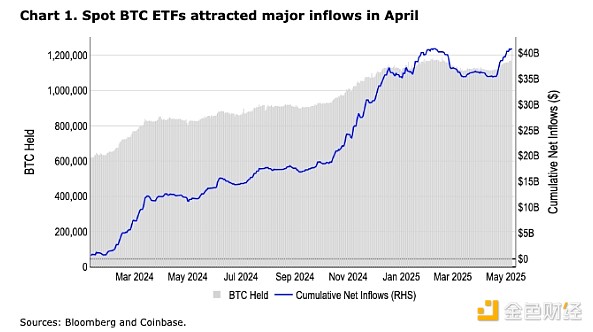
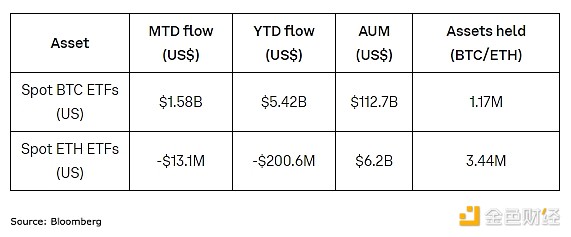
Currently, cryptocurrencies have reacted well to recent macroeconomic developments, with Bitcoin reclaiming the $100,000 mark this week. Spot Bitcoin ETFs attracted $2.96 billion in net inflows last month, following net outflows in February and March. Considering that leveraged funds increased their net short position in Chicago Mercantile Exchange (CME) Bitcoin futures by only $619 million in April, according to the latest data from the Commodity Futures Trading Commission (CFTC), this suggests that most of these flows were directional rather than basis-related. In the first eight days of May, another $1.58 billion of inflows went into these ETFs. It is important to note that the 13F filing deadline for the first quarter of 2025 is May 15, so next week we will have a more detailed understanding of which ETFs purchased these ETFs in the first quarter of 2025.
On the regulatory side, New Hampshire became the first state in the United States to pass the Strategic Bitcoin Reserve Act this week, indicating that its policy support for Bitcoin applications will be further strengthened. Currently, 28 states are considering legislative proposals to establish strategic Bitcoin reserves or include Bitcoin in managed funds. So far, eight of those states—Florida, Montana, North Dakota, Oklahoma, Pennsylvania, South Dakota, Utah, and Wyoming—have rejected the proposals, with another 19 still under consideration.
The governor of Arizona vetoed SB1025, which would have allowed the state pension fund to invest in cryptocurrencies, but approved HB2794, which would have allowed the state to custody unclaimed digital assets. Arizona's SB1373, which establishes a digital asset strategic reserve fund, is still on the governor's desk. Separately, the U.S. Senate did not approve the stablecoin bill, the GENIUS Act, in a full vote yesterday, with only 48 senators voting in favor, below the 60-vote threshold required to avoid lengthy debate rules. However, the veto did not dent the risk premium on most crypto assets.
Coinbase Acquires Deribit
Coinbase is making waves in the derivatives space with its landmark acquisition of Deribit. Deribit is the world’s leading cryptocurrency options exchange with approximately $30 billion in open interest. This strategic move by Coinbase positions it to become one of the world’s leading cryptocurrency derivatives platforms, serving institutional and sophisticated traders by offering the most comprehensive product offerings in the market. By combining Deribit’s powerful options capabilities with Coinbase’s mature spot, futures, and perpetual futures products, traders will be able to trade a wide range of products in a capital-efficient manner on a single platform.
This acquisition sets the stage for rapid global expansion and unlocks opportunities in the booming derivatives market, especially as cryptocurrency options are poised for exponential growth similar to the 1990s stock options boom. At the same time, starting today, May 9, Coinbase Derivatives Exchange will launch 24/7 futures trading on BTC and ETH contracts, providing U.S. traders with uninterrupted risk management. Beyond that, Coinbase is developing perpetual contracts that aim to bridge the gap between the U.S. and global crypto derivatives markets with innovative, regulated, and convenient solutions tailored for crypto-native traders.
On-Chain: Bitcoin’s OP_RETURN Battle
The Bitcoin community is in the midst of a heated debate over a proposed upgrade that core developers plan to implement in an upcoming release (date not yet determined). The change addresses data storage issues through the OP_RETURN field in transactions, an approach that was once limited to spam mitigation but is increasingly being used for non-monetary purposes. While some developers see removing the 80-byte size limit as a pragmatic solution to unavoidable data usage issues, hardline critics argue that it normalizes behavior that bloats the network and undermines Bitcoin’s core ideals as a currency. However, we believe that providing less intrusive methods, such as expanding the OP_RETURN field, could actually help steer data storage on the network away from disruptive practices without imposing restrictive tradeoffs that could undermine the core ethos of Bitcoin.
Cryptocurrency and Traditional Assets
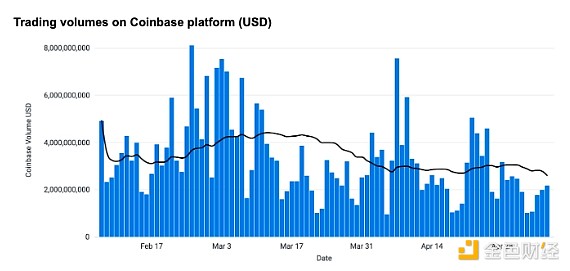
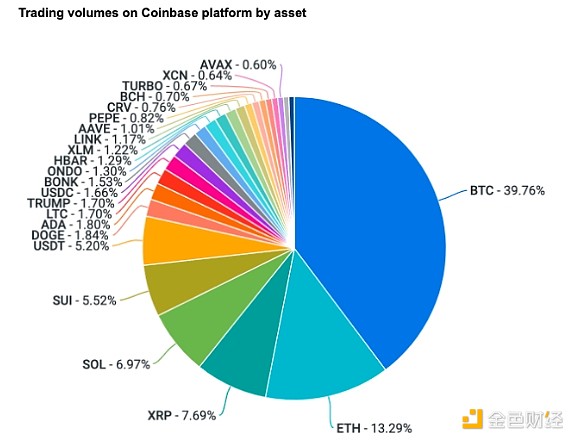
Coinbase Exchange and CES Insights
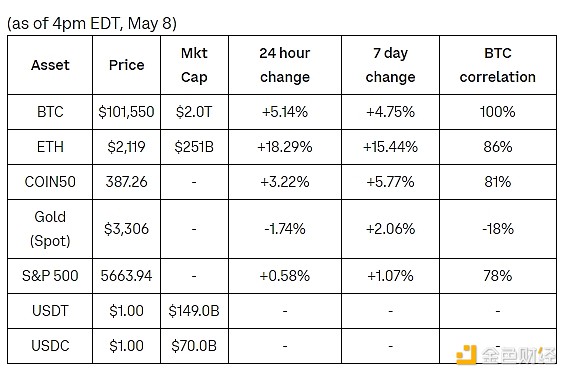
This week, the cryptocurrency market rose sharply, with Bitcoin (BTC) breaking through $100,000 and Ethereum (ETH) The bullish momentum was mainly driven by optimism following the announcement of the US-UK trade deal and continued strong inflows from institutional investors into US spot Bitcoin ETFs. Looking ahead to next week, the market focus will turn to key US inflation data (Consumer Price Index (CPI) and Producer Price Index (PPI)) and retail sales data. Maintaining Bitcoin above the psychological $100,000 mark is critical for the market to maintain positive sentiment.
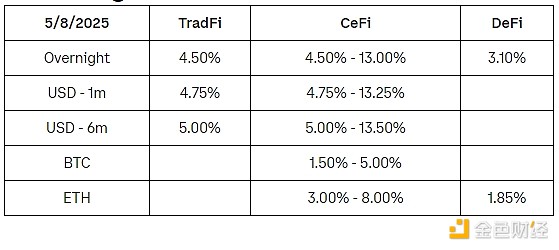
Financing interest rate


 Weatherly

