Translated by: Plain Language Blockchain
Yesterday, the price of Bitcoin broke through.
This brings us to the heart of our discussion: Is there really such a thing as a “value investing” perspective in an asset like Bitcoin that is known for its extreme volatility? Can this strategy, which seems to contradict its "high-risk, high-volatility" characteristics, capture "asymmetric" opportunities in this turbulent game?
In the investment world, asymmetry refers to situations where potential gains far outweigh potential losses, or vice versa. At first glance, this does not seem to be a characteristic of Bitcoin. After all, most people’s impression of Bitcoin is that you either get rich overnight or lose everything.
However, behind this polarized perception lies an overlooked possibility: in the periodic deep declines of Bitcoin, a value investing approach may create an extremely attractive risk-return structure.
Looking back at the history of Bitcoin, it has plummeted 80% or even 90% from its highs many times. In these moments, markets are gripped by panic and despair, and capitulation sends prices seemingly back to square one. But for investors who deeply understand the long-term logic of Bitcoin, this is a classic "asymmetric" opportunity - risking limited losses in exchange for potentially huge returns.
Opportunities like this don't come often. They test investors' cognitive level, emotional control and long-term holding beliefs. This raises a more fundamental question: Do we have reason to believe that Bitcoin truly has “intrinsic value”? If so, how can we quantify and understand it and develop investment strategies accordingly?
In the following content, we will embark on this journey of exploration: revealing the deep logic behind Bitcoin price fluctuations, clarifying the shining points of asymmetry when "blood flows", and thinking about how the principles of value investment can be reborn in the era of decentralization.
But first, you need to understand one thing: In Bitcoin investing, asymmetric opportunities are never scarce; in fact, they are abundant.
01 Why does Bitcoin have so many asymmetric opportunities?
If you browse Twitter today, you will see overwhelming celebration of the Bitcoin bull run. Price Breakthrough
But if you look back in the past, you will find that the invitation to this feast was actually sent at the most desperate moment of the market; it's just that many people lacked the courage to open it.
1.1 Historical asymmetric opportunities
The growth of Bitcoin has never been a straight upward curve. Its historical script is intertwined with extreme panic and irrational enthusiasm. Behind every deep decline, there is an extremely attractive "asymmetric opportunity" - the maximum loss you can bear is limited, while the returns you get may be exponential.
Let us travel through time and space and speak with data.
2011: -94%, from $33 to $2
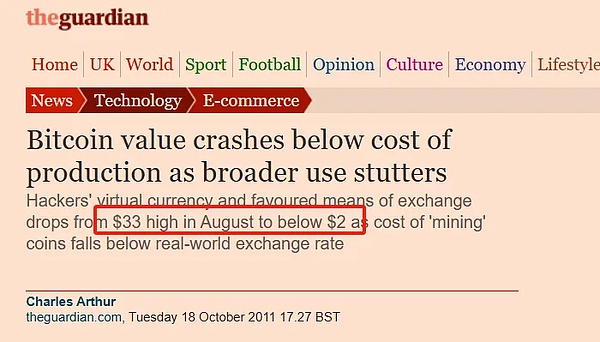
This was the first time Bitcoin became "widely known", and the price soared from a few dollars to $33 in half a year. But soon, the collapse followed. Bitcoin price plummeted to $2, a drop of 94%.
Imagine the despair at the time: The main geek forums were deserted, developers fled, and even core Bitcoin contributors expressed doubts about the project's prospects on the forums.
But if you took a gamble at the time and invested $1,000, when the price of Bitcoin exceeded $10,000 many years later, your holdings would be worth $5 million.
2013-2015: -86%, Mt.Gox collapsed
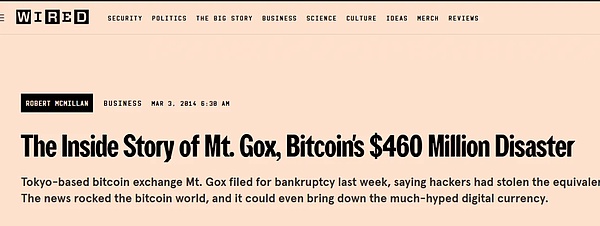
At the end of 2013, the price of Bitcoin exceeded US$1,000 for the first time, attracting global attention. But the good times didn’t last long. In early 2014, the world's largest Bitcoin exchange Mt.Gox declared bankruptcy, and 850,000 bitcoins disappeared from the blockchain.
Overnight, the media was unanimous: "Bitcoin is over." CNBC, BBC and The New York Times all reported the Mt.Gox scandal on their front pages. The price of Bitcoin fell from $1,160 to $150, a drop of more than 86%.
But what happened next? By the end of 2017, the same Bitcoin price reached $20,000.
2017-2018: -83%, ICO bubble burst
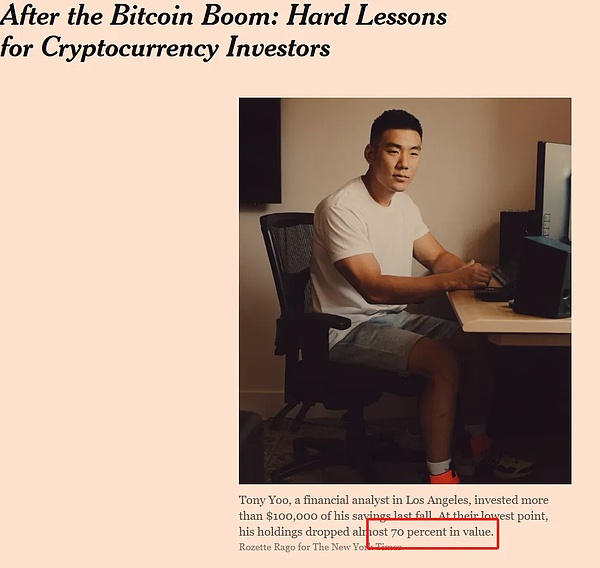
The above picture is from the New York Times report on the stock market crash. The red box highlights a comment from an investor who said he had lost 70% of his portfolio value.
2017 was the “year of national speculation” and Bitcoin entered the public eye.
But the tide receded, and Bitcoin fell from its historical high of nearly $20,000 to $3,200, a drop of more than 83%. That year, Wall Street analysts sneered: "Blockchain is a joke"; the SEC filed multiple lawsuits; retail investors were liquidated and left the market, and the forum was silent.
2021-2022: -77%, a series of "black swans" in the industry
In 2021, Bitcoin wrote a new myth: the price of each coin exceeded US$69,000, and institutions, funds, countries and retail investors flocked in.
But just one year later, Bitcoin fell to $15,500. Luna’s collapse, Three Arrows Capital’s liquidation, FTX’s explosion… a series of “black swan” events have destroyed confidence in the entire crypto market like dominoes. The Fear and Greed Index fell to 6 (extreme fear zone) at one point, and on-chain activity was almost frozen.
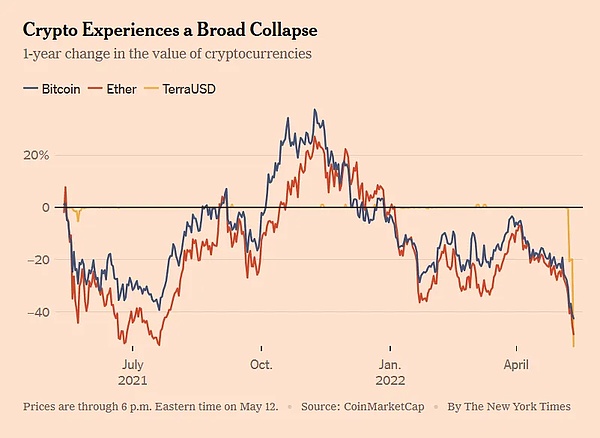
The above picture is taken from an article in the New York Times on May 12, 2022. In the picture, Bitcoin, Ethereum and UST plummeted at the same time. Now we realize that behind the UST plunge is the "stock price pumping" behavior planned by Galaxy Digital and Luna, which has greatly contributed to the UST plunge.
However, by the end of 2023, Bitcoin quietly rebounded to $40,000; after the ETF was approved in 2024, it soared all the way to today's $90,000.
1.2 The source of Bitcoin’s asymmetric opportunities
We have seen that Bitcoin has repeatedly achieved amazing rebounds at seemingly catastrophic moments in history. So the question is - why? Why can this high-risk asset, which is often ridiculed as a game of "pass the parcel", rise repeatedly after crashing? More importantly, why does it offer such a strong asymmetric investment opportunity for patient and knowledgeable investors?
The answer lies in three core mechanisms:
Mechanism 1: Deep cycle + extreme emotions lead to price deviations
Bitcoin is the only free market in the world that is open 24/7. There is no circuit breaker mechanism, no market maker protection, and no Federal Reserve backstop. This means that it is more susceptible to amplifying human emotional fluctuations than any other asset.
In a bull market, FOMO (fear of missing out) dominates the market, retail investors frantically chase high prices, narratives soar, and valuations are seriously overdrawn; in a bear market, FUD (fear, uncertainty, and doubt) floods the Internet, calls for “cut losses” are heard one after another, and prices are trampled into the dust.
This cycle of sentiment amplification causes Bitcoin to frequently enter a state where "the price deviates significantly from its true value." And this is fertile ground for value investors to find asymmetric opportunities.
To sum up in one sentence: In the short term, the market is a voting machine; in the long term, it is a weighing machine. Bitcoin’s asymmetric opportunity arises in the moments before the weighing machine is activated.
Mechanism 2: Extreme price fluctuations, but extremely low probability of death
If Bitcoin is really an asset that "may return to zero at any time" as the media often sensationalizes, then it really has no investment value. But in fact, it has survived every crisis - and emerged stronger.
In 2011, after falling to $2, the Bitcoin network continued to operate as usual.
After the collapse of Mt.Gox in 2014, new exchanges quickly filled the gap and the number of users continued to grow.
In 2022, after FTX went bankrupt, the Bitcoin blockchain continued to generate a new block every 10 minutes without interruption.
Bitcoin's underlying infrastructure has almost no history of downtime. The resilience of its systems is far greater than most people understand.
In other words, even if the price is cut in half again and again, as long as Bitcoin's technical foundation and network effects remain, there is no real risk of returning to zero. We have an attractive structure: near-term downside risk is limited and long-term upside is open.
This is asymmetry.
Mechanism 3: Intrinsic value exists but is ignored, leading to an “oversold” state
Many people believe that Bitcoin has no intrinsic value, so its price can fall indefinitely. This view ignores several key facts: Bitcoin is algorithmically scarce (21 million hard cap, enforced by the halving mechanism); it is secured by the world’s most powerful Proof-of-Work (PoW) network, with a quantifiable production cost; it benefits from strong network effects: over 50 million addresses have non-zero balances, and transaction volume and computing power have set new highs; it has gained recognition from mainstream institutions and even sovereign states as a “reserve asset” (ETFs, legal tender status, corporate balance sheets).
This brings up the most controversial but crucial question: Does Bitcoin have intrinsic value? If so, how do we define, model, and measure it?
1.3 Will Bitcoin return to zero?
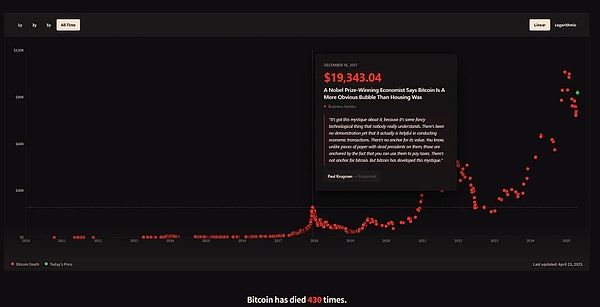
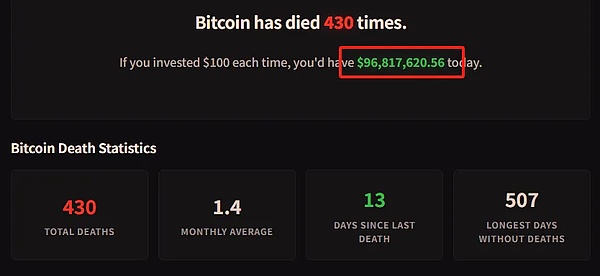
It's possible - but the probability is extremely low. A website recorded 430 times that Bitcoin was declared "dead" by the media.
However, below this death declaration count, there is a small note: If you bought $100 of Bitcoin every time Bitcoin was declared dead, your holdings would be worth more than $96.8 million today.
You need to understand: Bitcoin's underlying system has been running stably for more than ten years, with almost no downtime. Whether it was the collapse of Mt. Gox, the failure of Luna, or the FTX scandal, its blockchain always generates a new block every 10 minutes. This technological resilience provides a strong survival bottom line.
Now, you should be able to see that Bitcoin is not "unfounded speculation." On the contrary, its asymmetric potential stands out precisely because its long-term value logic exists - but it is often seriously underestimated by market sentiment.
This brings up the next fundamental question: Can Bitcoin, which has no cash flow, no board of directors, no factory, and no dividends, really be an object of value investment?
02 Can Bitcoin be used for value investment?
Bitcoin is notorious for its wild price swings. People swing between extremes of greed and fear. So, how do assets like this fit into “value investing”?
On one side are the classic value investment principles of Benjamin Graham and Warren Buffett - "margin of safety" and "discounted cash flow." On the other side is Bitcoin - a digital commodity with no board of directors, no dividends, no earnings, and not even a legal entity. Bitcoin seems to have no place in the traditional value investment framework.
The real question is: How do you define value?
If we go beyond traditional financial statements and dividends and return to the core essence of value investing - buying at a price below intrinsic value and holding until the value emerges - then Bitcoin may not only be suitable for value investing, it may even embody the concept of "value" more purely than many stocks.

Benjamin Graham, the father of value investing, once said: "The essence of investment is not what you buy, but whether you buy it at a price below its value."
In other words, value investing is not limited to stocks, companies or traditional assets. As long as something has intrinsic value and its market price is temporarily below that value, it can be a valid target for value investing.
But this raises a more critical question: If we cannot use traditional indicators such as price-to-earnings ratio or price-to-book ratio to estimate the value of Bitcoin, where does its intrinsic value come from?
While Bitcoin does not have financial statements like a company, it is far from worthless. It has a fully analyzable, modelable, and quantifiable value system. While these “value signals” aren’t collated into quarterly reports like they are for stocks, they are just as real — and perhaps even more consistent.
We will explore the intrinsic value of Bitcoin from two key dimensions: supply and demand.
2.1 Supply side: scarcity and programmed deflation model (stock-to-flow ratio)
The core of Bitcoin’s value proposition lies in its verifiable scarcity.
Fixed total supply: 21 million, hard-coded and cannot be changed.
Halving every four years: Each halving reduces the annual issuance rate by 50%. The last Bitcoin is expected to be mined around 2140.
After the halving in 2024, Bitcoin's annual inflation rate will drop below 1%, making it more scarce than gold.
The Stock-to-Flow (S2F) model, proposed by analyst PlanB, has attracted widespread attention for its ability to predict Bitcoin price trends during the halving cycle. The model is based on the ratio of the existing stock of an asset to its annual production.
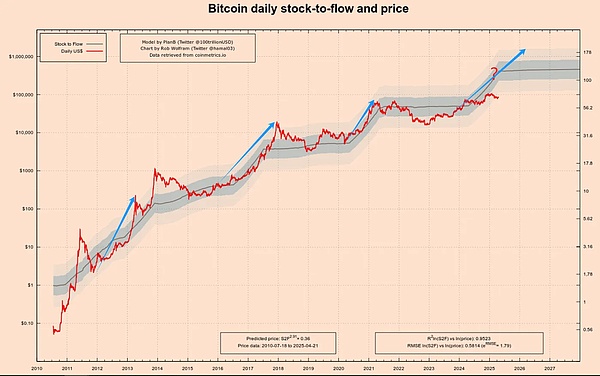
A higher S2F ratio indicates that the asset is relatively scarce and, in theory, has a higher value. For example, gold has a high S2F ratio (around 60), which supports its role as a store of value. Bitcoin’s S2F ratio has steadily improved with each halving: 2012 Halving: Price surged from ~$12 to over $1,000 within a year.
2016 halving: prices climbed from about $600 to nearly $20,000 in 18 months.
2020 halving: price rose from about $8,000 to $69,000 18 months later.
Will the fourth halving in 2024 continue this trend? My view is: yes, but the gains are likely to be weaker.
Note: The vertical axis on the left side of the chart uses a logarithmic scale to help visualize early trends. The jump from 1 to 10 takes up the same space as the jump from 10 to 100, making exponential growth easier to interpret.
The model is inspired by the valuation logic of precious metals such as gold and silver. The logic is:
The higher the S2F ratio, the lower the inflation of the asset and the greater the value it can theoretically hold.
In May 2020, after the third halving, Bitcoin's S2F ratio rose to about 56, almost on par with gold. The keywords of the S2F model are scarcity and deflation. It ensures that the supply of Bitcoin decreases year by year through an algorithm, thereby pushing up its long-term value.
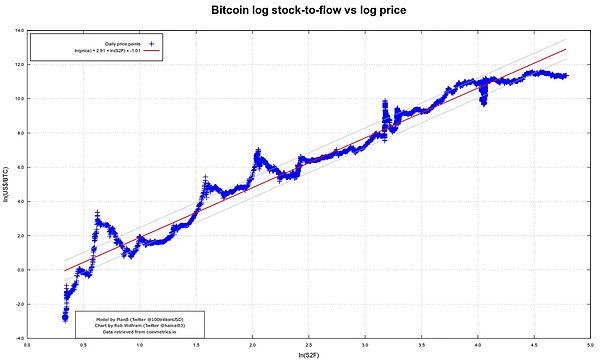
But of course, no model is perfect. The S2F model has a key weakness: it only considers supply and completely ignores the demand side. This may have worked before 2020, when Bitcoin adoption was limited. But since 2020 — as institutional capital, global narratives and regulatory dynamics entered the market — demand has become the dominant driver.
Therefore, to form a complete valuation framework, we must turn to the demand side.
2.2 Demand side: network effect and Metcalfe's law
If S2F locks the "supply valve", then the network effect determines how high the "water level" can rise. The most intuitive indicators here are on-chain activity and the expansion of the user base.
As of the end of 2024, Bitcoin has more than 50 million non-zero balance addresses.
In February 2025, the number of daily active addresses rebounded to about 910,000, a 3-month high.
Based on Metcalfe’s Law — that the value of a network is roughly proportional to the square of the number of users (V ≈ k × N²) — we can understand that:
if the number of users doubles, the theoretical network value could increase fourfold.
This explains why Bitcoin often shows "leap-like" value growth after major adoption events.

(Again, the image of Metcalfe gleefully admiring Bitcoin is a fictional depiction generated by AI.)
Three core demand indicators:
Active addresses: Reflects short-term usage intensity.
Non-zero address: Marks long-term penetration. Despite the bear market, the compound annual growth rate over the past seven years has been about 12%.
Value-carrying layer: Lightning Network capacity and off-chain payment volume continue to climb, indicating real-world adoption beyond "holding".
This “N² drive + sticky user base” model means two forces:
Positive feedback loop: More users → deeper transactions → richer ecosystem → more value. This explains why events such as ETF launches, cross-border payments or emerging market consolidation often lead to non-linear price spikes.
Negative Feedback Risk:If global regulation tightens, new technologies emerge (e.g. CBDC, Layer-2 alternatives), or liquidity dries up, user activity and adoption may shrink — causing value to shrink along with N².
Therefore, only by combining S2F (supply) and network effects (demand) can we build a robust valuation framework:
When S2F signals long-term scarcity and active users/non-zero addresses keep an upward trend, the mismatch between demand and supply amplifies the asymmetry.
Conversely, if user activity declines — even if scarcity is fixed — price and value may fall in tandem.
In other words: Scarcity ensures that Bitcoin will not depreciate, but network effects are the key to its appreciation.
It is particularly noteworthy that Bitcoin was once ridiculed as a "geek's toy" or a "symbol of speculative bubble." But now, its value narrative has quietly undergone a fundamental change.
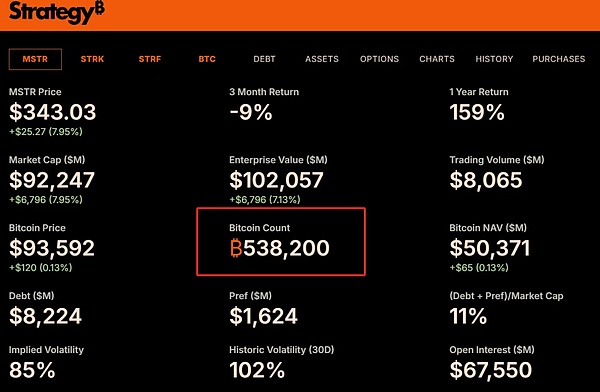
Since 2020, MicroStrategy has included Bitcoin in its balance sheet and currently holds 538,000 BTC. Global asset management giants such as BlackRock and Fidelity have launched spot Bitcoin ETFs, bringing in billions of dollars in incremental capital. Morgan Stanley and Goldman Sachs have begun offering Bitcoin investment services to high-net-worth clients. Even countries like El Salvador have adopted Bitcoin as legal tender. These changes are more than just capital inflows—they represent endorsements of legitimacy and institutional consensus.
2.3 Conclusion
In the Bitcoin valuation framework, supply and demand are never isolated variables—they are intertwined to form a double helix of asymmetric opportunities.
On the one hand, the S2F model based on algorithmic deflation mathematically outlines how scarcity increases long-term value.
On the other hand, network effects, measured by on-chain data and user growth, reveal the real-world demand foundation of Bitcoin as a digital network.
In this structure, the disconnect between price and value becomes more apparent - and this is where value investors find the golden window. When markets are gripped by fear and prices fall below levels implied by the composite valuation model, asymmetry quietly opens the door.
03 Is the essence of value investing simply to find asymmetry?
The core of value investing is not just "buying cheaply". It is based on a more fundamental logic: to find a structure with limited risk but significant potential returns in the gap between price and value.
This is the fundamental difference between value investing and trend following, momentum trading or speculative gambling.
Trend investing relies on market inertia;
Momentum trading bets on short-term fluctuations;
Value investing requires patience and rationality, intervening when sentiment deviates significantly from fundamentals, assessing long-term value, and buying when prices are far below value - and then waiting for reality to catch up.
Its effectiveness lies in the fact that it constructs a naturally asymmetric structure: the worst outcome is a controllable loss, while the best case scenario may exceed expectations several times.
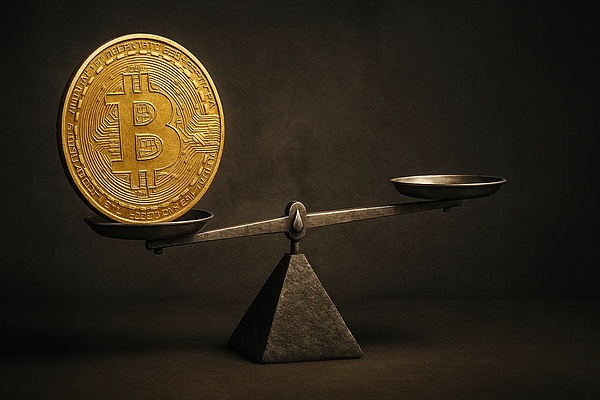
If we look more deeply into value investing, we will find that it is not a set of techniques, but a way of thinking - a structural logic based on probability and imbalance.
Investors analyze the “margin of safety” to assess downside risk.
They study "intrinsic value" to determine the likelihood and extent of mean reversion.
They choose to “hold patiently” because asymmetric returns often take time to realize.
None of this is intended to make perfect predictions. It's about setting up a gamble: when you're right, you win far more than you lose when you're wrong. This is the very definition of asymmetric investing.
Many people mistakenly believe that value investing is conservative, slow, and low-volatility. In fact, the true essence of value investing is not to earn less and take less risk - but to pursue disproportionately large returns with controllable risks.
Whether they were early shareholders of Amazon or Bitcoin geeks who quietly accumulated during the crypto winter, at their core they were doing the same thing:
when most people underestimate the future of an asset and its price is driven to the bottom by sentiment, regulation or misinformation - they took action.
From this perspective:
Value investing is not an outdated strategy of "buy low and collect dividends". It is the lingua franca of all investors seeking asymmetric return structures.
It emphasizes not only cognitive ability, but also emotional discipline, risk awareness, and most importantly, belief in time.
It doesn't require you to be the smartest person in the room. It just requires you to stay calm when others are panicking and bet when others are leaving.
So, once you truly understand the deep connection between value investing and asymmetry, you will understand why Bitcoin - despite its unfamiliar form - can be embraced by serious value investors.
Its fluctuations are not your enemy - they are your gift.
Its panic is not your risk - it's the market mispricing.
Its asymmetry is not a gamble - it is a rare opportunity to reprice undervalued assets.
Real value investors don’t shout in a bull market. They quietly made their plans in the calm beneath the storm.
04 Summary
Bitcoin is not a gambling table to escape reality - it is a footnote to help you re-understand reality.
In this uncertain world, we often mistake safety for stability, risk aversion, and avoidance of volatility. But true security is never about avoiding risk—it’s about understanding it, mastering it, and seeing the buried value foundation when everyone else is fleeing.
This is the true essence of value investing: finding asymmetric structures based on insights and mispricing; quietly accumulating chips forgotten by the market at the bottom of the cycle.
And Bitcoin—an asset born of code-enforced scarcity, evolving value through a network, and repeatedly reborn in fear—is perhaps the purest expression of the asymmetry of our time.
Its price may never calm down. But its logic is always firm:
You may never be able to perfectly buy the bottom. But you can go through the cycle again and again — buying misunderstood value at a reasonable price.
It's not because you are smarter than others - it's because you have learned to think in different dimensions: you believe that the best bet is not on the price chart - but on the side of time.
So, remember:
Those who bet at the depths of irrationality are often the most rational. And time is the most loyal executor of asymmetry.
This game will always belong to those who can understand the order behind the chaos and the truth behind the collapse. Because the world doesn't reward emotions—the world rewards understanding. And understanding, in the end - is always proven correct by time.


 Kikyo
Kikyo

