Author: Little Bear Biscuit, BitpushNews
At 4 AM in Singapore, Meta's layoff notices were issued on time, and then spread westward. The company had already notified employees to work from home prior to this day.
On Meta's internal forum, hundreds and thousands of people replied with only one salad emoji—a tacit "salute" among them.
Yes, another round of layoffs has come, and on May 20th. This round of global layoffs at Meta will see approximately 8,000 employees laid off, with about 7,000 being reassigned to a new AI department. Nearly 6,000 positions have also been frozen. But what truly caused an uproar internally was what this giant was doing: while cutting costs through layoffs, it was simultaneously forcing employees to install monitoring software—recording mouse movements, keyboard clicks, and screenshots—and then feeding all of this into AI model training. Over 1,500 employees signed a protest, and flyers plastered offices and windows. The protest posters depicted a cartoon workshop called the "Employee Data Extraction Factory," with several kittens wearing orange hard hats busily working inside. But Meta still laid off people as planned. The team driving this monitoring project was Maher Saba's newly established "Applied AI & Engineering" team. It's said that this project came directly from Zuckerberg himself; "not participating was not an option." To retain key director-level talent, Meta offered approximately $500,000 in additional stock incentives, but some still declined and chose to leave. Silicon Valley is being "skilled." It's not just Meta. From Google to Amazon, from Microsoft to Snap, the entire Silicon Valley is undergoing "optimization." Data from Layoffs.fyi shows that since 2026, over 111,000 people have been laid off in the US tech industry, involving 148 companies. Meta lost 8,000, Amazon lost approximately 30,000, Oracle lost approximately 30,000 globally, Microsoft's voluntary departure program involved nearly 9,000 people, and Block laid off over 4,000. In just five months this year, this number has already approached last year's total of 124,000. Interestingly, while each company's public reasons more or less mention "AI transformation" or "efficiency improvement," the founder of Layoffs.fyi publicly stated: "There is almost no evidence that AI has actually replaced the jobs of those laid-off employees." In many cases, AI is merely a narrative told to Wall Street. Meanwhile, tech giants are significantly increasing their investment in AI. The combined AI capital expenditures of four companies (Alphabet, Meta, Amazon, and Microsoft) are estimated to exceed $674 billion in 2026. Meta's net profit increased by 61% year-on-year in the first quarter, but its stock price fell by nearly 9% due to higher-than-expected AI investment. This means that investors now look not only at whether you can make money, but also at how much money you burn on AI. The collapse of the crypto community, silent mode. Large companies lay off employees, and because of their size, even the slightest disturbance can make headlines. But are the layoffs in the crypto industry a naked escape from the bear market, or are they happening quietly? A former crypto industry worker told me his story. A few years ago, he worked in marketing for a project team. He caught the good times, made some money, made a down payment on a house in Shenzhen, and thought life would continue like this forever. Later, housing prices fell, and the industry cooled down. He was unfortunately laid off, and still had over 10,000 yuan in mortgage payments to make each month. Now he's switched to selling cosmetic surgery products and works part-time at a coffee shop in his spare time. That's how the crypto world is; a star project that was shouting "To the moon" on X one day might quietly lay off its entire team the next. Just yesterday, crypto media and DeFi trendsetter Bankless was exposed for quietly laying off most of its employees without any public communication. In a bear market, layoffs are a standard practice. Gemini laid off 30%, Crypto.com reduced its workforce by 12%, and Layer-2 star project Optimism is also quietly streamlining its staff. Algorand went even further, cutting 25% of its employees. The situation of leading exchange Coinbase best illustrates the chill in this industry. In the first quarter of 2026, it suffered its second consecutive quarterly loss, with a net loss of $394 million—a stark contrast to its profit of $66 million in the same period last year. Trading revenue plummeted 40% year-over-year to $756 million, forcing the company to lay off 14% of its workforce. Trading volume was even more dismal. According to CoinGecko data, Binance's spot trading volume shrank from $361.8 billion in December 2025 to less than $80 billion in January, a nearly 90% drop in total trading volume across centralized exchanges in three months. With liquidity dried up, the only option was to "shrink" the balance sheet. Some projects have also attempted to use AI to justify layoffs—for example, Block laid off half of its employees under the pretext of AI integration. But Raman Shalupau, founder of CryptoJobsList, bluntly stated: "Currently, the industry is roughly in an 80/20 ratio. 80% are genuinely using AI to improve efficiency, while 20% are using AI to cover up the costs of previous overexpansion." Even more brutally, many smaller projects in the crypto space don't even issue layoff announcements; they simply quietly cease operations and disappear from public view. Rather than being replaced by AI, "silently dying" is the true fate of many crypto projects.

Should we shift all the blame to AI?
This question is highly debated within the industry.
a16z's position is clear: Don't make AI a scapegoat.
David George argues that this isn't the end of the world with "AI replacing humans," but rather a natural process of productivity improvement—agricultural mechanization didn't eliminate jobs, nor did electrification and the computer revolution. As cognitive costs decrease, the market will create new demand. Marc Andreessen is even more direct: the core reason for current layoffs is previous over-hiring, and AI is merely a "perfect scapegoat." However, a Forbes survey shows that of the 83,387 job cuts announced by US employers in April 2026, 26% were explicitly attributed to AI—AI has been the top reason for layoffs for two consecutive months. The CEOs of Scale AI and OpenAI have both publicly condemned companies for abusing AI as an excuse. A recent in-depth analysis published in the Harvard Business Review (HBR) states that companies are laying off employees now not because AI's current performance can perfectly replace humans, but because CEOs are paying for AI's future automation potential in advance.
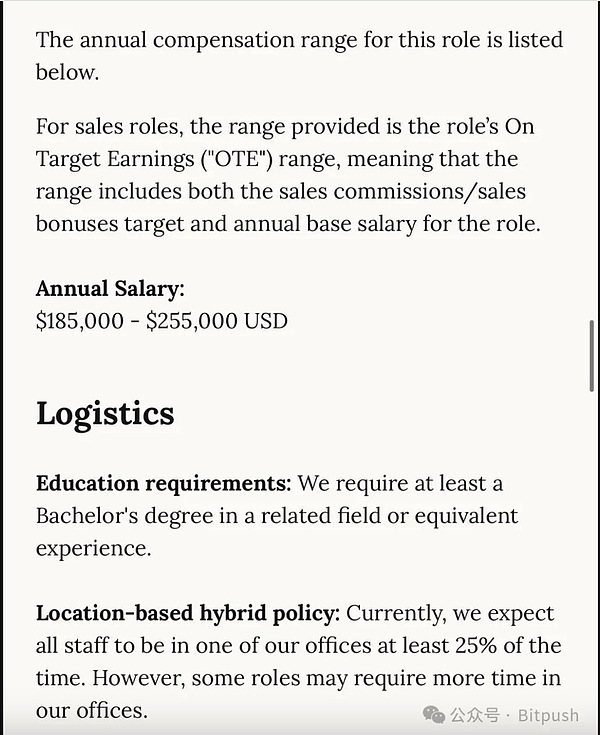
In contrast to the software industry, OpenAI and Anthropic are even expanding their hiring. Anthropic plans to double its international staff and quintuple its applied AI team. Therefore, the layoffs are not just about "the disappearance of jobs," but rather "the shift in job types." The question is, how many laid-off employees can cross this chasm in a short period of time?
Finally, a few words
Although Zuckerberg added on Thursday, "There are no plans for further layoffs this year,"
I guess, regardless of AI, the tech industry in 2026 will have learned one thing: layoffs will no longer be news, but a norm.
This anxiety was recently reignited. Last week, former Google CEO Eric Schmidt was invited to speak at the University of Arizona's commencement ceremony, where he talked about how young people should "embrace AI and embrace the future." However, instead of applause, he was met with a deafening chorus of boos. Students expressed their skepticism in the most direct way: tech giants are enjoying the market capitalization boom brought about by AI, while ordinary people can't even get a ticket to the game. For decades, people have been accustomed to a single path: years of hard study, learning a skill, joining a large company, and climbing the corporate ladder through intellectual ability. Now, this path is being rapidly severed by extremely low-cost algorithms. That viral salad emoji might not just be a tribute to departing colleagues, but also a subtle sense of helplessness: when professional skills are distilled, what do we have left that machines can't take away?


 Catherine

