Author: c4lvin (Four Pillars) Source: X, @FourPillarsFP Translation: Shan Ouba, Jinse Finance
Key Points
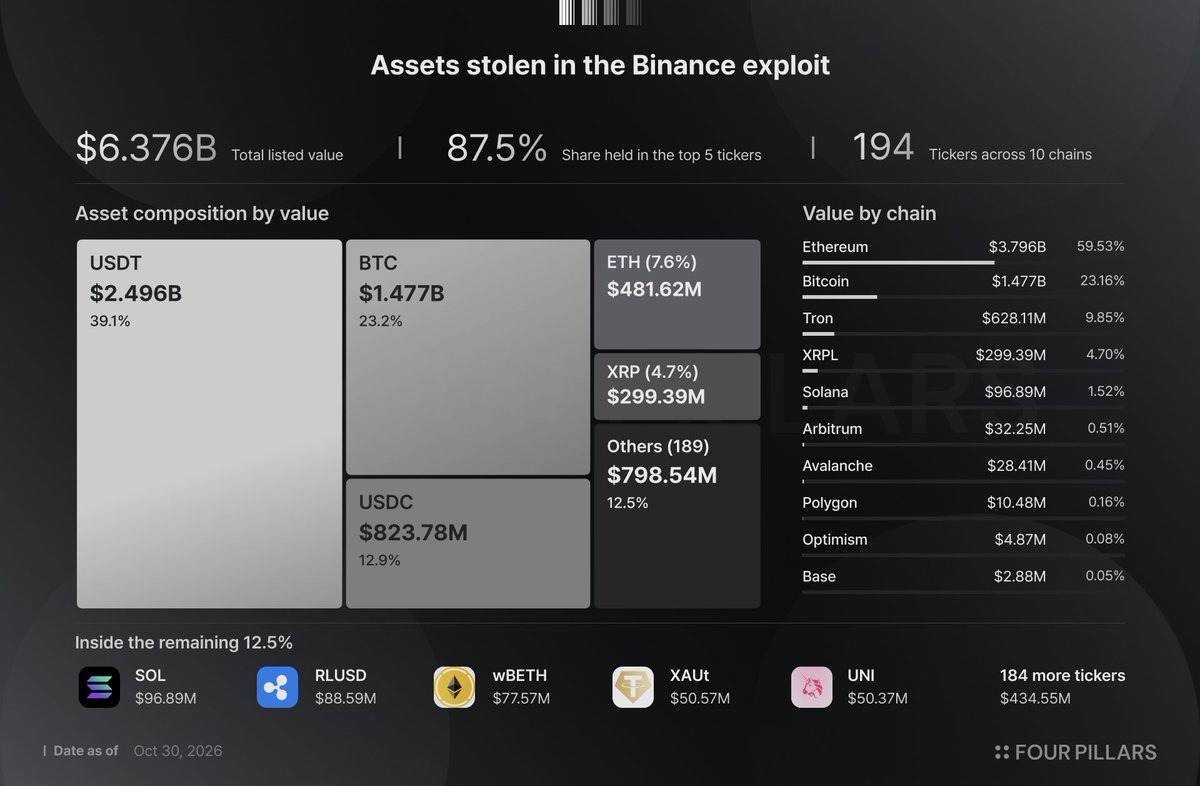
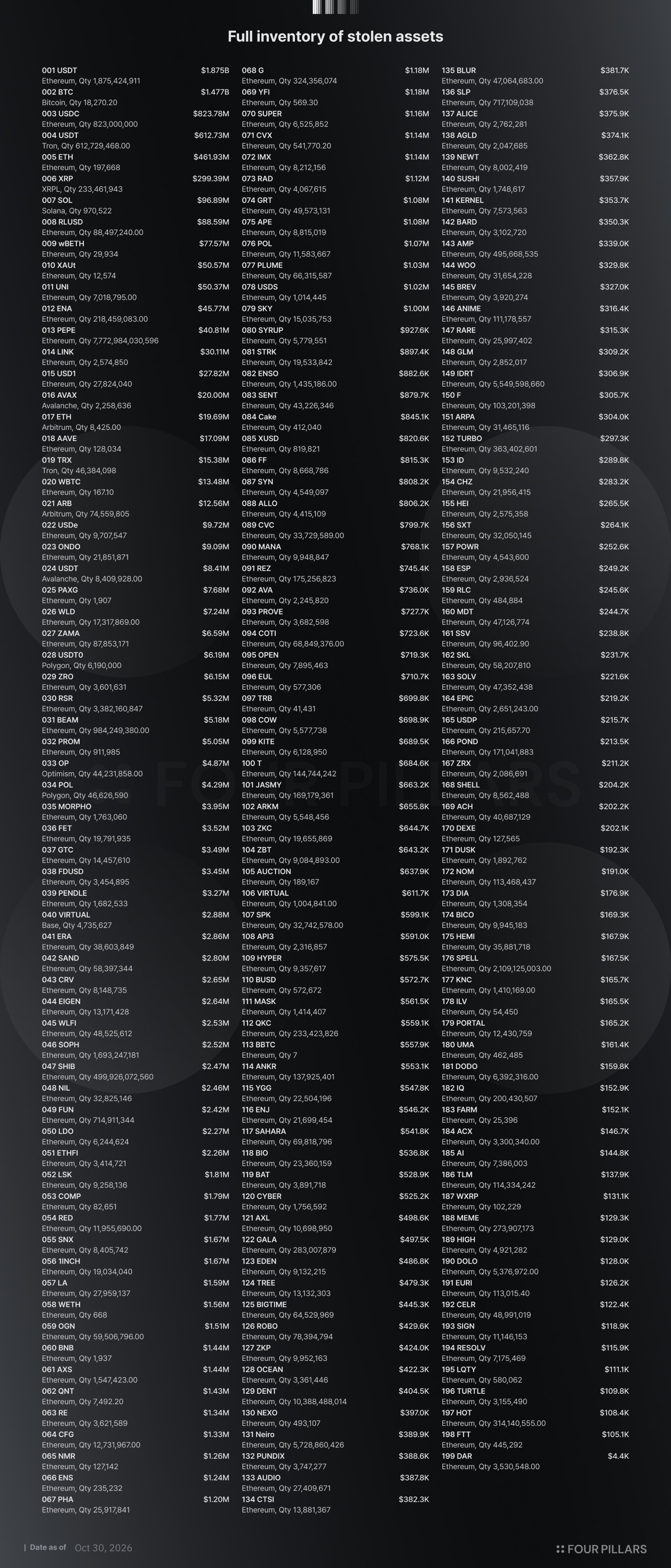
Starting at 5:04 AM Korean time on October 30, 2026, a record $6.36 billion in assets was stolen from Binance's hot wallets distributed across 10 blockchains, most of which were emptied within approximately 20 minutes. The FBI has identified the North Korean hacking group TraderTraitor as the mastermind. Consistent with the group's recent exchange attacks, this intrusion appears to have directly accessed Binance's internal signature infrastructure, rather than simply obtaining a private key.
Within one hour of the incident, Tether and Circle together froze approximately $2.4 billion in stablecoins.
Including the actions of the Arbitrum security committee and the token project using administrator privileges, over $2.8 billion in stolen assets were frozen or recovered. Binance also raised $6.34 billion of its own funds to fully cover the losses, without relying on external borrowing. Thanks to its reserve certificates and the phased resumption of withdrawals starting November 1st, according to its own data, the net outflow on the first day of resumption accounted for only about 2.1% of total assets. However, this result is largely due to the fact that the victim was Binance—if an event of the same scale occurred on a less resourceful exchange, a run would be almost inevitable. After the resumption of withdrawals, approximately 90% of the funds leaving Binance flowed to addresses outside the top ten exchanges, indicating a rising demand for self-custody. However, personal wallets are not a safe haven either; tampered Ledger devices and maliciously updated Trust Wallets are examples. As such incidents become more frequent, the demand for open-source wallets, where users can inspect their design and internal structure, will further increase. Join the Four Pillars Telegram group for the latest crypto insights: https://t.me/FourPillarsGlobal
1. Event Overview
Given the scale of the event, numerous analyses have emerged since its occurrence, and most readers likely already understand the general outline. However, many versions are currently circulating, some of which are inaccurate. Therefore, this article begins at the starting point of the event, reconstructing what happened step by step.Join the Four Pillars Telegram group for the latest crypto insights: https://t.me/FourPillarsGlobal
1. Event Overview
Given the scale of the event, numerous analyses have emerged since its inception, and most readers likely already understand the general events. However, many versions are currently circulating, some of which are inaccurate. Therefore, this article starts from the beginning of the event and reconstructs what happened step by step.
1.1 Abnormal Withdrawal Request
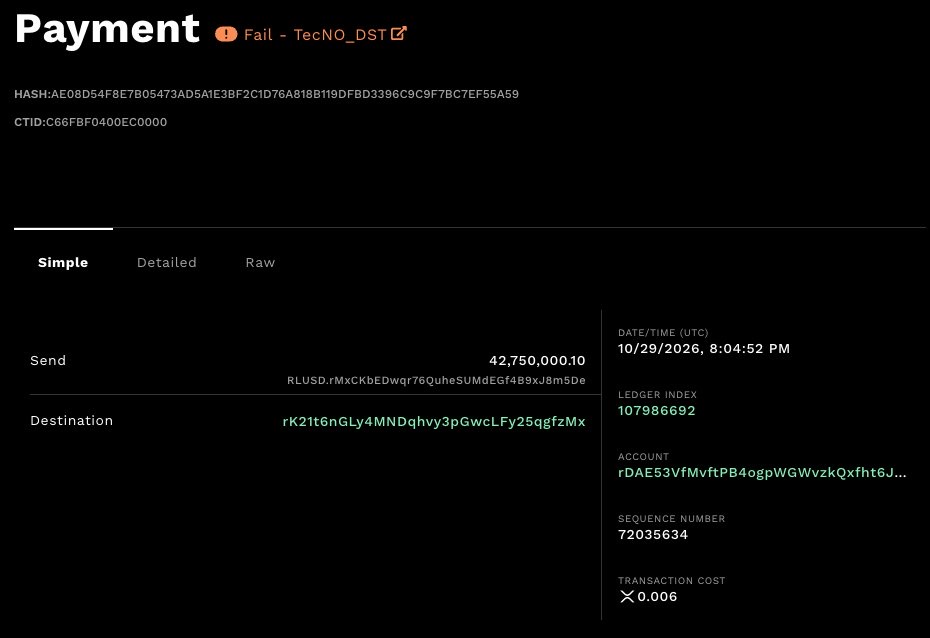
Source: XRPL Explorer
The earliest abnormal withdrawal attempt appeared on Binance's XRP Ledger wallet. At 5:04 AM Korean time on October 30th, the attacker attempted to transfer 42.75 million RLUSD to their own address, but the transaction failed. The reason is that the design of XRP Ledger requires new accounts to receive XRP, the network's native token, before they are activated.
1.2 How Binance and its ecosystem responded
Following the incident, a series of responses were launched, extending from Binance itself to the projects whose tokens were stolen, and then to DeFi protocols.
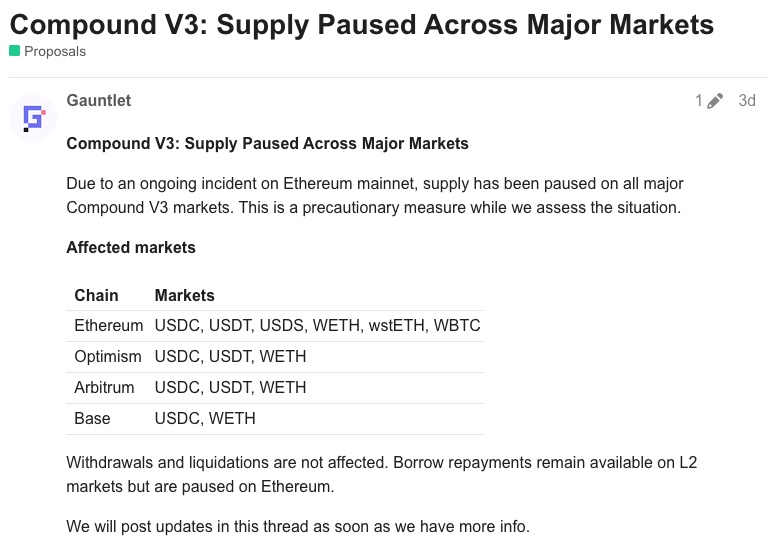
Source: Compound Community Forum
Compound Finance, as a precaution, froze the main lending markets on Ethereum, Optimism, Arbitrum, and Base to prevent further losses.
The following are the known specific actions of each project.
World Liberty Financial: Frozen approximately $75 million worth of USD1 and WLFI. Synthetix: Used administrator privileges to forcibly recover 8.41 million SNX tokens, transferring them to protocolDAO's Safe wallet. The Sandbox: Used multi-signature management of the token contract to forcibly recover 58.4 million SAND tokens. Pundi X: After communicating with Binance, froze 3.7 million PUNDIX tokens in the attacker's wallet and transferred them to a Binance address. Beam: Used multi-signature management of the token contract to directly destroy 984 million BEAM tokens in the attacker's wallet. Ultimately, over $2.8 billion in stolen assets were frozen or recovered.
1.3 How Stolen Funds Flow
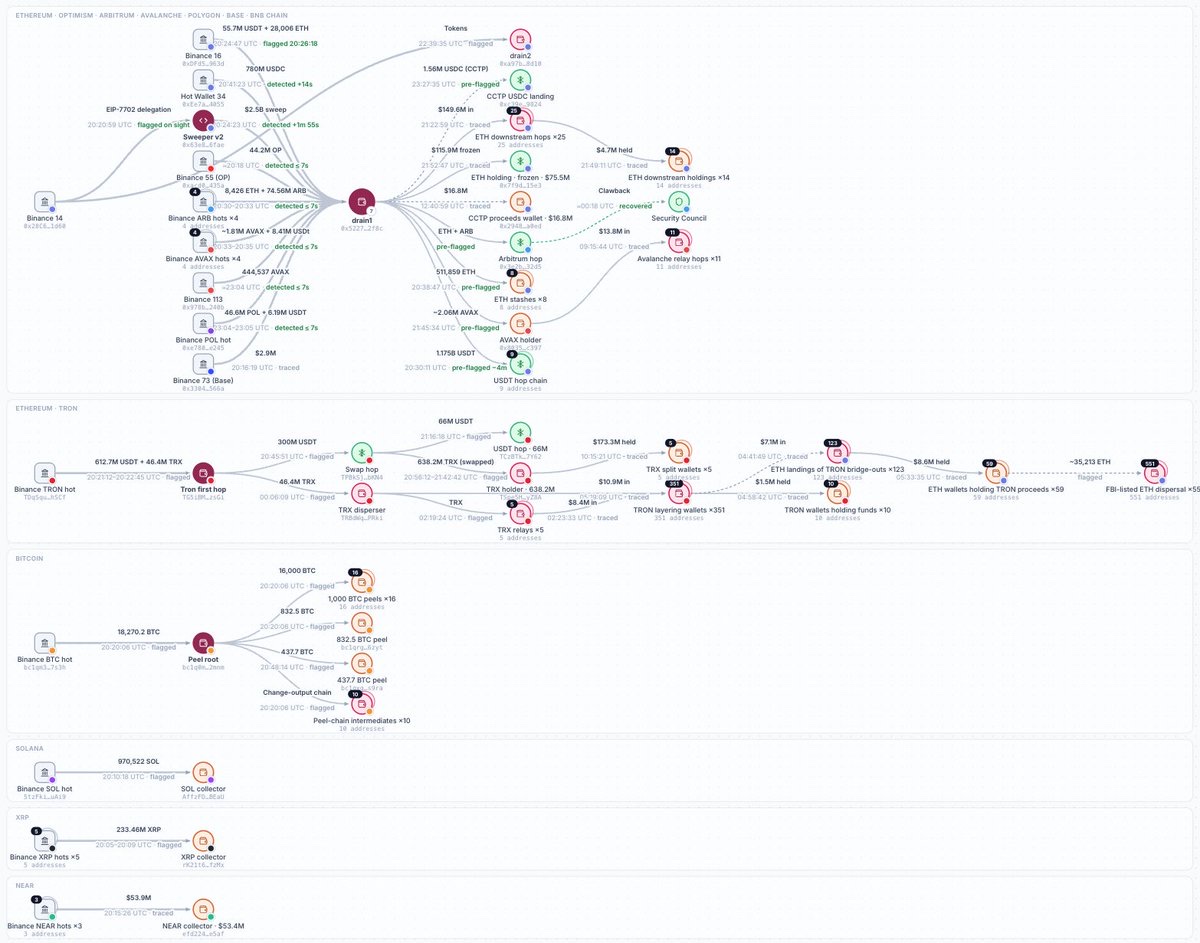
Source: Blockaid
As with most large-scale thefts, the funds stolen from Binance were not immediately laundered. Most of the funds were converted into native tokens that cannot be frozen and then distributed to numerous addresses. These assets are typically disposed of through over-the-counter trading or long-term laundering, thus requiring continuous tracking.
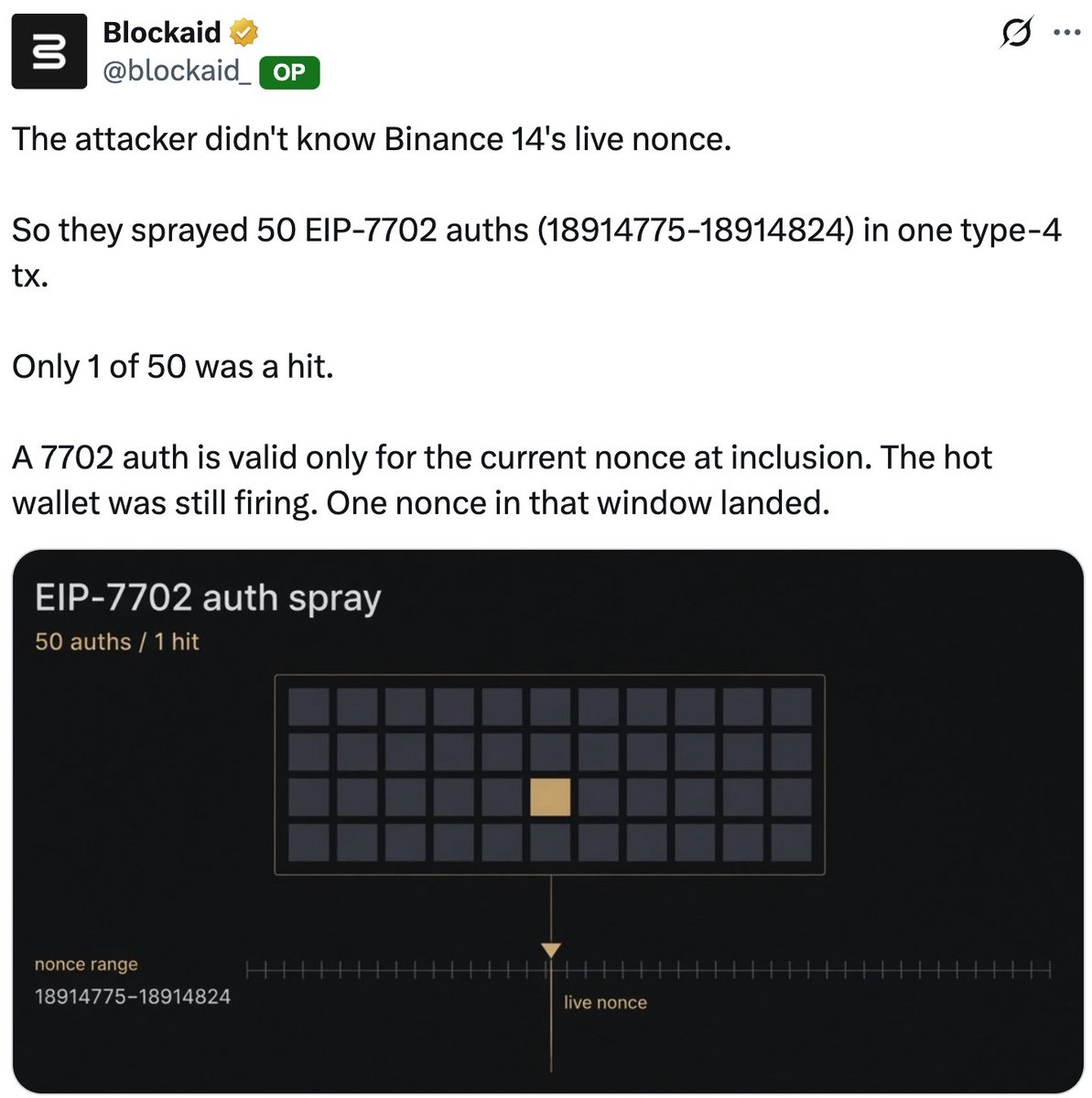
For example, of the $1.4 billion stolen from Bybit in early 2025, about 5% of the funds are still traceable on-chain; in the Drift incident this April, over 98.8% of the funds have not yet been laundered (see LazarusBounty). Asset transfers based on Tron are particularly complex. Following the attack, the funds were dispersed across Ethereum, Bitcoin, and Arbitrum via various pathways including Relay, THORChain, Chainflip, Symbiosis, USDT0, and Across. Reportedly, some funds also flowed out through channels with harder-to-identify withdrawal addresses, such as the Bitget Wallet cross-chain bridge and Bridgers. Source: ZachXBT Some of the assets laundered through THORChain were also mixed with funds attributed to the North Korean cybercrime organization TraderTraitor in the September Bitget theft, effectively confirming that this incident was also orchestrated by North Korea. It is particularly noteworthy here the attitudes of various agreements towards laundering stolen funds. Circle, which was previously the least willing to freeze stolen funds, was the fastest to act this time; while THORChain stated that due to the decentralized nature of the network, forcibly stopping transfers is practically impossible. THORChain has consistently maintained this stance on the flow of stolen funds, and it has sparked controversy each time. When Bybit was hacked in February 2025, Lazarus used THORChain as the main channel to exchange stolen ETH for BTC. Some node operators attempted to suspend Ethereum transactions, but were quickly overturned by other nodes. In the KelpDAO incident this April, most of the funds that could not be frozen on Arbitrum were also exchanged for BTC through THORChain. In the Bitget case in September, Bitget publicly demanded that THORChain block the attacker's address, but THORChain refused, citing "no mechanism to block a single exchange, only to suspend transactions as a whole or on a chain basis." Interestingly, THORChain reacts quite differently when its own funds are compromised. On May 15th of this year, approximately $10.7 million was stolen from one of THORChain's Asgard vaults because a malicious node operator leaked key information during the signing process. The node operator quickly reached a consensus on Discord and suspended all transactions on the network through on-chain voting, resulting in a shutdown of approximately five weeks. This contrasts sharply with external hacking incidents, which typically require the consent of more than two-thirds of the nodes and usually involve a choice not to intervene. Source: FBI. In a statement based on its preliminary investigation, the FBI officially named TraderTraitor as the perpetrator and specifically named THORChain node operators in its response, demanding their cooperation. A THORChain co-founder responded that, essentially, all transactions passing through THORChain are traceable. Ultimately, THORChain did not take any concrete action regarding this incident. Ironically, on October 31st, Ethereum experienced a block reorganization, causing THORChain to malfunction and temporarily suspend transactions, thus putting the attacker's exoneration on hold for a period. The debate over how to handle stolen assets has been ongoing for a long time. After Cetus was hacked last year, Sui froze the stolen funds through an emergency upgrade, which severely divided public opinion: one side criticized Sui for being a centralized chain, while the other argued that victims should be allowed to recover their assets first. In this incident, stablecoin issuers, public chains, and projects froze funds at multiple levels and in different ways, but similar criticisms were almost nonexistent. My feelings about this are complex. The rapid freezing prevented the spread of losses, which is clearly commendable. However, I also feel uneasy: the attackers who witnessed this incident firsthand now know what can be frozen and what cannot. In the next attack, they will dispose of freezeable assets more quickly, leaving less time to respond. As it becomes clearer which assets and paths allow administrator intervention, stolen funds will flow more into channels like THORChain, which are less likely to be actively interfered with, and the likelihood of successful tracing will decrease even faster. 2. Root Cause Analysis Binance first disclosed the attack's deployment method in its initial report on November 3rd, stating that some technical details would not be disclosed at this time to avoid exploitation in subsequent attacks. However, the disclosed content basically confirms the situation inferred from early on-chain data. This section will compare and analyze the intrusion path described in the report with on-chain records. Source: Binance. Binance's initial report indicates that this attack was not a single point of attack starting with a laptop, but rather a multi-stage operation spanning several months, utilizing fake interviews, malware, and internal AI tools. The timeline, combining the report's narrative with on-chain records, is as follows. June: Wallet DevOps engineer A downloaded a tampered Homebrew installer while searching for and installing a popular AI programming tool. Binance's security team detected the anomaly, replaced the device, and rotated all related credentials. However, in this process, A's job responsibilities and information about his wallet infrastructure team colleagues were exposed to the attackers. September: Software engineer B was contacted on a legitimate job search platform by someone claiming to be a project director. In the first round of interviews, the person impersonating HR built trust by showcasing social media accounts filled with personal photos and videos. Near the end of the second round of interviews, B was asked to download an assignment on his work computer. Malware hidden in the assignment replaced legitimate development tools with a malicious version during installation, which was not detected by the security tools deployed at the time. October 20: Using B's computer as a springboard, the attackers used internal AI tools to take over the computers of A and another wallet software engineer, C. Subsequently, on A's computer, the attacker found a token with container deployment permissions. From October 28th to 1:47 AM on October 30th: The attacker obtained funds from Tornado Cash, deployed the sweeper contract, and practiced the attack. From 2:15 AM to 4:56 AM on October 30th: The attacker logged into C's computer, deployed the container using the credentials stolen from A, and ran the attack script. At 5:04 AM: The first abnormal withdrawal attempt occurred. This sequence follows a fairly typical platform infrastructure intrusion script, reminiscent of the CoinsPaid incident in 2023. At the time, the attackers impersonated Crypto.com recruiters, contacting targets via LinkedIn private messages. They reportedly spent six months studying CoinsPaid's organizational structure and role-based permissions to pinpoint their targets. The malware delivery method was similar to this time: after several rounds of recruitment, the target was tricked into installing malware disguised as an assignment during the final programming test. The main difference was that a DevOps engineer's mistake significantly shortened the time it took for the attackers to understand Binance Wallet's infrastructure team. If anything is unusual, it's the recurring presence of AI tools in the attack path. In June, a popular AI programming tool served as bait; in October, an internal AI tool became a springboard to other engineers' computers. An AI tool capable of executing commands and accessing multiple systems on a developer's computer is essentially an "insider" with extensive privileges. Granting permissions to internal AI tools will become a new item on exchanges' security checklists. 2.2 EIP-7702 and the Sweep Contract On Ethereum, the target of the attack was a hot wallet (0x28C6...1d60) marked as Binance 14. Unusually, the attacker exploited EIP-7702. EIP-7702 was introduced with the Ethereum Pectra upgrade in May 2025. When an External Account (EOA) signs a delegation authorization, this feature mounts the code of a smart contract to that address. Every subsequent call to that address executes the mounted code. The delegation remains valid until a new authorization is signed at the same address, overwriting it. In personal wallets, this feature is often used to package multiple transactions or have others pay gas on your behalf. Conversely, the same characteristic means that anyone who can induce a wallet to sign a delegation to their own contract can take over that wallet; from that moment on, all assets in the wallet can be transferred out by their code. This is exactly the effect the attackers were aiming for. The attackers made extensive preparations for this. Their operating address (0x7C86...5CA0) received its first funds—0.1 ETH—from Tornado Cash at 4:39 PM on October 28th. At 11:28 AM the following morning, this address deployed the first version of the sweep contract, one function of which could transfer all specified tokens and ETH at once. Subsequently, from 10:51 PM on the 29th to 1:47 AM on the 30th, the attackers conducted rehearsals using three wallets under their control, each time covering the entire process from delegation to asset transfer, with amounts ranging from $2 to $6.
Source: Blockaid
At 5:24 AM Korean time, three minutes after the order took effect, the operating address invoked the buy function. In one transaction, more than 60 types of assets, including 167,464 ETH and 1.615 billion USDT, worth approximately $2.53 billion, were transferred to the receiving address (0x5227...2f8c). The problem is that the delegation authority remained even after the initial theft, leading to further losses. Binance 14 had execution rights over a smart account owned by Binance, and the attacker used the common execute function to withdraw 823 million USDC from that account. Binance's deposit aggregation system was also still aggregating deposits to Binance 14, allowing the attacker to further absorb newly arrived assets. For over two hours after the initial aggression, the attacker continued to acquire new assets, and the delegation status remained in place for over three hours. Because this attack utilized EIP-7702, this feature itself has been scrutinized. Those who believe EIP-7702 is responsible offer the following arguments. Without delegation, an attacker would have had to issue separate transactions for each of the more than 60 assets to transfer them. These transactions would compete with Binance's normal withdrawals for nonce, and many would fail. Delegation allowed the attacker to transfer $2.53 billion in a single call. In the past, even if the signature system was compromised, attackers had to re-sign each transaction, and cutting off access would stop the outflow. Delegation, however, surrenders the entire account at once, erasing the time needed for discovery and response. In fact, for more than two hours after the initial sweep, the attacker continued to receive new deposits, and Binance 14 did not issue any signatures. Withdrawal limits and frequency limits are fundamental security measures because they buy time for response, which delegation takes away. Pectra's existing regular accounts never agreed to enable this feature. It's unreasonable to reduce the security of existing users and then tell them to "switch wallets if they feel insecure." Addresses like hot wallets, which have no delegation needs, should have a way to register as "never to be used." The only way to revoke a delegation is to sign a new authorization pointing to address zero within the same wallet. Since the delegation remains on that address even if the private key is changed, revocation means signing again with the leaked private key. On the other hand, those who believe EIP-7702 should not be blamed offer the following argument: Delegation authorizations are validly signed using Binance 14 keys and executed on-chain as designed. The problem is not a flaw in the protocol, but the abuse of the signing infrastructure. An attacker capable of signing 50 delegation authorizations can also sign ordinary transfers. In fact, at the same time, wallets on Binance 16 and nine other chains were emptied using only ordinary signatures, without using EIP-7702. Smart contract wallets with access policies have long existed, but Binance chose not to use them. Delegation blacklists require an additional status query for each delegated transaction, and the list must be maintained permanently, which means all users bear the cost of patching for a few exchanges. I agree that EIP-7702 itself is not the problem. How a feature is used is the responsibility of the user; EIP-7702 is not mandatory. Delegation will never occur under any circumstances unless the wallet key directly signs the delegation authorization. Exchange withdrawals never require signed delegation authorization. Binance's signature system generated 50 delegation authorizations, which is a failure of its signature strategy. Binance actually had a window of opportunity to mitigate this, because the code was attached to Binance 14 the moment the delegation took effect. This state change was visible to anyone on-chain for the 3 minutes and 24 seconds before the buyout. In my opinion, an exchange of Binance's size could have prepared for this: establishing a system that could immediately alert when hot wallets are attached with code via EIP-7702, and preparing an approved reversal transaction in advance. 2.3 Leaked Signature Authorization In recent years, hacks targeting large exchanges, especially those attributed to North Korean-related organizations, have exhibited a recurring pattern: attackers do not directly steal hot wallet private keys, but rather compromise internal infrastructure, hijacking signature authorization or replacing data to be signed. In May 2024, DMM Bitcoin: Approximately 4,502.9 BTC were stolen. According to the FBI, TraderTraitor, posing as a recruiter, compromised the computer of a Ginco employee and used it to tamper with a legitimate transaction request issued by a DMM employee. In July 2024, WazirX: Approximately $235 million was stolen. In February 2025, Bybit: Attackers tampered with the signature interface through a Safe developer's computer. The signers believed they were approving a normal transaction, but in reality, they were handing over control of their cold wallets. In September 2026, Bitget: Attackers compromised the wallet infrastructure backend and forged transaction data. Bitget stated that the attackers neither obtained the private key nor forged the user's withdrawal request. Therefore, the most unusual aspect of this incident is the delegation itself. Delegation is not a withdrawal transaction. Even if the exchange's withdrawal operations never require it, Binance's signature system still generated 50 such transactions. Assuming the signature system doesn't understand what it's signing, or the attack completely bypassed it, it cannot distinguish whether a request is a withdrawal, delegation, or something else. These types of attacks cannot be stopped by multi-party computation (MPC) or hardware security modules (HSM) alone—although financial institutions commonly use these two to protect keys. These tools only prevent key leakage, not what the key is used to sign. Unless the signer understands what they are about to sign and independently verifies it according to the policy, this step remains exposed to attacks. 3. Impact and Implications 3.1 Information Requires More Rigorous Verification What worried me most during the incident response was how quickly misinformation spread. Shortly after the incident, rumors circulated in the community that Binance had orchestrated the hack to shake the market. However, within hours, Tether, Circle, and other third parties had frozen approximately $3 billion. Some of the stolen funds even passed through THORChain and were mixed with funds from the Bitget theft. If the attack was orchestrated by Binance, these facts are difficult to explain. Denials of North Korean involvement further fueled suspicion. However, the FBI has named North Korea, and the current circumstantial evidence makes it difficult to deny that TraderTraitor was the perpetrator. On November 1st, the account @doomerfied, known for spreading fake news, posted a message about a DevOps engineer at Binance, claiming that the engineer had a romantic relationship with a North Korean agent and left his laptop unattended on the day of the incident. A media account then reposted the claim, which quickly spread on X. The content also rapidly disseminated in the South Korean Telegram community, and many people still believe this "emotional scam" story. When the public is extremely confused by a major hacking incident, such misinformation does nothing to help with recovery. In times of information overload, influential media outlets need to verify their published content with far higher standards than they currently do. 3.2 Where Should Personal Assets Be Stored? This incident was fortunately brought under control, largely because the victim was Binance. Binance raised $6.34 billion using its own resources, without relying on external borrowing; according to them, net outflows on the first day of resumed withdrawals accounted for only about 2.1% of total assets. In 2025, Bybit had to borrow ETH from other exchanges and institutions to cover its losses. Given this, I believe that a run would be unavoidable if an event of similar scale occurred on any other exchange. Moreover, the intervals between attacks on large exchanges are shortening: Upbit last November, Bitget this September, and now Binance. The problem is that funds leaving exchanges have few good destinations, and personal wallets are also targets. In October, an unidentified component was discovered in devices sold by CryptoBilis, an authorized Ledger reseller in Southeast Asia. According to the Ledger security team, this component reads the content displayed on the device screen: when the mnemonic phrase recovery interface appears, it decodes the 24 words and transmits them via the LTE network. The estimated losses caused by the tampered Ledger devices exceed $90 million. The same reseller has reportedly also sold tampered Trezor devices—Trezor is one of the largest hardware wallet vendors, alongside Ledger. Software wallets are no different. A malicious update to the Trust Wallet browser extension last December resulted in the theft of approximately $7 million. This year has seen a series of worrying supply chain attacks targeting various crypto wallet repositories. Despite this, users appear to be turning to self-custody. A report citing data from a data provider states that approximately $4.5 billion left Binance within 24 hours of withdrawals resuming, with only about $368 million flowing to the other top ten exchanges. In other words, 90% of the outflowing funds went not to other exchanges, but to addresses outside of exchanges.
Source: Ambire
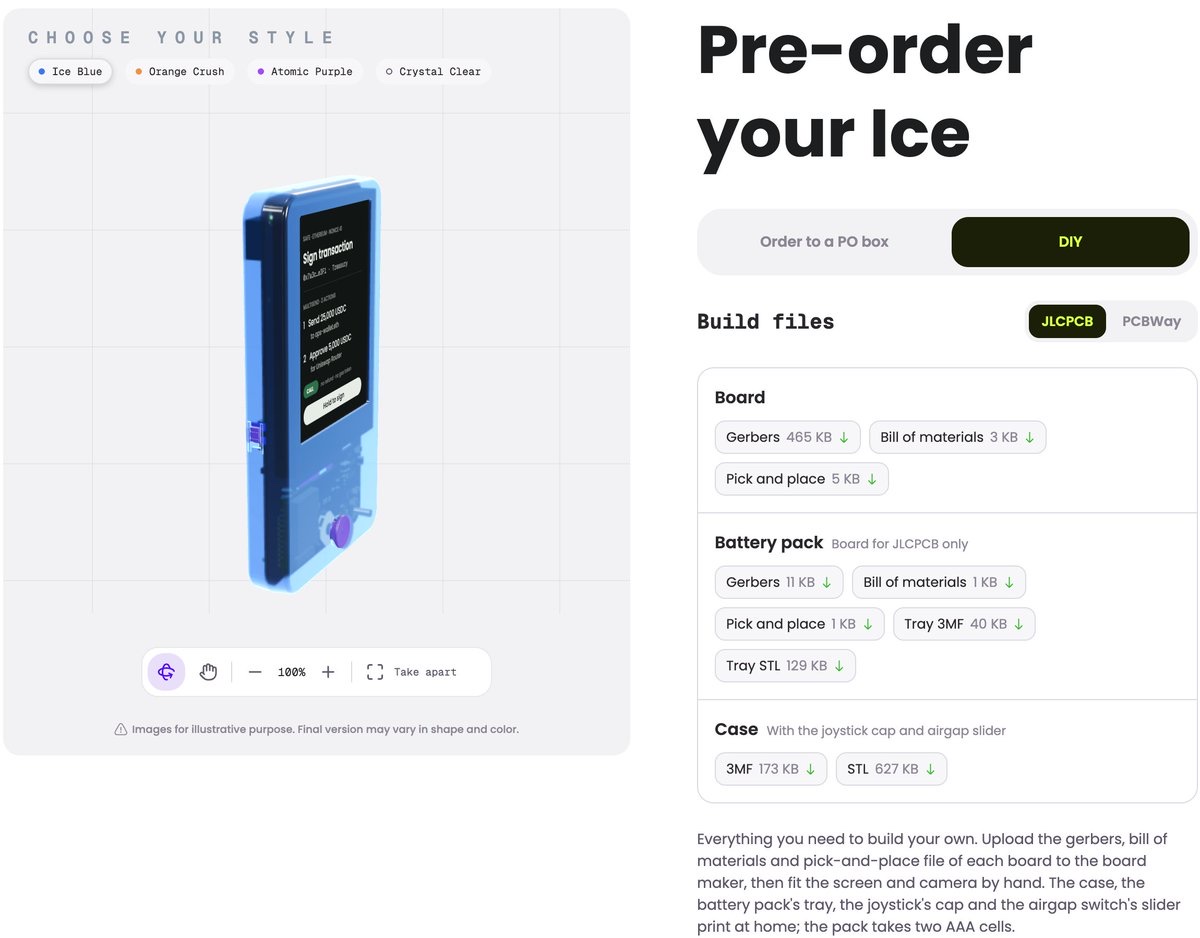
In this context, wallets based on open software and open hardware may be a better choice for individuals. Coincidentally, on the same day as the Binance incident, Ambire released its open-source hardware wallet, Ice. Ambire publicly disclosed the wallet's hardware design, circuit board files, and firmware, allowing anyone with the necessary equipment to assemble it themselves; the finished products they sell also feature transparent casings, allowing anyone to see the internal components. Of course, open source does not automatically equal security, and very few users will actually verify their devices against publicly available designs. However, I predict that as incidents become more frequent, people will prefer tools that allow for self-checking and verification, and the demand for open-source self-hosted wallets will increase accordingly. 3.3 Binance and the Crypto Ecosystem's Rapid Response is Worthy of Being a Model Binance's response was remarkably swift. On the day of the incident, it pledged to fully cover all losses and stated that it had prepared $6.34 billion in its own funds. Regarding the solvency issue that users were most likely concerned about, it responded with proof of reserves. Withdrawals resumed quickly, starting in batches at 3 PM on November 1st. The first phase covered 15 networks and assets, including BTC, ETH, USDT, USDC, BNB, SOL, and XRP; by 9:36 PM that day, the first phase was fully restored. According to Binance data, within approximately 9 hours and 30 minutes of the resumption of withdrawals, $4.649 billion was withdrawn and $1.01 billion was deposited, resulting in a net outflow of $3.64 billion, representing 2.1% of Binance's total assets of $171 billion. On DefiLlama, the net outflow over 24 hours initially rose to approximately $7 billion before falling back to less than half.
I think the most noteworthy point is that the Proof of Reserve finally came into play this time. Binance introduced this mechanism shortly after the FTX crash in November 2022, and it was criticized at the time for only showing the balance at a single point in time and not disclosing total liabilities. This criticism still holds true today, but considering the simultaneous outflow of billions of dollars, I think Binance's response was quite swift.
The response outside of Binance was equally impressive. As mentioned earlier, Tether and Circle began freezing funds within an hour of the incident; the Arbitrum security committee and various token projects used administrator privileges to lock or recover assets; Aave and Compound suspended markets to prevent losses from spreading to DeFi. At least in this incident, the entire industry prioritized controlling losses over competition. But as mentioned above, this speed stems in part from the presence of intervention power at many points, which also puts pressure on the industry to respond even faster in the next incident. 4. Others' Perspectives 4.1 Juno, Head of ChainLight Compared to tracing stolen funds, my work is more upstream, focusing on the security of the crypto infrastructure itself. After each security incident, whether forensics or post-incident analysis, I always end up asking the same question: "Is there really no way to know in advance?" Looking back, in many cases, there are more ways to detect warning signs in advance than we imagine. Of course, not every attack can be predicted. But predicting an attack and detecting anomalies are two different things. Even in this incident, there was a window of about three minutes, although very short. From the exchange's perspective, an EIP-7702 transaction originating from its own hot wallet is inherently anomalous. Even without knowing the specific attack method, it's entirely possible to predefine "this should never happen." Therefore, I believe security is not just about finding as many vulnerabilities as possible. Security work also includes defining what constitutes anomalies, verifying that anomalies can indeed be detected, and continuously rehearsing to confirm the effectiveness of the response after detection. Of course, exhaustively listing all anomalous scenarios is extremely difficult, and some believe it's impossible. I also don't believe it's possible to cover them all. But this is not a reason to give up. Ultimately, the only option is to continuously think from the attacker's perspective and patch the gaps one by one. Here's an even more important issue. No matter how well detection and response are implemented, if the system's initial design is flawed, some attacks still cannot be stopped. This is what surprised me most about this incident. Initially, when I heard that someone had launched an attack using EIP-7702 and that other chains had also been emptied, my first reaction was that the key itself had been stolen, not that the signature system was flawed. Because I believe that a signature system should contain only minimal code and verification logic, and should be completely isolated from the production environment and regular access paths: network access should be minimized, and authentication and access control should be strict. Given Binance's scale, I initially assumed that even the transaction splitting and merging processes would have corresponding safeguards. Under such a setup, the signer should only receive the minimum amount of information, and the validity of each request should be verified in an independent environment. For example, the signer should only receive the receiving address and amount as input and assemble the transaction itself; the signature should only be released to arbitrary hashes when a separate offline multi-signature is attached. Implementing this architecture is quite difficult. Even so, a company like Binance should have invested sufficient resources in this area. That said, my focus is not on the right or wrong of a specific implementation, but rather on the extent to which the last line of defense trusts the judgment of the upper-layer system. Some risks cannot be solved simply by adding detection rules; they can only be addressed by changing the architecture. In practice, when you repeatedly write response plans and conduct drills, you often reach a point where you realize, "This design is structurally incapable of preventing this kind of attack." I believe this moment is a crucial discovery. This is precisely the time to redesign the system and seriously consider security at the design level—in other words, "design is security." Equally important as technical design is operational security, or OPSEC. A search for "Binance" on LinkedIn yields a wealth of information about who's on which team and what they do. Finance is also a critical infrastructure. How well are the operational security measures managed for those who control these systems? This reminds me of the MakerDAO (now Sky) case. MakerDAO has a rule called "2.6.6 Alignment Representative Operational Security": if someone reports an Alignment Representative (AD) for violating operational security, that AD will lose their identity, and half of their deposit will be paid to the whistleblower as a bounty. Between 2023 and 2024, several ADs did indeed lose their identities for this reason. In one case in April 2024, the whistleblower received a bounty of 20.84 MKR, equivalent to approximately 70 to 80 million Korean won at the time. This case is noteworthy for a simple reason: it treats operational security as a necessary condition for maintaining system security, rather than a matter of personal habit. Those responsible for core cryptographic infrastructure are, in effect, the guardians of a huge vault. Even without actual asset theft, the information they possess about system design and internal operations, if leaked, could pose significant risks to the company. Their positions demand a correspondingly high level of responsibility, and I believe the company should treat and reward them accordingly. Finally, I believe all of this will be even more important in the future because, regardless of whether it's related to AI, attackers' productivity is undergoing a fundamental change. If attackers of the past were single-core, today they are almost like having infinite cores: they can transform their knowledge into intelligent agents, automate attack methods, and execute tasks that previously required manual labor in parallel and on a large scale. The cost of launching attacks is decreasing, and the attack cycle is shortening. If defenders remain stuck in the mindset of "finding as many vulnerabilities as possible and then patching them," it will be difficult to keep up with this pace. Therefore, I believe that future security strategies boil down to three things. Detection: Even if the attack method is unknown, abnormal states should be detectable. Response: Contingency plans must be repeatedly built and practiced to ensure that once detected, they can effectively prevent or reduce losses. Design: For risks that cannot be prevented by detection and response alone, the system should be redesigned to make the attack itself difficult to execute. All of this must be built on a foundation of rigorous operational security. Ultimately, the important thing is not to predict every attack, but to build a system that can withstand attacks that "no one anticipated." Finding vulnerabilities is important, but security should also include detecting anomalies, responding quickly, limiting losses, and changing the architecture itself when necessary. I want to extend my support to everyone working to protect the crypto ecosystem. 4.2 gss1, Senior Researcher at OtterSec In large-scale security incidents, the extent of loss is not solely determined by the attack itself. The speed of situation assessment after the incident and the ability of relevant institutions to coordinate to prevent further losses are also crucial factors. The Binance hack demonstrated both the importance of incident response capabilities and the potential for industry-wide collaboration. Although approximately $6.3 billion in assets were stolen, approximately $3 billion has been frozen through cooperation with Tether, Circle, and other industry participants. This illustrates the significant role rapid collaboration can play in limiting losses from major security incidents. However, the incident also exposed the limitations of existing response systems. Chainflip stated that funds rejected by its AML screening were returned to new addresses and then deposited again, thus allowing some transactions to pass the check. Symbiosis also acknowledged the limitations of its existing screening system, although it identified the flow of stolen funds and contacted Binance. These cases illustrate that even with self-built monitoring and interception systems, the ability to intercept stolen funds moving rapidly between multiple protocols and public chains remains limited. This incident also raises another question: if the same incident occurred to a smaller project instead of Binance, would the same level of cooperation and rapid response be achieved? I believe an environment needs to be established where every security incident can be responded to quickly, regardless of the scale of the loss or the project's impact. Emergency response channels such as SEAL 911 already exist, but collaboration between exchanges, stablecoin issuers, blockchain projects, and cross-chain bridges still needs to be strengthened. In particular, if the incident reporting process can be standardized, and verified attacker addresses and the flow of stolen funds can be shared with relevant teams in real time, further transfer of funds can be prevented more effectively. Of course, verification procedures must also be established to prevent false reports and unjustified asset freezes. I hope this incident can serve as an opportunity to improve the emergency response capabilities of the entire industry, enabling anyone, regardless of project size, to receive rapid and effective support. 4.3 jinmo123, Co-founder of QED Audit AI has brought about a "great era of hacking," but we should distinguish between two types of events: AI directly carrying out attacks, and AI acting as an attack path. The Binance case is closer to the latter. Fake Homebrew links promoted through Google ads have been reported multiple times since January 2025, and fake interviews are a tactic North Korea has used for years. What's truly new is that attackers used internal AI tools to reach engineers managing wallet infrastructure. Similarly, one concern is that more and more companies, including Coinbase, are using a unified, single LLM gateway to access AI across their entire organization. Such gateways have the ability to tamper with the output of tool calls, sending malware into users' computers; once their configuration permissions are compromised, no one can monitor the "monitor." However, staying away from AI is not an option either. Since AI accelerates the attacker's lateral movement, defenders will find it equally difficult to keep up without it. Although internal AI tools became the path for this attack, Binance's first response plan was "expanding AI-based anomaly detection," which is ironic but necessary. Detection is equally difficult. The zero-day malware in September went undetected by EDR, and EDR's ability to bypass such trial-and-error tasks is precisely AI's strength. At the same time, AI generates a large number of attempts that do not conform to existing patterns, drowning out genuine signals in noise. This year alone, Binance has intercepted 57 attack attempts related to North Korea. Coupled with other targeted attempts mixed in, few security teams realize that an infection detected in June is related to an attack four months later. This may sound a bit abstract, but the fundamentals still hold true: least privilege, zero trust, and EDR should also apply to AI systems; parts previously labeled as "third-party" or "employee behavior" and excluded from the scope should also be considered part of the attack surface. There are no universal answers to security in the AI era, but there are some positive signs: the effectiveness of AI-based code scanning is being recognized by more people, and asset freezes are happening much faster than after the Bybit incident; "code is law, unless there's a hacking incident" is becoming a growing consensus. Nevertheless, this October is still the worst cybersecurity awareness month ever. Hopefully, things will be different a year from now. *Current evidence is insufficient to consider the Binance case an AI-initiated attack. However, it's an open secret that almost any part of the internet can be hacked; it's just that few people have both the motive and the capability. Security was once an arbitrage opportunity between the cost of an attack (knowledge, information, and time) and the value of the underlying asset. AI has significantly reduced the cost of launching an attack. In my view, the recent series of hacking incidents is a result of the expansion of the hacker community or the increase in hacker AI. Disclaimer: The author of this report may hold personal positions or have an economic interest in the assets or tokens mentioned in the text. However, the author declares that no transactions have been conducted using material non-public information obtained during the research or writing process. This report is for general informational purposes only and does not constitute legal, business, investment, or tax advice. It should not be used as the basis for any investment decisions, nor should it be considered as guidance for accounting, legal, or tax matters. Specific assets or securities mentioned in the text are for informational purposes only and should not be construed as an investment offer, solicitation, or recommendation. The views expressed in this article are solely those of the author and do not represent the position of any affiliated institution, organization, or individual, and are subject to change without notice. Furthermore, except for individual disclosures contained in each report, Four Pillars may hold existing or potential investments in some of the assets or protocols discussed herein; Four Pillars' FP Validated may already be running as a node on some of the networks or protocols discussed herein, or may do so in the future.


 Zoey


