If there was one astonishing phenomenon in the capital markets of 2024, it was this: everyone wanted to be the next Michael Saylor, but the vast majority failed along the way.
In the past few months, a number of so-called "Bitcoin Treasury Companies" have emerged in the US stock market. They attempted to replicate the MicroStrategy playbook: issuing bonds, buying cryptocurrencies, and driving up stock prices. However, the results were disastrous.
In a recent in-depth interview, veteran investor Andy Edstrom bluntly described this phenomenon as a "dumpster fire." Many imitators saw their stock prices plummet by 80% or even 95% from their peak, leaving countless retail investors penniless in this round of "false prosperity." Why is it that the same strategy is a legend for MicroStrategy, but a joke for others? In an era where AI narratives are crushing everything like a freight train, is Bitcoin still the best safe haven for assets? Today, we'll peel back the noise and discuss the underlying logic. Chapter 1: The essence of MicroStrategy is not "buying coins". This is a counterintuitive understanding: if you think Michael Saylor is just borrowing money like crazy to buy Bitcoin, you probably only understand the first layer. Andy Edstrom proposed an extremely insightful mental model: MicroStrategy is essentially profiting from interest rate differentials by issuing "dollar stablecoins." Let's break down this mechanism: USDT (Tether), which everyone is familiar with, is backed by US Treasury bonds and issues dollar-denominated tokens. What MicroStrategy is essentially doing is "using Bitcoin as collateral to issue yield-generating dollar tokens." The "dollar token" here corresponds in reality to its issued convertible bonds and preferred stock. Mechanism: It borrows low-cost dollars from the market (through bond/preferred stock issuance) and then converts these funds into Bitcoin. Safety Pad: To ensure the security of this system, an extremely high "over-collateralization ratio" is necessary. Andy points out that considering Bitcoin's volatility (it can drop 70-80% in a year), MicroStrategy maintains an over-collateralization ratio of approximately 5:1. This is why it is currently the only successful player. It possesses a massive stockpile of Bitcoin (worth approximately $56 billion at the time of podcast recording), allowing it to safely amplify returns through leverage. This is textbook financial engineering. In contrast, those imitators known as "DATs" (Digital Asset Reserves) are often cobbled together by teams with no prior experience managing publicly traded companies, lacking core cash flow, and unable to even submit basic SEC financial reports on time. They attempt to play the high-leverage game without a safety cushion, only to reap the consequences. "This is a world of binary oppositions: MicroStrategy is in a solitary alliance, while the other imitators are mostly a complete disaster." Chapter Two: The Fog of Valuation—Why Pay for Premiums? This leads to the biggest debate in the investment world: If I want to hold Bitcoin, why not buy spot instead of the heavily overvalued MSTR? This involves a core metric: MNAV (Market Net Asset Value). Many enthusiasts try to brainwash the market, saying that these companies deserve a 2x or even 15x MNAV premium. Andy Edstrom, with an economics background, scoffs at this. He reviewed the century-long history of closed-end funds: (Source footnote ng-version="0.0.0-PLACEHOLDER">) The typical scenario is that closed-end funds are usually traded at a discount (e.g., a 10%-20% discount), with only very rare instances of a small premium.
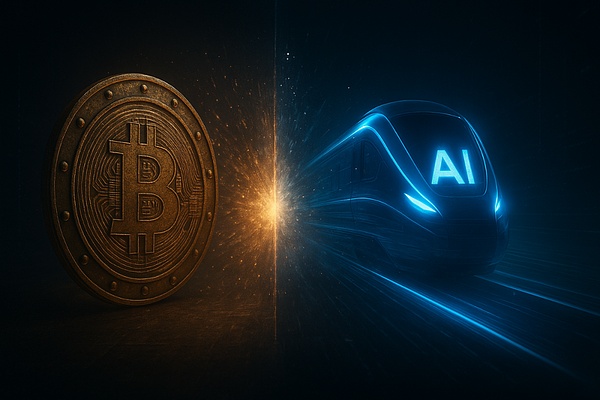
Exception:Only exceptionally well-managed holding companies like Berkshire Hathaway, or banks with 10x leverage, can maintain a book value premium of around 2x.. The conclusion is harsh: Unless a company can prove it can outperform Bitcoin itself through active management (such as low-interest financing, cashing out at high prices and buying back at low prices), it should not enjoy a high premium in the long run. For MSTR, the market is willing to pay a premium because it has indeed increased the amount of Bitcoin per share through capital operations. But for other small companies that have no positive cash flow and are simply hoarding Bitcoin (or even Ethereum or BNB), paying a premium is simply paying an "intelligence tax." We must face an awkward reality: over the past year, Bitcoin's price movement has appeared "boring" and weak compared to AI tech stocks. Why? Because AI's narrative is too sexy. Preston Pysh points out a very insightful observation: for high-net-worth individuals with substantial wealth, understanding Bitcoin requires an extremely high cognitive threshold (cryptography, monetary history, geopolitics). This is a huge "educational burden." In contrast, AI is "instant gratification." Anyone can turn on their computer, type in a question, and ChatGPT or Gemini instantly provides a stunning answer. Investors immediately understand: "Wow, this can change the world! I want to buy the company that makes it." This explains the flow of funds. Take Google as an example; despite initial ridicule, its Gemini model iterates extremely quickly and is now rivaling OpenAI. Meanwhile, Elon Musk's Tesla, with its Robotaxi and humanoid robots (Optimus), is building the prototype of the next industrial revolution. "This thing (AI and robots) is like a high-speed freight train. When you see the scale of the factories Elon envisions, you'll think it's crazy. But when it actually comes to fruition, it will absolutely dominate the market." But does this mean Bitcoin is obsolete? Absolutely not. Andy Edstrom maintains his 2019 assessment: Bitcoin is still expected to reach $400,000 per coin over the next 10 years (by 2029) (based on an $8 trillion network value). However, the investment logic has changed. In 2019, Bitcoin was considered "the best risk-adjusted investment of this generation." Today, in 2025, while it still has 5x growth potential, it faces strong competition from the explosive growth of AI productivity. The world is diverging into two main lines: Unlimited fiat currency printing (driven by social chaos brought about by government debt and AI). Extreme productivity deflation (driven by AI and robots). Bitcoin is the shield against the first, while tech giants are the spear that seizes the second. Conclusion: Finding Certainty Amidst the Noise When the tide recedes, we find that most of the so-called "Bitcoin concept stocks" are swimming naked, while true giants (such as MSTR) are evolving into a new type of financial institution. For ordinary investors, the current market is full of noise. Here are three action guidelines extracted from this in-depth conversation: 1. Beware of the leverage trap of "pseudo-reserve companies" Don't be misled by marketing terms like "the next MicroStrategy." If a company doesn't have strong core business cash flow or enough Bitcoin for over-collateralization, its high premium is just a castle in the air. If you are bullish on Bitcoin, buying Bitcoin itself (or a spot ETF) is always the lowest-risk option. 2. Embrace the Underlying Logic of Energy and Computing Power The ultimate goal of AI is energy. With the explosion of data centers and robotics, electricity demand will grow exponentially. Solar energy cannot fill all the gaps, and natural gas and other baseload energy sources may be severely undervalued by the market. Don't just focus on the chips; look more at the pipelines that power them. 3. Bitcoin is "insurance," not a "lottery ticket." If you buy Bitcoin simply because you want to get rich quick, you might be disappointed or lured away by the surge in AI prices. The ultimate reason to hold Bitcoin remains: censorship resistance and protection against fiat currency collapse. When governments are forced to turn on nuclear-powered printing presses to combat the unemployment boom caused by AI, Bitcoin, as an immutable value network, will be the strongest foundation on your balance sheet. In this era of uncertainty, having a private key (Self-custody) remains the last line of defense. "Everything takes longer in Bitcoin than we think it will."


 Weatherly


