Author: Stacy Muur Translator: Shan Ouba, Jinse Finance
This guide covers 8 leading perpetual contract decentralized exchanges (Perp DEXs) that have launched effective points programs and are worth participating in mining, and shares proven mining strategies and tools. Ready to get started?
Introduction
Since the advent of Hyperliquid, the perpetual contract decentralized exchange industry has entered its most competitive phase. Even after the market crash of October 10-11, 2025, the trading volume in this sector still climbed from $647.6 billion in 2023 to over $1.2 trillion in 2025, accounting for 26% of the global perpetual futures trading market share.
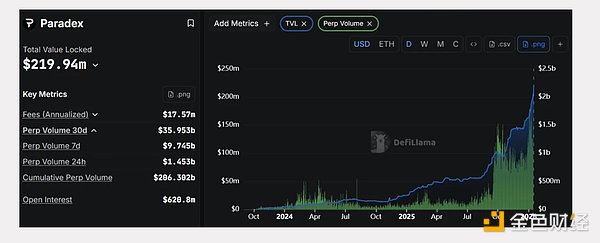
At that time, Hyperliquid achieved what was once considered an impossible feat: creating an exchange that could truly rival Binance and capturing over 70% of the decentralized perpetual trading market share. However, new decentralized perpetual contract exchanges are constantly emerging, with new platforms launching daily. Why are there so many on-chain perpetual contract platforms now? Is it because of Hyperliquid's enormous success? Admittedly, this is one reason, and the sector has become a highly profitable area. However, the fundamental answer lies in this: before 2025, the core competition among perpetual contract decentralized exchanges focused on technology, competing on superior underlying public chains (L1), more advanced ZK systems, and data availability layers with higher throughput. By 2025, the focus of industry competition has shifted from technology to incentive mechanisms. The current industry landscape shows that emerging perpetual contract decentralized exchanges are facing increasing pressure, offering comparable transaction latency, lower fees, and highly attractive incentive programs. Hyperliquid's market share has now plummeted to around 20%, posing a real threat to emerging platforms. For example, Variational has not only attracted significant attention and users with its airdrop/credit programs but has also introduced a refund mechanism for trading losses. In October 2025, trading volume in the sector reached a record $1.2 trillion, nearly doubling from the previous month. This growth was primarily driven by incentive mechanisms, credit programs, and airdrops. Perpetual contract decentralized exchanges (PCEs) have become one of the most worthwhile airdrop tracks in the cryptocurrency space, with various protocols preparing to distribute millions of dollars in airdrops to boost liquidity and activate user behavior. This article will analyze the opportunities in the entire perpetual contract PCE sector and focus on highly practical mining strategies. The core risks of participating in perpetual contract PCE mining are: some platforms have no plans to issue tokens, some tokens will eventually become worthless, making the time-consuming participation unprofitable (such as $VOOI), and some platforms' core purpose is simply to earn transaction fees from users. Therefore, the core question is never "can I participate in mining," but rather "is it worthwhile to participate?" This section will combine trading volume, open interest, user growth, and fee economics to screen for perpetual contract decentralized exchanges worth investing time in. The data is mainly from DefiLlama on January 16, 2026. Paradex V2 is a perpetual contract decentralized exchange built on Starknet's first application chain, emphasizing privacy features. The platform offers free trading, deep liquidity for hundreds of crypto and pre-market assets, supports atomic settlement, and features institutional-grade privacy features and a mobile-optimized interface. Architecturally, Paradex is an integrated DeFi ecosystem comprised of the Paradex exchange, the Paradex chain, and XUSD (a native synthetic USD stablecoin powered by the DIME token).
Core Functionality
Multiple trading pairs support up to 50x leverage
Low Fees: 0.02% for order placers, 0.05% for takers
Cross-margin functionality
ZK-Rollup technology, providing Ethereum-level security
Platform Development Data
Total Value Locked (TVL): Approximately $220 million (from only $25 million at the beginning of 2025, an increase of nearly 6 times)
Cumulative Trading Volume: $206 billion
Holdings: Approximately $620 million
30-Day Trading Volume: $36 billion
Points Program
Core Functionality
Based on the StarkNet zk-Rollup layer, fast transaction final confirmation
Supports up to 50x leverage
Transaction Fees: 0.02% for order placers, 0.05% for takers (ranking among the lowest-fee perpetual contract decentralized exchanges)
Adopts an order book trading model
Platform Development Data
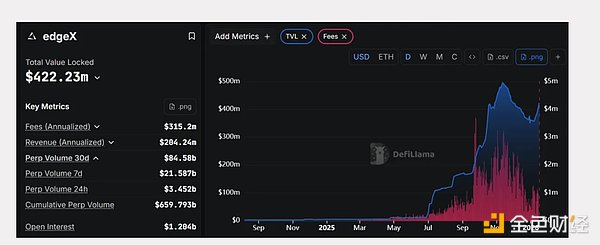
Weekly Trading Volume: $21.59 billion
30-Day Trading Volume: $84.58 billion (consistently ranking among the top five decentralized exchanges for perpetual contracts)
Open Positions: $1.2 billion
Total Locked Value: $422.23 million
Points Program
edgeX recently concluded its 27-week "Open Season"
Weekly Trading Volume: $21.59 billion
30-Day Trading Volume: $84.58 billion (consistently ranking among the top five decentralized exchanges for perpetual contracts)
Open Positions: $1.2 billion
Total Locked Value: $422.23 million
Points Program
edgeX recently concluded its 27-week "Open Season"
The points program has distributed over 7 million points to active users; the TGE pre-launch season will begin on January 7, 2026, using experience points as the incentive unit to reward users' natural platform usage behavior. Experience points will be distributed weekly, and the token generation event is expected to start no later than March 31. Participation Steps:
Visit the edgeX platform to create a trading account: https://pro.edgex.exchange/referral/MUUR
Deposit and start trading. Prioritize spot trading and receive a 3x experience multiplier on your trading volume;
Trade directly on the edgeX mobile app. All eligible actions will earn a 1.2x experience multiplier;
Hold MARU tokens to unlock an additional 1.05-1.15x experience multiplier; Register as a platform courier to receive an additional 1.05-1.1x experience multiplier;
Core Functionality
A Privacy-Focused Exchange
Integrating a Self-Custodial Layer 2 Zero-Knowledge/Verification-Based Settlement Layer with an Off-Chain Order Book
zkSync Atlas Technology Enables High-Performance Perpetual Contracts to Be Composable with Ethereum
The Three-Layer Architecture Design Allows GRVT to Prioritize Increased Throughput and Reduced Transaction Latency While Ensuring Cryptographic Proofs
Platform Development Data
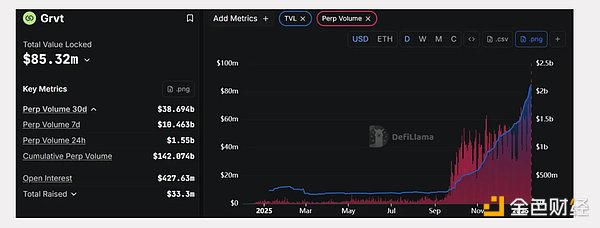
Total Locked Value: Approximately $85 million
Cumulative Trading Volume: $2,142.1 billion
Holdings: Approximately $427.6 million
30-Day Trading Volume: $38.7 billion
Points Program
After long-term development, GRVT was launched in 2024 The points incentive system was officially launched this year, with the first phase of the points program rewarding users who contribute trading activity, liquidity, and position size to the platform. Participation steps: Visit the GRVT exchange website and register an account (email-based registration may require KYC verification depending on the region); Deposit funds into your trading account; Open positions to earn points, focusing on maintaining position size, as this indicator has higher weighting; Participate in the referral program to earn extra commission rebates (rebates are calculated based on the exchange's net revenue and may fluctuate due to order book/take-order fees offsetting each other).
Extended
Extended (formerly X10) is a high-performance perpetual DEX built on Starknet by the former Revolut team. The platform initially focused on perpetual contract trading and is now expanding to an integrated margin model, supporting spot trading and embedded lending functionality.
Extended (formerly X10) is a high-performance perpetual DEX built on Starknet by the former Revolut team. The platform initially focused on perpetual contract trading and is now expanding to include an integrated margin model, supporting spot trading and embedded lending functionality.Extended (formerly X10) is a high-performance perpetual DEX built on Starknet by the former Revolut team.
Core Functionality
Hybrid Architecture: Off-chain order book handles trade matching, risk control, and trade sorting; on-chain settlement is completed
Crypto assets and traditional financial assets support up to 100x leverage
Integrated margin is achieved through XVS liquidity pool shares, combining lending, liquidity provision, and clearing functions
Trading instruments include synthetic and traditional financial assets
Platform Development Data
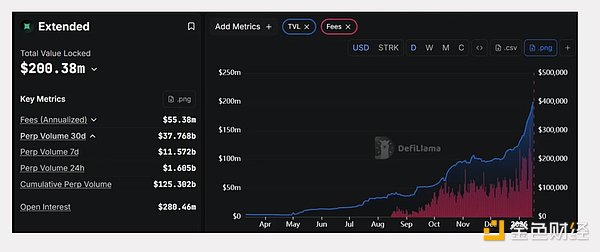
Total Locked Value: $200 million
24-Hour Perpetual Contract Trading Volume: $1.6 billion (Strong performance, helping Starknet dominate the perpetual contract market)
30-Day Perpetual Contract Trading Volume: $37.8 billion
Open Interest: $280 million (Year-to-date increase of 45.2%)
Points Program
2025 4 On March 30th, Extended launched its points program, distributing 1.2 million points weekly to traders and liquidity providers. Users can earn points through trading, referrals, and providing liquidity. Points are distributed every Tuesday at 00:00 UTC. Participation steps:
Visit the Extended website, connect your wallet and create an account: https://app.extended.exchange/join/MUUR
Deposit funds into your account, open positions to generate trading volume and accumulate points;
Provide liquidity to the liquidity pool to earn an additional 20% points and annualized return;
Unlock your referral link after reaching $10,000 in trading volume, earning 10% of the referred user's transaction fees and 2.5% of their points.
Pacifica is a hybrid perpetual contract decentralized exchange built on Solana and is currently in closed beta testing. Despite its early stage, the platform has already attracted considerable trading volume, even surpassing established Solana decentralized exchanges like Jupiter and Drift at certain times, ranking among the top perpetual contract decentralized exchanges in terms of daily trading volume. Given that previous Solana perpetual contract platforms like Drift and Zeta have distributed generous airdrops, and Pacifica is operated with its own funds, the probability of this project distributing high-value airdrops is higher than the industry average.
Core Functionality
Hybrid Architecture: Off-chain Order Book + Solana On-chain Settlement / Deposit / Withdrawal
Multiple Trading Pairs Support Up to 50x Leverage
AI Trading Assistant
Clearance Guarantee Mechanism Can Increase Points Acquisition
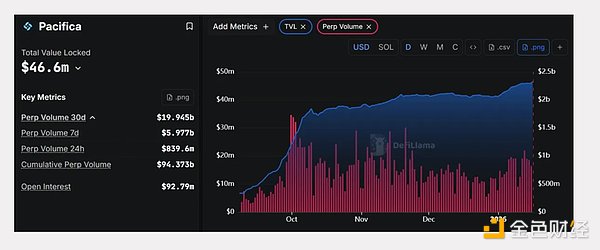
Total Locked Value: $47 million
24-Hour Perpetual Contract Trading Volume: $839.6 million
30-Day Perpetual Contract Trading Volume: $19.95 billion
Open Interest: $92.8 million
Points Program
On January 2, 2026, Pacifica launched a continuous trading points reward program, offering up to a 23% points bonus, increasing by 2% daily, reaching a maximum on the fifth day. 10%; High trading activity can further increase rewards, and fee discounts and bonuses can reduce the cost of acquiring a unit of points to approximately $0.15. Participation Steps:
Use the invitation code to visit the Pacifica website and enter the closed beta phase;
Connect your wallet and deposit funds, open positions to generate trading volume and accumulate points;
Participate in the referral program to obtain your exclusive invitation code.
Reya
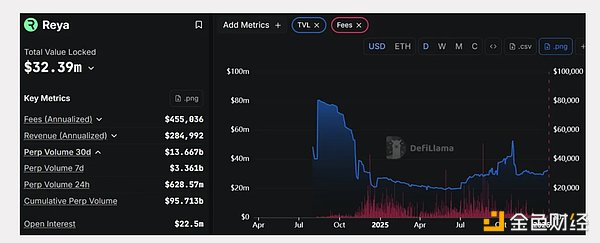
Reya is a modular, layer-two public chain optimized for trading, built on a customized Arbitrum Orbit. It is not a standalone decentralized exchange, but rather exists as a foundational execution layer with shared liquidity, allowing multiple trading front-ends to be developed on this layer.
Reya is a modular, layer-two public chain built on a customized Arbitrum Orbit platform, optimized for trading. It is not a single decentralized exchange, but exists as a foundational execution layer with shared liquidity, allowing multiple trading front-ends to be developed on this layer.
Core Functionality
Features a zero-knowledge aggregation layer designed specifically for transactions
Leveraging zero-knowledge proofs to achieve verifiable order execution and settlement, transactions are cleared on Ethereum, ensuring extremely high security
Introducing rUSD interest-bearing stablecoin, driven by Reya's integrated liquidity framework
Core Functionality
RFQ peer-to-peer trading model, abandoning the traditional order book
Vertically integrated market maker, Omni liquidity provider
Zero commissions
Trading loss refund
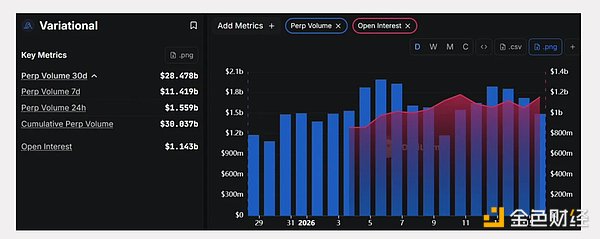
In 2026, Omni started from the testnet and grew into one of the largest perpetual contract platforms in the cryptocurrency field, and its loss refund function attracted a lot of market attention.
Platform Development Data
Cumulative Trading Volume: $30 billion
Weekly Trading Volume: $11.4 billion
Open Interest: $1.1 billion (ranked among the top five decentralized exchanges for perpetual contracts)
Points Program
Core Functionality
An integrated exchange for spot and perpetual contracts, pioneering an integrated margin model
Nado's liquidity providers (NLPs) inject idle funds into the platform's order book to earn annualized returns
Order matching latency is only 5-15 milliseconds
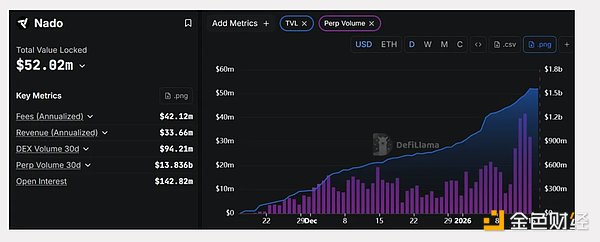
30-day perpetual contract trading volume: $13.8 billion
Total locked value: $52 million
Open interest: $142.8 million
Ink Points Program
After the private beta test, the platform will open airdrop mining. It is currently unclear whether Nado will launch a platform-exclusive airdrop, but it is certain that early users will receive Ink airdrop points rewards for their trading activities—the Nado section on the Ink website homepage is already labeled with an "Airdrop" tag. ...li>
II. Mining Strategy: Funding Rate Arbitrage
The perpetual contract market has become the largest financial market in the cryptocurrency field in terms of trading volume, with weekly open interest often exceeding $50-100 billion, achieving significant growth in the past year.
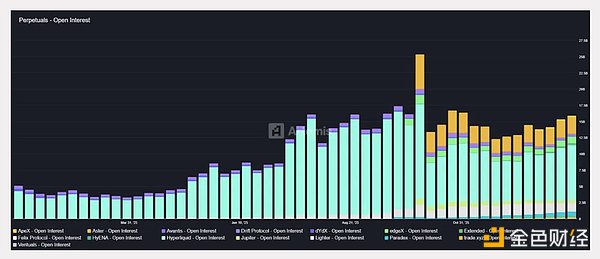
When participating in perpetual contract mining, compared to large-cap assets, it is recommended to choose altcoins with lower market capitalization, which can obtain higher reward points. However, this choice also comes with corresponding risks: low-market-cap tokens are more volatile, and if position management is not done properly, the probability of capital loss will increase significantly.
For users with limited trading experience or who are unwilling to take on the active trading risks associated with airdrops, funding rate arbitrage is a proven and high-quality strategy that can generate trading volume and achieve profitability or at least break even. What is funding rate arbitrage? Funding rate arbitrage is a cash-and-carry arbitrage strategy in the perpetual futures market. The funding rate is the cost for investors to hold a perpetual contract position. When the funding rate is positive, long positions must pay funding fees to short positions; when the funding rate is negative, short positions must pay funding fees to long positions. The funding rate in most perpetual contract markets is typically positive.
Practical Strategy
Open a long position on one decentralized exchange;
Open a corresponding short position on another decentralized exchange;
Earn funding fees;
Stable trading volume generation, accumulating points to earn rewards.
Properly generate trading volume and accumulate points to earn rewards.
Simple Example: Bitcoin Spot Price: $50,000 Bitcoin Perpetual Contract Price: $50,100 Funding Rate: +0.01% (positive value) every 8 hours
Operation Method: Open a $10,000 long position in Bitcoin on exchange A, and simultaneously open a $10,000 short position in Bitcoin on exchange B. Regardless of whether the Bitcoin price rises or falls, the profits and losses of the long and short positions will offset each other. With a positive funding rate of +0.01%, the short position will continuously earn funding fees: $10,000 × 0.01% = $1 earned every 8 hours. If the funding rate remains positive, it can earn $3 per day, $90 per month, unaffected by Bitcoin price fluctuations.
Choosing to open long and short positions on different exchanges, rather than on the same platform, is primarily to avoid Sybil attack detection and potential platform blacklisting.
Funding rate arbitrage allows users to participate in mining on perpetual contract decentralized exchanges without relying on price fluctuations. The advantages of this strategy are significant: profitability can be achieved even with moderate leverage, traders don't need to worry about drastic asset price volatility, and they can easily and steadily generate trading volume and accumulate points. Key Risks to Be Aware Of: While funding rate arbitrage can reduce risk exposure, it is not foolproof and some unavoidable risks remain, such as the liquidation of short positions and the funding rate turning from positive to negative. Therefore, the following practical steps should be taken to further reduce risk:
Continuously monitor positions and actively manage open contracts to avoid liquidation;
Set stop-loss (SL) and take-profit (TP) orders, which are effective means to avoid position liquidation, especially important for short positions;
Avoid using high leverage.
III. Funding Rate Arbitrage Robots and Tools
Tracking funding rates requires a lot of effort. Professional miners use robot tools, and even airdrop participants with little trading experience can benefit from these tools. They can visually display the best funding rate arbitrage opportunities on various perpetual contract decentralized exchanges, such as marking the corresponding annualized yield and the specific operations to achieve that yield (such as opening a long position on exchange A and a short position on exchange B). Here are some useful tools: LorisTools: A one-stop dashboard and filter tool that integrates funding rate data from centralized and decentralized exchanges, enabling efficient discovery of cross-exchange arbitrage opportunities; Arbitraxdexs: Still under development, it allows querying annualized yields of various tokens, exchange bid-ask spreads, and funding rate differences; Cexchange: A built-in funding rate arbitrage aggregator focusing on funding rate arbitrage strategies between decentralized trading pairs; Fundingview: A funding rate arbitrage strategy discovery tool that helps traders filter historically profitable arbitrage trading pairs and calculate average annualized yields over different time horizons; p2p_army: Another arbitrage scanning tool with built-in analysis capabilities. It can identify funding rate differences across exchanges and provides real-time scanning of funding rate differences, historical rate tables, and alert functions. dextrabot: An automated mining platform focusing on airdrop point mining and copy trading on perpetual contract decentralized exchanges (supporting platforms such as Lighter, Aster, Hyperliquid, Extended, and Variational). It primarily features low-cost strategies such as delta-neutral bots and grid trading.
Conclusion
2025 was a landmark year for perpetual contract traders and exchanges: it saw both successful airdrops and the largest single-day market crash in cryptocurrency history (October 10-11), triggering the automatic liquidation (ADL) cycle and causing huge losses even for traders using funding rate arbitrage strategies.
Decentralized perpetual contract exchanges are still on the rise, but traders need to remain cautious. The key point is: choosing which platform to trade on is just as important as choosing which instruments to trade. Always carefully read the official documentation of new exchanges to avoid falling into the trap of malicious platforms.
This article provides you with the tools needed to start your perpetual contract decentralized exchange mining journey; after that, experience and self-discipline will be your core guides.
This article provides you with the tools needed to start your perpetual contract decentralized exchange mining journey; after that, experience and self-discipline will be your core guides.
Critics often point out that most emerging protocols are simply trying to be "the next Hyperliquid," but in my opinion, this isn't a problem—the real competitors of perpetual contract decentralized exchanges (PCEs) aren't each other, but rather centralized exchanges. As this sector continues to develop, opportunities remain, and they will only become more challenging over time. Remember: the biggest regret in the cryptocurrency space is missing out on the big trends.


 Edmund


